Boro Gobra does not look like a place where something as abstract as an electoral roll could rupture everyday life. It sits quietly in the Basirhat landscape: Ponds holding still water under the afternoon sun, fruit trees leaning over courtyards, half-built brick houses standing beside older mud-walled homes. On most days, by early afternoon, the village would slow into a kind of drowsy silence.
But not anymore.
The stillness has been replaced by clusters of people. Men and women gathered in tight circles, speaking in lowered but urgent voices, documents clutched in their hands like fragile proof of existence. At the centre of this anxious churn is a small stationery shop near the local primary school. The whirr of a Xerox machine has become the background score of the village. Sheets of paper slide out one after another: Aadhaar cards, admit cards, land deeds, affidavits; each one a desperate attempt to assert: I belong here.
Over the past week, hundreds of names have quietly vanished from the voter rolls here.
They disappeared not with a knock on the door or a public announcement, but in a list published at midnight. As the first supplementary list came out around 11.55 pm on the intervening night of March 23 and 24, 340 residents of Boro Gobra in the Begampur-Bibipur Panchayat of Basirhat-2 Block in West Bengal’s North 24 parganas district found themselves struck off the electoral roll. It takes a moment to grasp the scale. One list wiped out all under-adjudication voters from Booth 5 of Begumpur Bibipur panchayat — every single one of them Muslim.
The deletion made no sense to them. Many have lived here all their lives. They have voted in successive elections. Some can trace their roots back generations. Yet, overnight, they have been pushed into a space of doubt, where their belonging itself seems to require proof.
And there are similar stories unfolding across neighbouring villages.
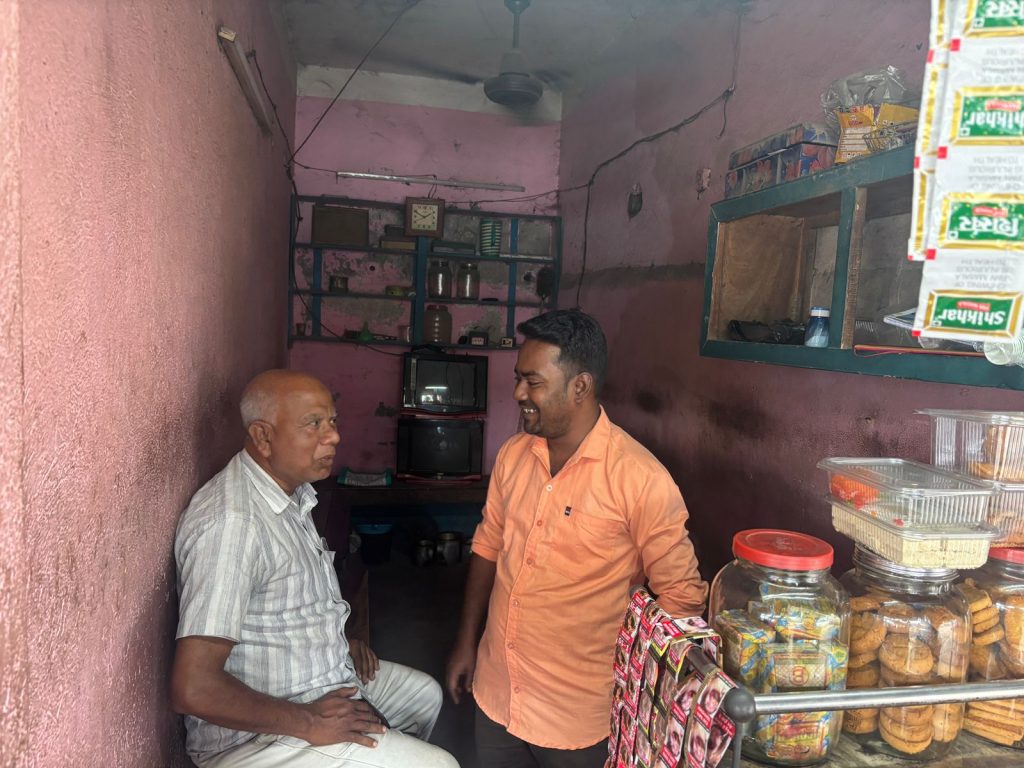
At Mohammad Mijanur Rahaman’s shop, where many gathered when Alt News visited the village, the stories began to overlap.
Even the Booth Level Officer wasn’t Spared
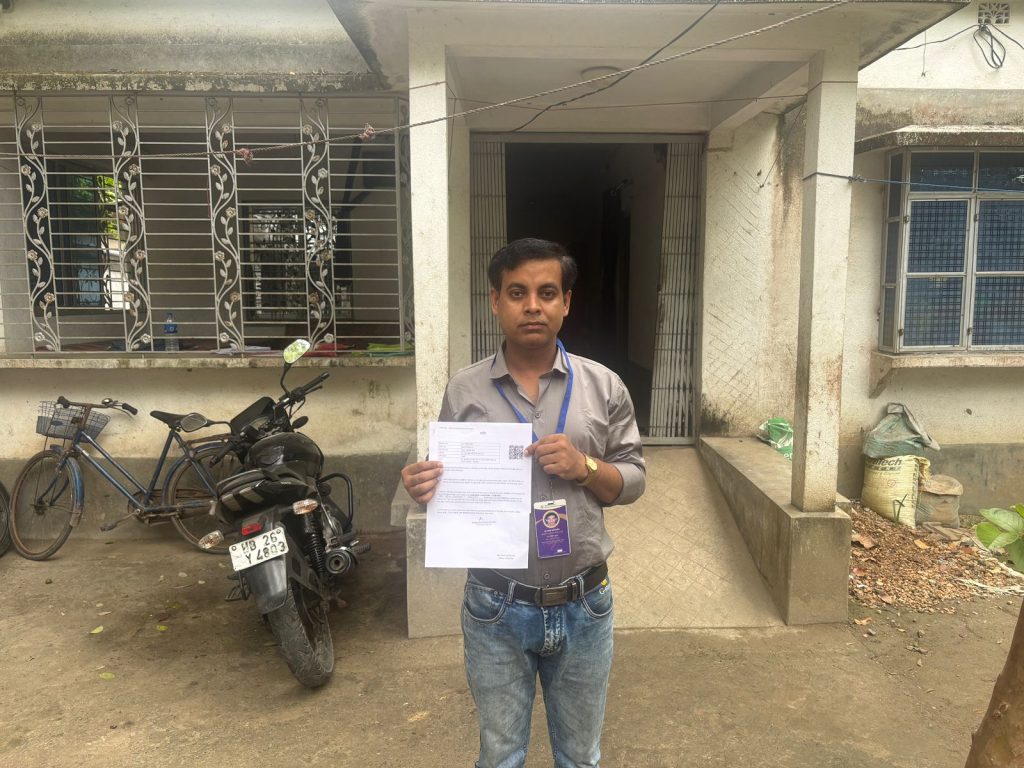
Safiul Alam, the booth level officer (BLO) who conducted the entire exercise in Booth 5, found his own name missing when the list was published.
“When I started working with the list, it had 990 voters. During the draft phase, we found 36 dead or left voters. Rest of the electorate were able to link themselves with the 2002 list. However afterwards, 358 voters were flagged through the logical discrepancy, and notices were issued. On 28 February, 18 voters were able to clear their names. The remaining 340 voters got deleted.”
Alt News went through the list and verified this.
The reason cited in his own notice left Alam incredulous.
“As per the under adjudication notice that I received, I was flagged because my father’s age was 50+ when I was born. Is it a crime in India to have a child after reaching 50 years of age?”
He pointed to another pattern.
“The under-adjudication list had only five Hindu names, and all of them got their names cleared. The Hindu voters in question didn’t have any documents other than the Aadhaar card. Still they cleared their names easily. But the Muslims are penalized despite having all the proper documents. This is creating social tension in our area.”
His brothers, too, were deleted; again because their father was allegedly linked to six individuals.
“The funny part is, my sisters who live in Baduria and Minakhan block respectively, got their names cleared by linking themselves with my father. But we brothers got stuck in the middle.”
He was not alone. Sahanara Khatun, the BLO of the neighbouring booth, also found her name on the deleted list.
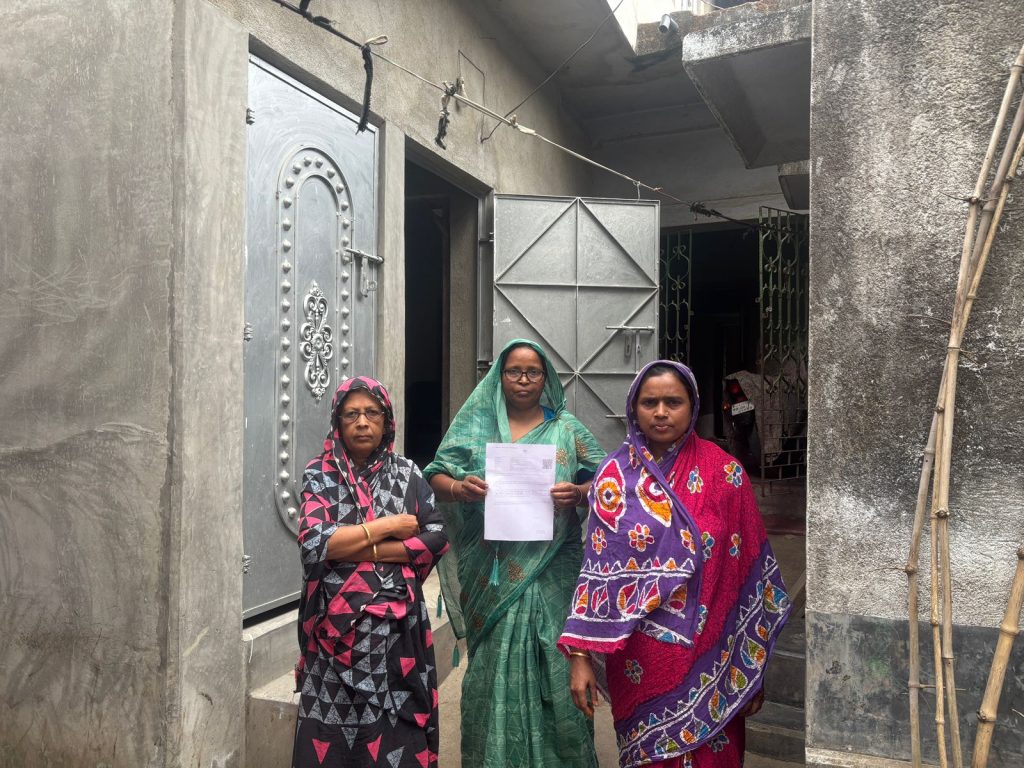
“My name in the 2002 list was Sahanara Khatun Baidya. After marriage I changed it to Sahanara Khatun. I have an affidavit to prove my point, and I had submitted it during the hearing as well. Still my name got deleted.”
Her data from Booth 4 reveals a stark pattern.
“In the mixed locality, Hindu voters numbered around 200. Out of these, only 10 received adjudication notices and every single one cleared scrutiny. But out of the 504 Muslim voters of the same booth, only 189 were able to clear their names. The remaining 314 voters have been deleted.”
“I strongly feel that almost all the documents were overlooked. Otherwise, such an outcome is impossible.”
All of the deleted voters will now have to appeal to a judicial tribunal.
‘Where did These Two Extra Persons Come From?’
Kajirul Mondal, a booth-level agent in his late twenties, is among those deleted.
“Both of my parents are in the 2002 SIR list. But the Election Commission deleted my name using logical discrepancy,” he told Alt News.
He had submitted his Madhyamik (West Bengal Class X board examination) admit card, higher secondary certificate and college degree. Still, the system flagged him.
“My father’s name in his documents is Sherali Mondal. But in my documents, it is Sher Ali Mondal. The ECI flagged it using logical discrepancy. Along with that, there is a second reason. My father has four sons including myself. But according to the notice that all four of us got, my father’s name got linked with six persons in total. So where did these two extra persons come from? And why should we suffer for this error?”
Mijanur Rahaman, the shop owner, had a similar but more perplexing experience. “Unlike Kajirul, there is no mismatch of my father’s name in my documents. Yet my name got deleted.” Like Kajirul, he too was flagged because his father’s name was linked to six individuals.
“We are only four siblings, three brothers and one sister. Where did these two extra humans come from? I don’t know how I am going to clear off my name from this mess.”
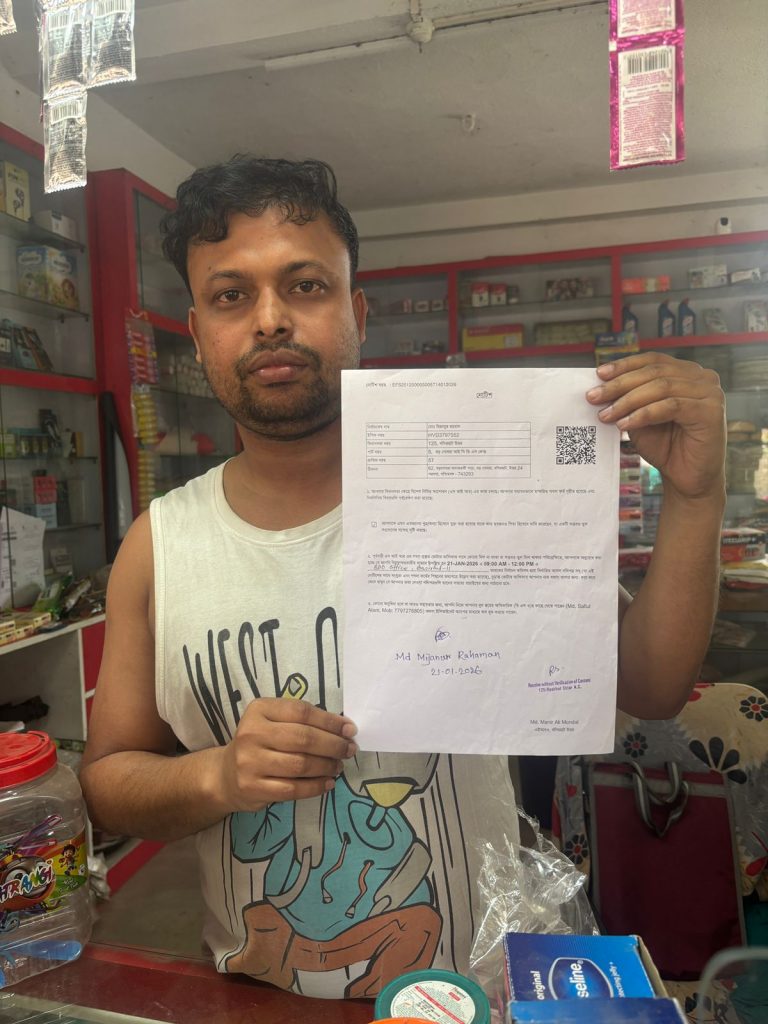
He pointed to what he saw as a glaring inconsistency.
“If you look at serial number 253 of our voter list, you will find the name of Pratima Ruidas. But her husband’s name is also given as Pratima Ruidas, which is an error. Still her name is on the voter list, and people like us, with all the correct documents, have been thrown away.”
The sense of betrayal deepens with cases like that of Manirul Islam Mondal.
Manirul, in his fifties, and his father were both on the 2002 SIR list. He has a passport. His family’s land deeds predate Independence. Yet his name was deleted. “There are 32 other unfortunate voters like me in this village who, despite being on the 2002 list, have been deleted this time. We don’t know what’s wrong with us,” Manirul told Alt News.
“I went to the Basirhat-2 BDO office to attend the hearing notice on 21 March. Even the BDO said that all my documents are fine and there is no need for me to worry about anything. But here I am now, facing an uncertain future,” he added.
When Bureaucracy Spills into the Personal
For some, the consequences have spilled into deeply personal spaces.
Fulchuratan Bibi, whose own name remains, has seen three of her children deleted.
“My children linked themselves with their father, still got deleted. My daughter submitted a family tree sketch during the hearing, and got replied that it is not enough, and she might not be her father’s child. This has created tensions in her in-laws’ place. What kind of a crude joke is this?”
Across the panchayat, the scale of deletion is stark. Booth 1 saw 176 deletions out of 401 under adjudication. Booth 2: 142 out of 212. Booth 3: 233 out of 352. Booth 11 recorded perhaps the most dramatic figure: Only 30 names cleared out of 538.
In neighbouring Kachua panchayat, tea stall owner Obaidulla Mondal described a similar pattern.
“Nearly 2400 voters from this panchayat have been deleted. Out of the 118 under-adjudication voters from my booth, 97 names got deleted,” he added.
Generations Here, Still not Enough
Beyond the numbers, there are stories that deepen the sense of disbelief.
Sufia Bibi, 77, from Kachua panchayat area, is among those whose names have been deleted. She was on the 2002 SIR list and is a passport holder. Her late husband was the headmaster of a local school, and after his death, she has been receiving a government pension. Her family holds ancestral land and has lived in the area for generations.
Yet, both her name and that of her son Mustafa Kamal have been struck off the rolls.
“Sufia Bibi’s family lives in this area for at least 5 generations. Despite that, both her and her son Mustafa Kamal’s name got deleted from the electoral roll,” said Munshi Abdul Halim.
Halim, a local CPI(M) leader, framed the issue more broadly.
“In booth-64 of our panchayat 274 names have been deleted. This village mostly comprises small fisherfolk. The elders are illiterate and the youths are first-generation learners. You can very well imagine that there will be errors and mismatches in names. Citing that anomaly, these people are disenfranchised en masse. This is inhuman.”
‘No Reason is Given’
The uncertainty cuts across social positions. Even Mofijul Islam, a public prosecutor at the Basirhat court, finds himself under adjudication from booth 11 of Begumpur Bibipur Panchayat.
“I myself am living through uncertainty every day. I don’t know whether my name will be cleared or deleted… If privileged sections like us can go through this phase, you can very well understand what the poor people are facing.”
For many, the absence of reasons is as troubling as the deletions themselves. The supplementary list offers no explanation; only names that are no longer there.
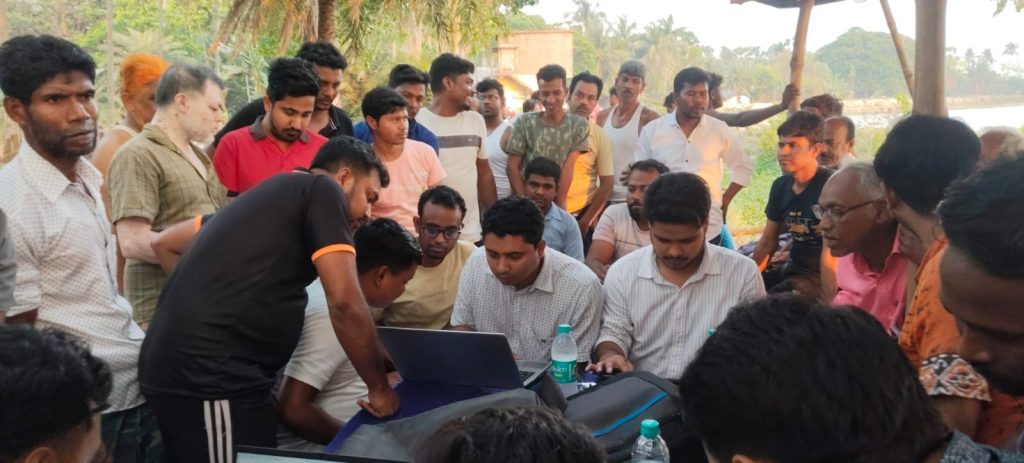
Nasirul Haque from Ghorarash Kulingram Panchayat of the same block works as an advocate in Kolkata high court. He has been instrumental in setting up SIR help camps in his locality, as well as creating awareness about the situation. Speaking to Alt News, Haque described the larger impact.
“People are in a state of fear. They think they haven’t only lost voting rights but also citizenship. They fear losing government benefits… This situation is rife for people with vested interests to manipulate the victims.”
“In adjudication, both sides should have the right to respond… But here, the victims only received a notice and submitted documents. There is no clarity whether all the documents reached the judicial officer, and how those officers decided their authenticity.”
Highlighting the gravity of the situation, Nasirul said, “By the data I have received, Basirhat-II block is among the worst affected in West Bengal. Nearly 200 voters, on average, have been deleted from each Muslim-dominated booth. Around 50 BLOs have also been struck off. Some of these very officials were later called for election duty training. It is a farce.”
Waiting to be Counted Again
Back in Boro Gobra, these structural questions translate into something more immediate.
People keep returning to Mijanur’s shop.
They keep photocopying documents.
They keep comparing notices.
And they keep asking the same questions — questions that, for now, have no clear answers.
In a village that once moved at the pace of seasons, time now feels compressed into deadlines and hearings. For hundreds here, the future has narrowed into a single, exhausting task: to prove that they belong to the place they have always called home.
_____________________________________________________________________________________
Photos: Anindya Hazra
Independent journalism that speaks truth to power and is free of corporate and political control is possible only when people start contributing towards the same. Please consider donating towards this endeavour to fight fake news and misinformation.