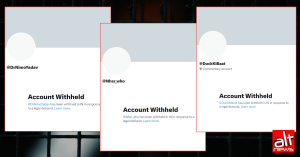
In recent months, the Government of India has invoked Section 69A of the Information Technology Act, 2000, to block social media posts by several users within the country. Orders shared by affected users suggest a troubling pattern: the law is increasingly being used to curb criticism of the government, stifle dissent, and target political satire—particularly content critical of Prime Minister Narendra Modi and his policies.
On March 10, noted cartoonist Satish Acharya said that two of his cartoons had been withheld in India by the platform X following government directives. The cartoons offered a sharp critique of developments in West Asia and India’s perceived diplomatic silence.
One illustration contrasted 2016 and 2026, highlighting a shift from the Prime Minister’s earlier emphasis on India-Iran ties to his current silence on sensitive issues such as the reported assassination of Ayatollah Khamenei. Another depicted a US submarine attack on the Iranian vessel IRIS Dena in the Indian Ocean — after it had participated in naval exercises in India — using the phrase “Atithi Devo Bhava” to underscore the irony of the government’s silence.
Reacting to the blocking of his work, Acharya said that attempts by those in power to suppress cartoons often end up amplifying their reach many times over.
Two notifications in three days from X as they received ‘order’ from the govt to block two of my cartoons.
Though this govt has lots of ‘tejaswi log’, let me share a pro-tip.
My experience for the last 15 years on social media teaches me that whenever any govt/politician tries… pic.twitter.com/Gc832grcxy— Satish Acharya (@satishacharya) March 10, 2026
Section 69A is typically invoked to address serious threats to national security, sovereignty, public order, or India’s relations with foreign states. On October 7, 2025, the Union ministry of electronics and information technology (MeitY) reiterated this at a New Delhi workshop on “Management of Information on Intermediary Platforms.” Secretary S. Krishnan explained that the provision empowers the government to block online content only in such exceptional circumstances — when national security, public order, or friendly relations with foreign states are endangered.
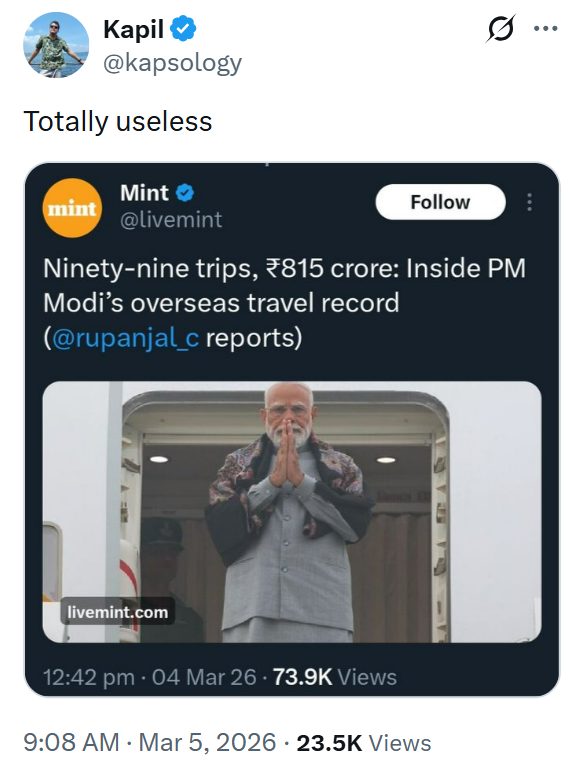
Yet recent blocking orders point to a clear departure from this stated intent. The crackdown has not been limited to high-profile voices; even ordinary users engaging in political criticism and satire are being targeted. On March 5, for instance, a user named Kapil posted a screenshot of a news report on expenditure related to the Prime Minister’s foreign visits, calling it “totally useless.” That two-word remark, too, was withheld in India following a government directive.
On March 5, a user named Poonam wrote in a post, “A slithering worm has more spine than Narendra Modi.” Citing Section 69A of the Information Technology Act, 2000 (IT Act), the government ordered social media platform X to block this X post in India.
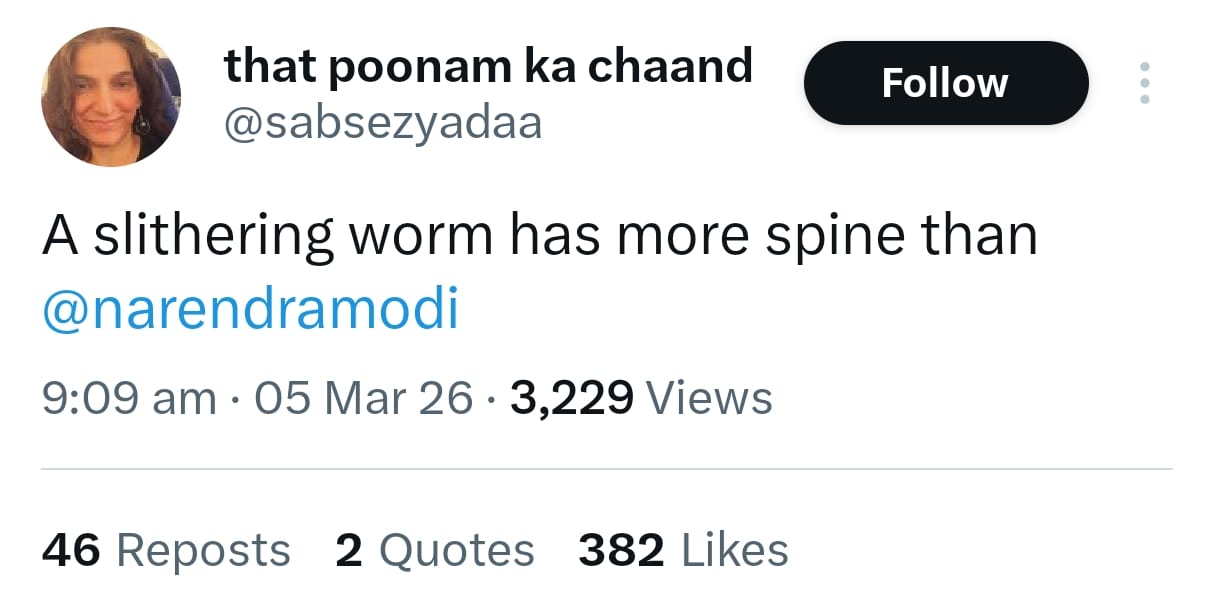
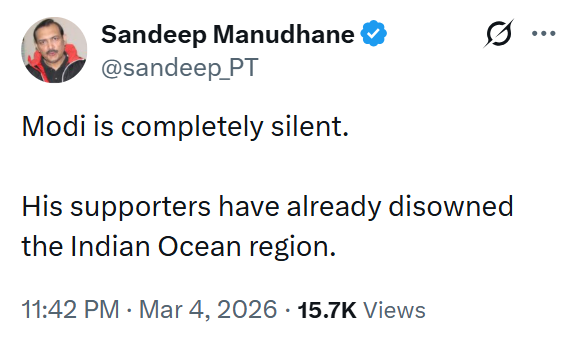
Similarly, when educationist Sandeep Manudhane took a jibe at the security of the Indian Ocean and the Prime Minister’s silence over the US strike at an Iranian ship, his post too was blocked in India following a government order. Together, these instances point to a troubling pattern — where even routine political criticism and satire are treated as grounds for censorship, stretching a law meant for national security to silence dissent.
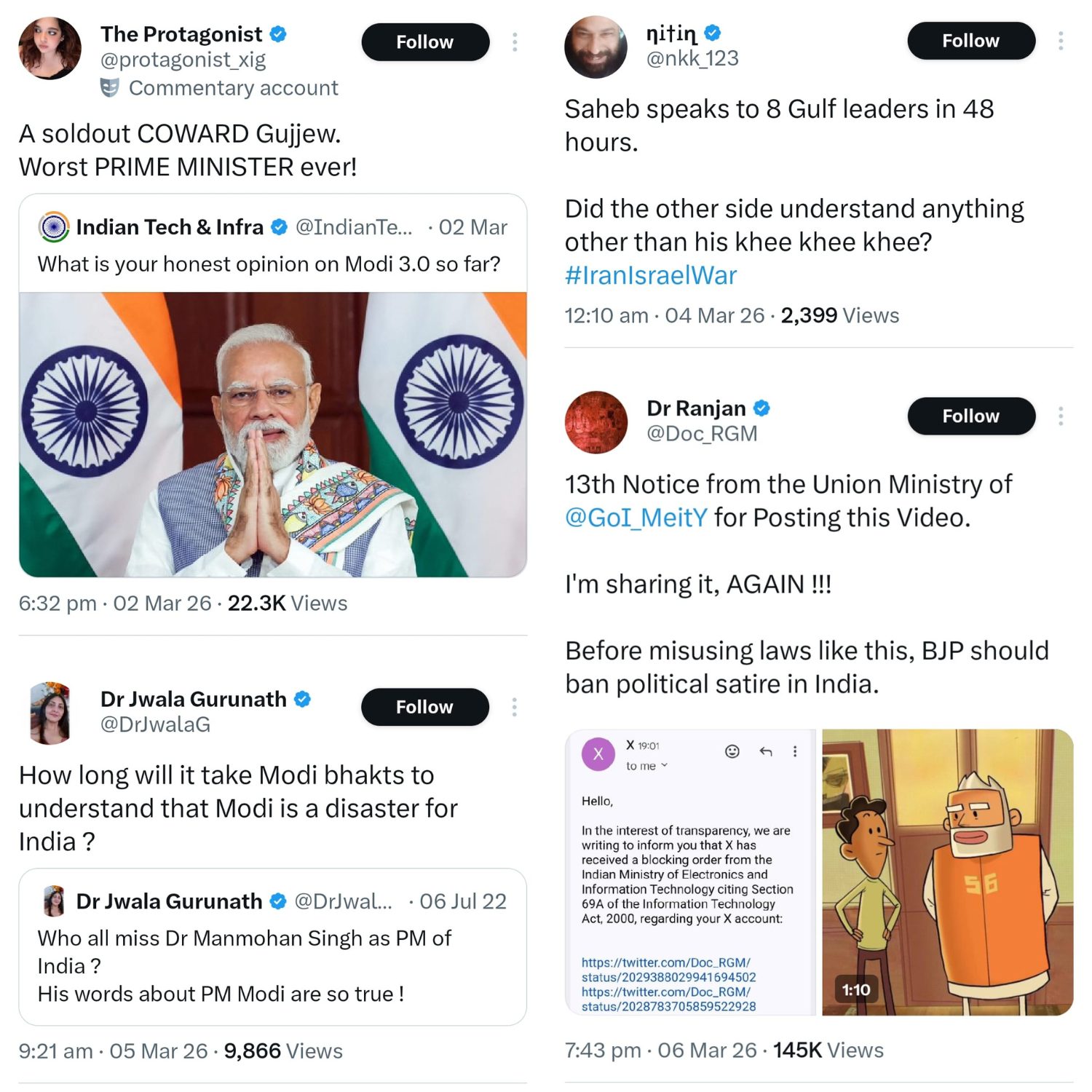
The sweep of restrictions has extended to several other users expressing political opinions. A user named The Protagonist shared critical views on “Modi 3.0”; the post was promptly withheld in India following a government order.
Another user, Nitin, posted a satirical remark on the Prime Minister’s interactions with leaders from Gulf nations. His tweet too was blocked—despite the fact that it did not explicitly mention either the Prime Minister or the Government of India.
Academics have not been spared either. Posts by Dr. Jwala Gurunath and Dr. Ranjan, commenting on political ideologies and the influence of the government, were similarly blocked. In Dr. Ranjan’s case, even a follow-up post noting that his earlier tweet had been withheld was itself blocked—highlighting the recursive nature of this censorship.
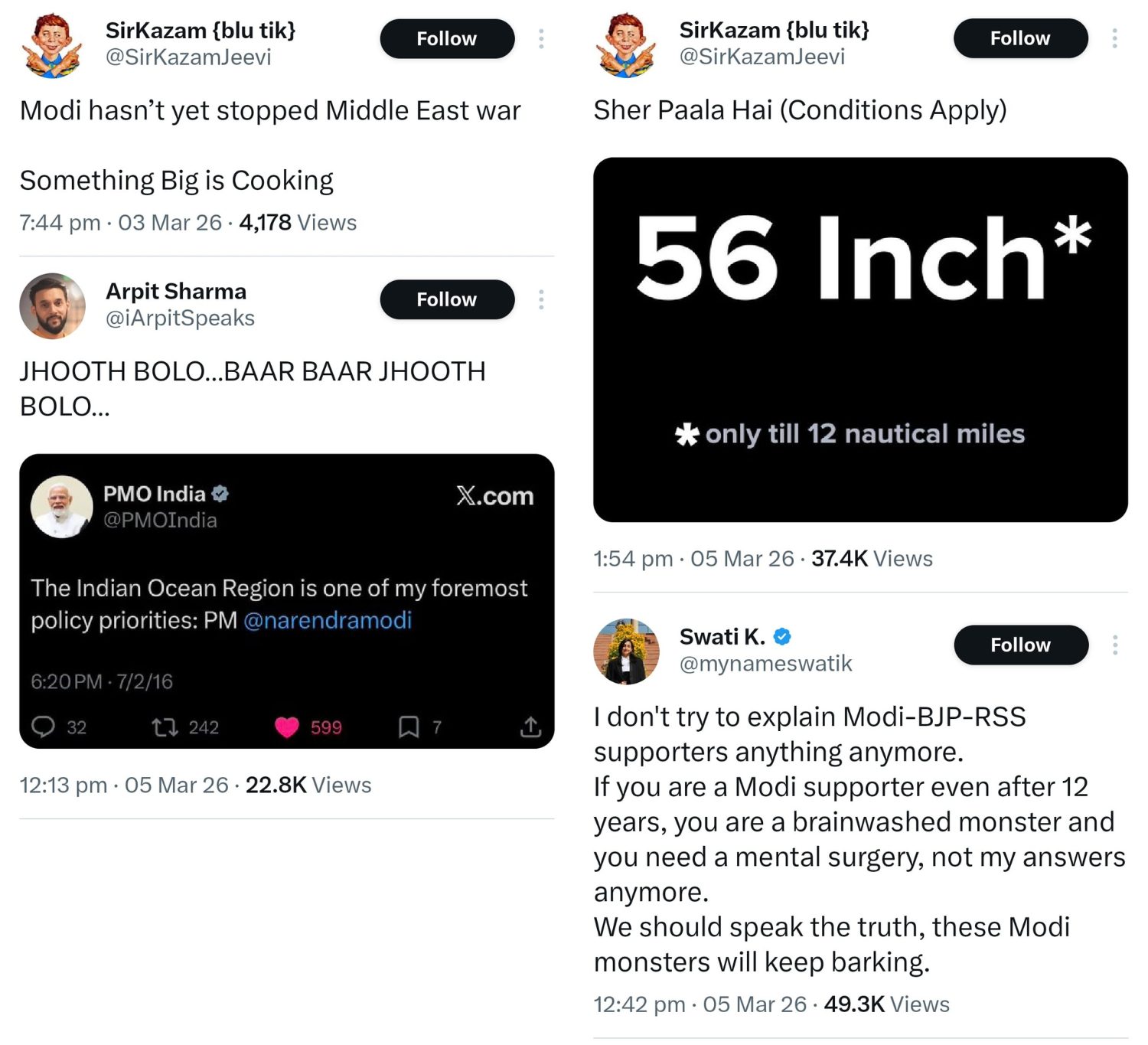
The net has widened to include even satire and casual political commentary. A user named “Sir Kazam” posted a lighthearted remark on the Prime Minister’s perceived inaction on the Middle East conflict — “Modi hasn’t yet stopped the Middle East war. Something Big is Cooking”— and, in another tweet, mocked the oft-cited “56-inch chest” remark by writing, “This claim applies only up to 12 nautical miles.” Both posts were withheld in India.
In a similar instance, on March 5, Arpit Sharma shared a screenshot of an old post by the Prime Minister describing the Indian Ocean as a policy priority, adding the comment, “Jhooth bolo, baar baar jhooth bolo” (“Tell lies, tell lies again and again”). This post too was blocked—suggesting that even recalling past statements can invite censorship. A sharply critical remark by a user named Swati Khanna on the mental health of supporters of the Prime Minister, the BJP and the RSS was also withheld.
Taken together, these cases point to a shrinking space for online criticism, where even satire, mockery and the act of holding the government to its own past words are increasingly being treated as grounds for takedown.
Is Criticism of Govt a Threat to the Nation?
Section 69A permits blocking only in the interest of India’s sovereignty and integrity, public order, or national security. Yet actions against Satish Acharya’s cartoons, or even a two-word criticism like “totally useless”, suggest that criticism of the government is increasingly being treated as a threat to the nation itself. By targeting satire on diplomatic silence or frustration over public spending, authorities appear to blur the line between the government and the country. Satire, by design, is exaggerated—it is a non-violent means of dissent. Using legal powers meant for exceptional threats to curb such expression points to a troubling misuse of the law.
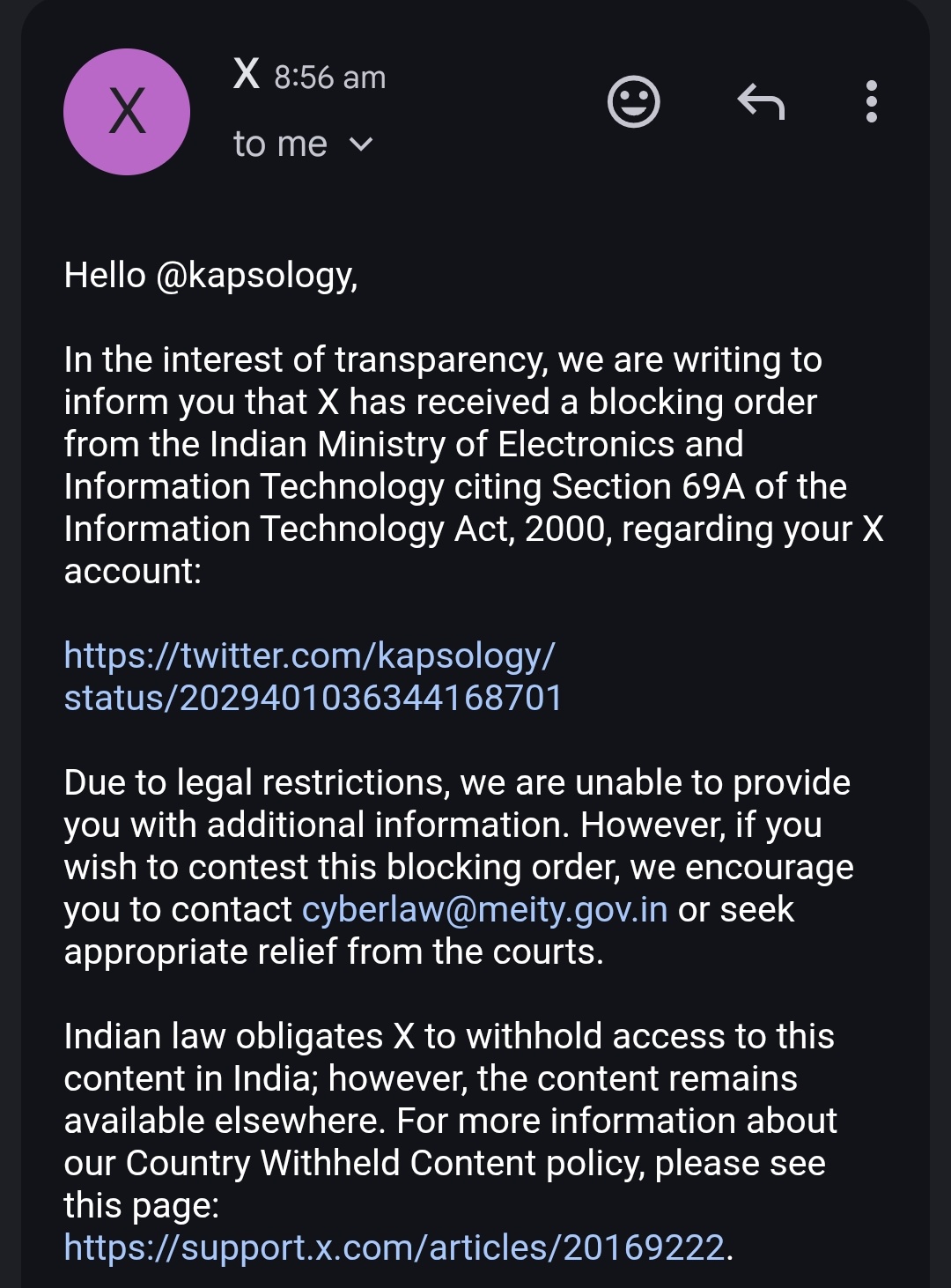
Equally concerning is the opacity surrounding these actions. Blocking orders under Section 69A are confidential, and users often learn of restrictions only through automated emails from platforms like X. There is typically no prior notice, no opportunity for a hearing, and no clear explanation of how a particular post endangers national security—raising serious questions about due process and accountability.
If Section 69A continues to be deployed against trivial remarks and political satire, social media risks losing its character as a space for independent expression, turning instead into an echo chamber for state-approved narratives—a shift that is deeply at odds with the principles of a democratic society.
Alt News Spoke to Internet Freedom Foundation Chief Apar Gupta
To better understand the implications of these developments, Alt News spoke with Apar Gupta, founder-director of the Internet Freedom Foundation, a non-profit organization that works on digital rights in India. Here are some excerpts from that conversation:
Q. What is the procedural mechanism for issuing blocking orders under Section 69A? How does a complaint translate into content being taken down?
A. Under the 2009 Blocking Rules, a complaint typically first lands with a “nodal officer” in a ministry, department, state government, or a notified agency. That organisation must examine it and, if it believes the Section 69A grounds are met, send a written request to the designated officer in the Union ministry of electronics and information technology (MeitY). The designated officer convenes a committee to examine the request, and the hosting party or platform is meant to get notice and a chance to be heard where the person is identifiable. The committee’s recommendation goes to the secretary, MeitY, who approves or rejects it. If approved, the designated officer issues a direction to the intermediary to block the specific information within a stated timeline. There is also an emergency route for interim blocking, but it must be placed before the committee within 48 hours and then confirmed or revoked. However, due to a lack of transparency several of these procedural safeguards are not evident. In several cases conducted by the Internet Freedom Foundation, notices for hearings were not even sent to impacted parties.
Q. Beyond platforms restricting content, what legal or punitive action—if any—can be taken directly against the individual who posted it?
A. A Section 69A order mainly directs an intermediary to restrict access. By itself, it does not convict or punish the user who posted the content. However, the same facts can initiate a criminal case through normal police powers. In practice, users are often booked for offences framed as promoting enmity, outraging religious feelings, making statements that may cause “public mischief,” criminal defamation, or for speech alleged to endanger the State, depending on the allegation. Since 1 July 2024, these offences are in the Bharatiya Nyaya Sanhita (which replaced the IPC), and procedure falls under the Bharatiya Nagarik Suraksha Sanhita. Separately, parts of the IT Act still create offences for specific categories like obscene material, child sexual abuse material, or privacy violations. Rights monitoring has documented arrests and FIRs over online posts, including political speech.
Q. What legal framework or operational rules govern these actions? Where are the boundaries of what law enforcement and designated officers can and cannot do codified?
A. The main legal boundaries for blocking are in Section 69A of the IT Act and the 2009 Blocking Rules. Section 69A limits blocking to specific grounds (sovereignty and integrity, defence, security of the State, friendly relations, public order, and incitement linked to these) and requires reasons to be recorded in writing. The Blocking Rules then set out who can initiate requests, the role of the designated officer, committee review, the emergency process, record keeping, and the review committee’s periodic oversight. A major structural gap is Rule 16 confidentiality, which often keeps orders away from users who want to challenge them. Separately, platforms also receive takedown directions under the IT Rules 2021, especially Rule 3(1)(d), which has been tightened over time, including very short compliance timelines in recent amendments.
Q. In cases where cartoons, satire and critical commentary have been blocked, what statutory grounds under Section 69A are invoked to justify such action? How does the state legally classify satirical content — such as political cartoons — as a threat to public order or national security?
A. For cartoons, satire, and criticism of the Prime Minister, the only Section 69A hooks the state usually tries to use are “public order” or “preventing incitement” linked to public order or security. Legally, that requires a clear, proximate connection to violence or disorder, not just that the content is mocking or uncomfortable for the government. A valid 69A direction should also be narrow and content specific, identify the exact post or URL, and record reasons in writing. Recent user reports on X show a recurring due process gap: posts are “withheld in India under Section 69A,” but users receive no reasons and no copy of the order, making legal challenge difficult.
To fit satire into Section 69A, the state usually argues that the content is not “just humour” but is likely to trigger disorder, hatred, or violence, and therefore affects public order or security. That is a high legal bar. The Supreme Court has drawn a line between advocacy and incitement, and has said restrictions tied to public order must have a proximate link to incitement. For a political cartoon, the state would need to show more than offence or reputational harm, for example a concrete risk of imminent violence, targeted harassment, or coordinated mobilization that the post is actually inciting. Without that, using 69A to block satire looks like viewpoint based censorship and is difficult to justify under the limits built into Section 69A and Article 19(2).
Independent journalism that speaks truth to power and is free of corporate and political control is possible only when people start contributing towards the same. Please consider donating towards this endeavour to fight fake news and misinformation.