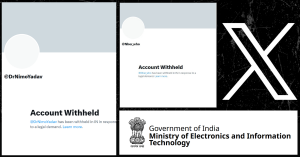
The Transgender Persons (Protection of Rights) Amendment Bill, 2026, was passed in the Lok Sabha on March 24 and in the Rajya Sabha on March 25. Five days later, on March 30, President Droupadi Murmu signed the bill, turning it into a law. This bill was passed despite much pushback from the Opposition in Parliament and from the trans community across the country. Top members of the National Council for Transgender Persons (NCTP), a committee created by the government for consultation regarding legislation in relation to the rights of transgender persons, resigned on March 25 in protest, as they said they were kept completely in the dark about the bill and weren’t consulted.
The amendment brings changes to the Transgender Persons (Protection of Rights) Act, 2019. The biggest change is the definition of a transgender person. The 2019 Act defined a transgender person as someone “whose gender does not match with the gender assigned to that person at birth and includes trans-man or trans-woman (whether or not such person has undergone Sex Reassignment Surgery or hormone therapy or laser therapy or such other therapy), person with intersex variations, genderqueer and person having such socio-cultural identities as kinner, hijra, aravani and jogta“. This granted a person the right to a self-perceived identity, as mentioned in Chapter III of the Act under ‘Recognition of identity of Transgender persons’.
The new amendment says that only the following persons can be identified as transgender: “… a person having such socio-cultural identities as kinner, hijra, aravani and jogta, or eunuch, or a person with intersex variations or a person who, at birth, has a congenital variation in sex characteristics as compared to male or female development… or any person or child who has been, by force, allurement, inducement, deceit or undue influence, either with or without consent, compelled to assume, adopt, or outwardly present a transgender identity, by mutilation, emasculation, castration, amputation, or any surgical, chemical, or hormonal procedure or otherwise: Provided that it shall not include, nor shall ever have been so included, persons with different sexual orientations and self-perceived sexual identities“.
Skip to PDF contentThe above definition summarises that one is no longer allowed to identify with self-perceived gender identities, and individuals who are born intersex or those who have been “forcibly put through” gender-affirming surgeries would only be considered as transgender. The amendment runs counter to the inclusive nature of the 2019 Act, as well as completely glosses over the existence of individuals who identify as transmen and individuals who do not identify with the male/female gender binary.
It also goes against the National Legal Services Authority (NALSA) vs. Union of India 2014 judgement, which granted those who do not identify with the male/female gender binary the right to recognition before the law: “Everyone has the right to recognition everywhere as a person before the law. Persons of diverse sexual orientations and gender identities shall enjoy legal capacity in all aspects of life. Each person’s self-defined sexual orientation and gender identity is integral to their personality and is one of the most basic aspects of self-determination, dignity and freedom…”, the judgment read. The judgment also mentioned that no condition of medical requirements or any other requirement would be imposed on a person for them to be recognised legally.
Additionally, section 18 of the 2019 Transgender Act listed four ‘Offences and penalties’ that protected a trans person. New elements have been added to that list, which criminalise any person who “forcibly” makes an individual or a minor go through surgical processes that would present them as a transgender person against their consent. Many from the trans community fear that the above provision could be used against them if they attempted to guide a young person who is seeking advice on how to begin their transition journey.
Hearing a PIL on April 8, the Delhi high court sought response from the Union government regarding the allegations that the proposed amendments infringed upon provisions under Articles 14, 19(1)(a), and 21 of the Constitution of India, and effectively constituted a “legislative rollback” of a fundamental right previously affirmed by the Supreme Court.
As part of nationwide protests against the Act, a demonstration was organised at Ranu Chhaya Mancha in Kolkata on March 31. Alt News spoke to six people from the transgender community, who shared their views on the entire debate.
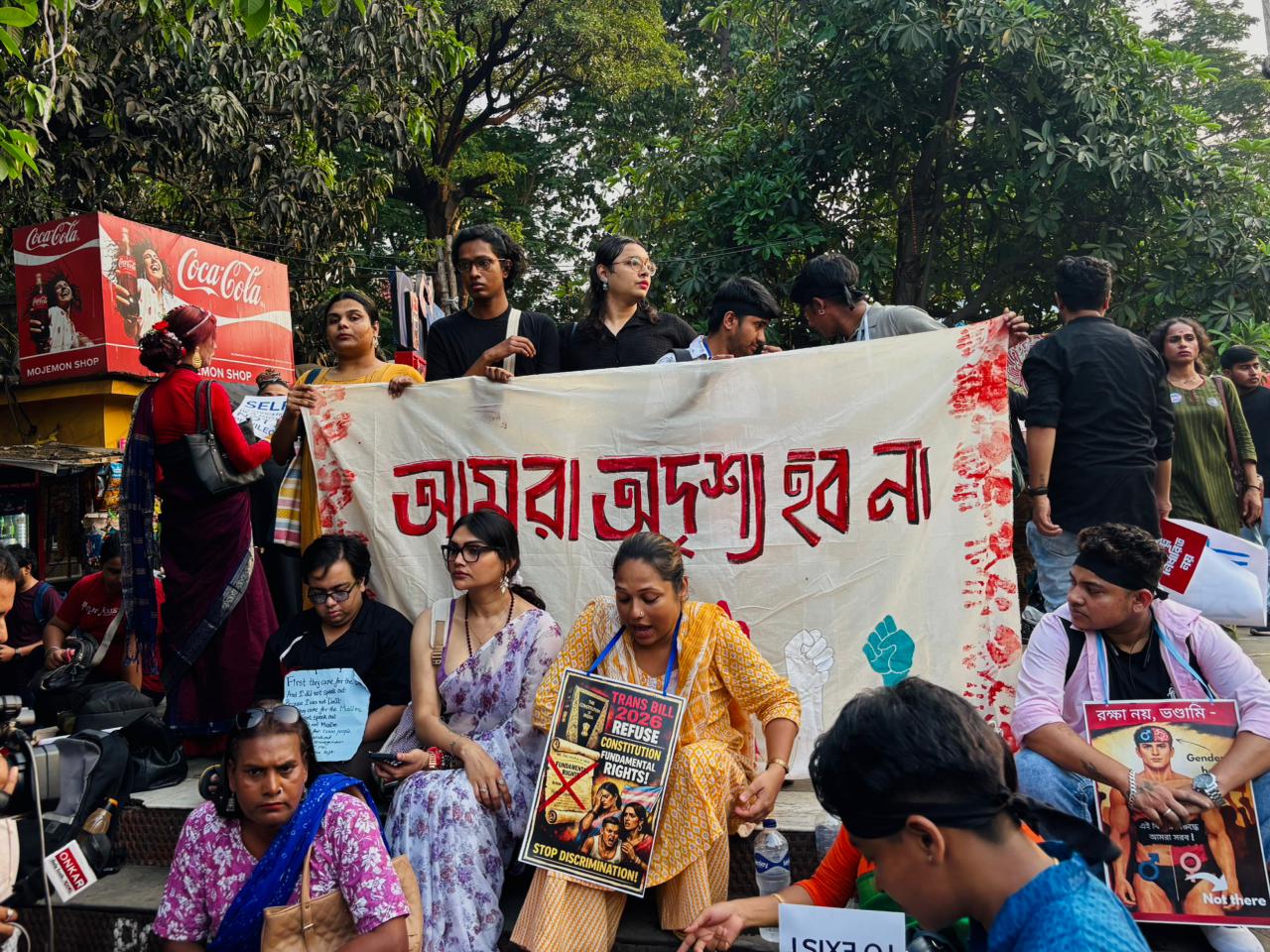
Keith, Transman, social worker at Samabhabona and freelancer
Keith, who identifies as a transman and is involved with the NGO Samabhabona, analyses what the new definition of transgender persons means for individuals identifying as transmen.
“What they’ve done with this bill is legally redefine what ‘transgender’ means. If you look closely at that definition, it largely covers people who can be grouped within the hijra and kinnar gharanas, i.e., mostly trans women, though not all, along with some transfeminine and non-binary people. It is extremely rare for trans men to identify with that framework, perhaps one in ten thousand, especially today. Most trans men are perisex, meaning not intersex, and almost all of us have transitioned of our own volition. Which effectively puts us outside the definition. We are, in effect, being written out of it.
And it’s not just trans men. Transmasculine people, non-binary and genderqueer individuals, and even many perisex trans women are excluded. There’s a misconception that because the law gestures toward intersex people, trans women as a whole are protected, but that simply isn’t true. Many trans women don’t fall into these narrow categories. They may be working in corporate jobs, doing sex work, or begging to survive. Where are they supposed to go? Where do any of us go? This bill effectively erases us from legal existence,” said Keith.
“This also means we lose access to gender-affirming care. We won’t be able to consult psychiatrists for gender dysphoria, endocrinologists for hormone replacement therapy, or surgeons for procedures, whether that’s top surgery, bottom surgery, hysterectomy, or anything else. The message is clear: remain the gender you were assigned at birth. Conform. Be ‘normal.’
At the same time, the law criminalises what it calls ‘forcibly’ making someone trans, whether by pushing them toward HRT or surgery, with harsher penalties if the person is a minor. The danger is how loosely ‘force’ can be interpreted. If a 15-year-old who has just finished their board exams comes to me and says they want to begin HRT at 18, I can no longer guide them. Their family could accuse me of having ‘forced’ their child into being trans, and I could be imprisoned,” Keith continued.
“There are countless people still figuring out their identities, many of them closeted. This law pushes them further back into silence. And for those who are already out and at different stages of transition, it effectively tells them to reverse course — to return to some so-called ‘natural’ state,” Keith said, underscoring his frustration.
Asked about plans to challenge the law, Keith said, “There have been discussions about taking this to court. But there’s also real apprehension about the current political climate under the BJP government. In legal challenges, we often rely on the NALSA judgment, where the Supreme Court affirmed the right to self-identification. But what if the Court itself shifts? What if judges are appointed who dismiss NALSA as an aberration and insist that one has to be ‘born transgender’? That possibility worries us”, Keith added.
Tista Das, Transwoman, social worker of human rights and environment
Tista Das is a transgender activist based in West Bengal. In 2019, Das tied the knot with Dipan Chakrabarty, a transman, in what is believed to be West Bengal’s first transgender wedding. Their special day was labelled as the ‘rainbow wedding’.
“This bill helps no one. It’s like dangling a radish in front of a donkey. People think, ‘Look, we’ve been given something,’ that something good has arrived. But the radish keeps moving just out of reach. Eventually, you’re left stranded, unable to move forward, unable to turn back. That’s where this law is taking us if it isn’t rolled back. There is a disaster waiting to unfold, and I feel for those who still don’t see it,” Tista told Alt News.
“The fact that transgender advisors were not consulted in drafting this bill is deeply authoritarian. This government at the Centre has consistently operated this way. But that is not how a democracy functions. This law must be repealed in the interest of human rights and democratic values.”
“Time and again, in authoritarian systems, it is the most marginalised who are targeted first. Earlier, it was women; today, it is trans people. One reason is that trans communities still lack meaningful political representation — spaces where their voices can be heard. And there are structural barriers to that: Many cannot even leave their homes because they lack stable livelihoods. When survival itself is uncertain, where do you go? How do you participate? That enforced isolation keeps people invisible. And now, this law threatens to make that invisibility permanent,” Tista added.
On the law’s potential impact, she said, “We still don’t fully know how this will play out. We have our fears, but the reality could be worse. Existing transgender identity cards could be invalidated until authorities decide we ‘qualify.’ There may even be attempts to coerce or ‘convert’ those who have not undergone surgery, or are just beginning their transition, back to their assigned gender at birth. And there are many who simply won’t have the strength to keep fighting indefinitely. What I fear most is that some may see no way out.”
Dipan, who was also present at the protest, said, “Even as I stand here today, I am told I do not exist. All of us are struggling, but this is not the moment to give in. We have to stand together. This government fears unity, and unity is exactly what we need right now.”
Teesta, Agender & Disha, Gender Queer, Bachelor’s students at Calcutta University
Both Teesta and Disha do not identify with the male/female gender binary. Teesta identifies as agender, which is a term used by individuals who do not identify with any specific gender or who experience a lack of gender altogether. Disha identifies as gender queer, an umbrella term for people whose gender identity falls outside traditional male-female categories, often embracing non-binary or fluid identities.
Speaking to Alt News, they shared their views on the newly passed Bill and what they believe the future is going to look like.
Teesta said, “Even within our own communities, there is limited awareness about the diversity within trans, intersex, and non-binary identities. People still conflate being intersex with being trans, but they are not the same. This law reinforces that confusion, erasing intersex identities by folding them into ‘trans’, while simultaneously erasing many who actually identify as trans, especially trans men.”
Disha added, “The bill claims it will benefit those identified as transgender in a socio-cultural sense, through certification by a medical board. But having to prove my identity before a medical board does not benefit anyone, least of all trans men, who don’t fall within that narrow socio-cultural framework. There are many trans men who have not undergone medical procedures; for them, this law is particularly dangerous. It also raises a troubling question: what happens to those who already have transgender identity cards? Could their very existence be criminalised? The law offers no clarity, which leaves us in a state of deep anxiety.”
Teesta continued, “Even before this, non-binary people were barely recognised. While trans identities have some visibility, non-binary identities remain widely misunderstood. At least earlier, there was a legal space that acknowledged gender diversity. Now, even that is disappearing. I’ve personally faced ignorance in healthcare settings, for instance, when seeking care from a gynaecologist. Much of this stems from deeply entrenched hetero-patriarchal ideas about sex and bodies. That said, we also recognise that we come from certain privileges that allow us to navigate this neglect in ways others cannot.”
Disha added, “We are also relatively privileged because we are not medically transitioning. Those who need access to gender-affirming care are now left in confusion. The law doesn’t even make clear whether, or to what extent, such care will be allowed.”
They concluded, “It feels like the intent behind this bill is to criminalise the community, and this may only be the beginning. At the same time, we have to hold on to hope. This is unconstitutional; the 2014 NALSA judgment upheld the right to self-identification, and this law takes us several steps backwards. It undermines our identity and dignity. Many cis people think this isn’t their fight, but they need to understand that today it’s us, tomorrow it could be another marginalised group. This is how erasure begins. Everyone must speak up.”
Teesta added, “I would urge young people to talk about this, to read the law and understand its implications. We’re in college, and most of our peers don’t even know this is happening. That’s the most difficult part.”
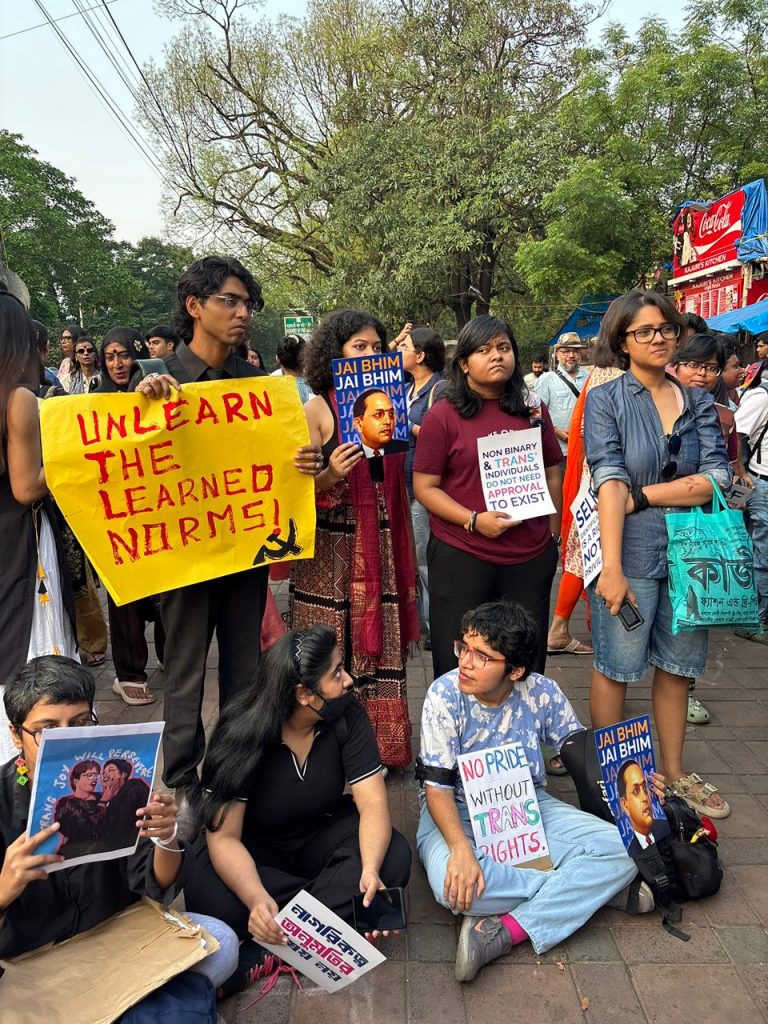
Rony, Transman, Hair Stylist
Rony, who identifies as a transman and has recently begun his transition journey, is fearful of what the future holds as the new law erases his identity. At the same time, he also expresses concern for transmen who still haven’t begun their transition process but want to.
Rony told Alt News, “Those among us who haven’t begun their transition, or have just started, or are hoping to, are the very people we should be able to support. They come to us asking how to begin hormone therapy or how to obtain a Gender Dysphoria (GD) certificate. But under this law, even offering such guidance could put us at risk. We could face legal action — fines or even imprisonment.
It’s also important to understand the medical consequences. Those already undergoing transition and receiving care cannot simply stop without harm. Abruptly discontinuing treatment can lead to serious side effects and health complications. This law has put all of us in an impossible position. Those who haven’t started are afraid, and those of us already in the process are left stranded and uncertain.”
Speaking about his own journey, he added, “I am currently on hormone therapy. It has deepened my voice and initiated facial and body hair growth. If I’m forced to stop suddenly, those changes won’t simply reverse in a stable or predictable way. I won’t get back what I had before, and I may also lose what has begun.”
He further said, “The doctor’s certification we previously relied on to update our documents is now effectively restricted. So, in appearance, you may see me with a beard and moustache, but my official documents will still reflect the gender I was assigned at birth. Who I am internally — that I am a man born in a female body — will no longer be recognised on paper.
This mismatch will affect everyday life: accessing banking services, travelling, and basic verification processes. My identity won’t align with my documents. And that takes a serious mental toll. This law has impacted all of us deeply,” Rony said.
Sabrina, Transwoman, Makeup Artist
Sabrina, a makeup artist who has lived as a transgender person for over 15 years, said in a measured tone, “If the government were genuinely concerned about our well-being, it would have consulted us. It should have reached out to bodies like the West Bengal Transgender Persons Development Board, the Delhi board, and similar institutions across states; senior members of the community, many of whom are highly educated. They could have discussed what issues they had with the existing Act, or how they wanted to improve it. But when decisions are made in the dark, without involving us, it suggests a hidden agenda; an attempt to impose beliefs rather than address realities.”
She added, “In 2019, we were told that we have the right to self-identify our gender. Now, that right is being diluted with conditions — that only those who undergo medical procedures or surgeries will be recognised as transgender. That is simply wrong.”
“When I began my transition, I had to go through a long medical process. Visiting government doctors, consulting multiple psychiatrists. I still have all those certificates. Even then, it wasn’t easy. The surgeries involved in transitioning are extremely expensive, and not everyone can afford them. Some may not want to undergo them at all — out of fear, or for personal reasons. But that doesn’t make them any less who they are. Transition is not a single procedure; it involves multiple stages and can take years.”
“My truth is that I am a woman born in a male body, and I am far from alone. There are countless transgender people across the world who feel the same way. You can see how I present myself — long hair, feminine clothing. If you asked a cisgender man to wear a saree and step out into the world, he would not be able to do that”, Sabrina added.
Glossary of Terms
Transgender – Individuals whose gender identity differs from the gender assigned at birth. This includes people identifying as men, women and non-binary/gender queer. In the Indian context, intersex individuals, as well as those identified as hijra, kinnar, aravani and jogta, are also recognized under this category.
Cisgender – Individuals who identify with the gender they were assigned at birth.
Transman (FTM) – An individual who identifies with the male gender and were assigned female at birth. They might have socially or medically transitioned to outwardly present their perceived gender identity.
Transwoman (MTF) – An individual who identifies with the female gender and were assigned male at birth. They might have socially or medically transitioned to outwardly present their perceived gender identity.
Intersex – Intersex – Individuals born with sex characteristics (such as chromosomes, hormones, or anatomy) that do not fit typical binary definitions of male or female bodies. Intersex refers to biological variations and is distinct from gender identity.”
Hijra, Kinnar, Aravani, Jogta – Hijra, Kinnar, Aravani, Jogta – Socio-cultural identities in South Asia associated with gender diversity. These communities may include transgender women, intersex individuals, and others who do not conform to the gender binary. They have distinct cultural histories and social structures, and are legally recognized as a third gender in India.
Genderqueer – It is an umbrella term for people whose gender identity falls outside traditional male-female categories, often embracing non-binary or fluid identities.
Non-binary – Someone whose gender identity does not fit strictly within the binary categories of man or woman.
Agender – It is a term used by individuals who do not identify with any specific gender or who experience a lack of gender altogether.
Gender-noncomforming – A person whose behaviour or appearance does not conform to prevailing cultural and social expectations about what is appropriate to their gender.
Transfeminine – It is an umbrella term for individuals assigned male at birth who identify with a feminine identity or expression, including trans women, non-binary, and gender-nonconforming people.
Transmasculine – It is an umbrella term for people assigned female at birth who identify with masculinity, encompassing trans men, nonbinary, and gender-fluid individuals.
Perisex – Perisex describes people who are not intersex, meaning their innate sex characteristics fit typical, binary, medical notions of male or female bodies. It refers to individuals whose physical development aligns with standard male or female classifications at birth.
Gender Dysphoria – It is a psychiatric diagnosis that refers to the psychological distress that results from an incongruence between one’s sex assigned at birth and one’s gender identity. Though gender dysphoria can sometimes begin in childhood, some people may not experience it until after puberty or much later. Not all transgender people experience gender dysphoria.
Independent journalism that speaks truth to power and is free of corporate and political control is possible only when people start contributing towards the same. Please consider donating towards this endeavour to fight fake news and misinformation.