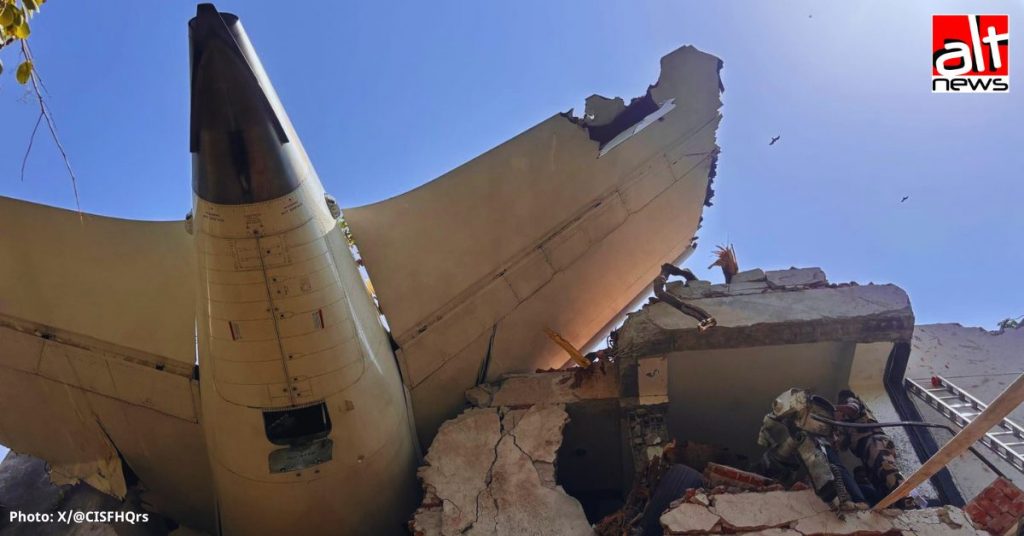
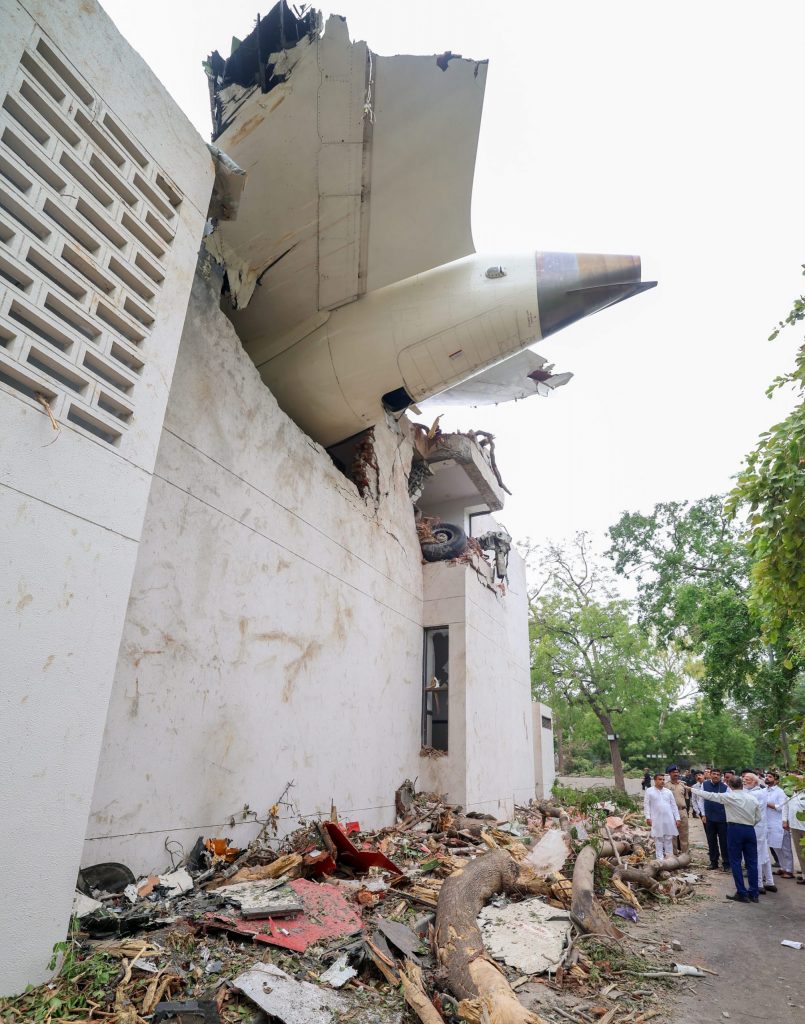
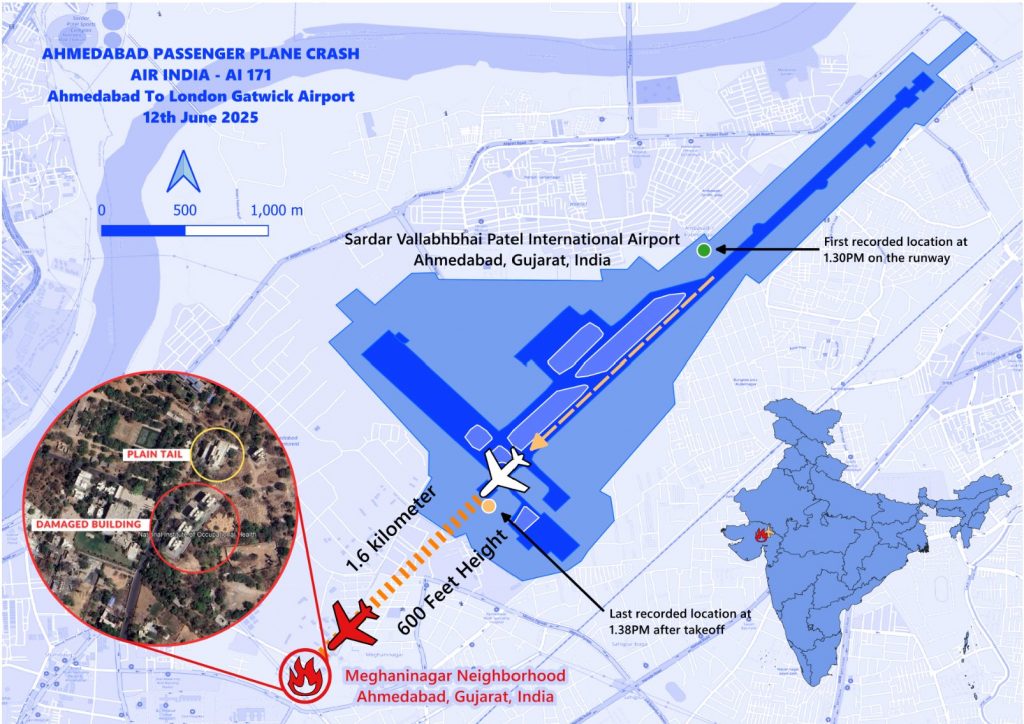
The Air India AI171 crash in Ahmedabad on June 12, 2025, killed 260 people, making it one of the deadliest aviation disasters in Indian history. Within weeks of the tragedy, the focus of the investigation and much of the ensuing public discourse came to centre onto one of the dead: Captain Sumeet Sabharwal, the Air India pilot who was flying the Boeing 787 on what proved to be its final journey from Ahmedabad to London.
At the heart of that discourse was a single cockpit exchange contained in the Aircraft Accident Investigation Bureau’s (AAIB) preliminary report, released a month after the crash. It said, “In the cockpit voice recording, one of the pilots is heard asking the other why did he cutoff. The other pilot responded that he did not do so.”
That single sentence would be repeated by television anchors, newspaper columnists and aviation commentators around the world. It would eventually become the foundation for the narrative that one of the pilots had caused the crash by moving the aircraft’s fuel-control switches.
There was only one problem.
The cockpit conversation that triggered this global speculation never mentioned fuel. It did not mention switches. It did not identify which pilot was speaking or which pilot was being questioned. The report did not provide a timestamp of the conversation indicating when the exchange took place.
How the Fuel-switch Narrative Took Hold
In fact, by the time readers encountered the cockpit conversation in the AAIB report, much of the groundwork for that interpretation had already been laid. On July 10, 2025, two days before the preliminary report into the crash was released, The Wall Street Journal (WSJ) published an Exclusive that appeared to reveal the investigation’s central narrative before the public had seen the report.
The headline read: “Air India Probe Puts Early Focus on Pilots’ Actions and Plane’s Fuel Switches.”
Citing “people familiar with U.S. officials’ early assessments”, the newspaper reported that investigators were focusing on pilot actions and that preliminary findings indicated the switches controlling fuel flow to the aircraft’s engines had been turned off.
“The investigation into last month’s Air India crash is focusing on the actions of the jet’s pilots and doesn’t so far point to a problem with the Boeing 787 Dreamliner,” the report said, adding, “Preliminary findings indicate that switches controlling fuel flow to the jet’s two engines were turned off, leading to an apparent loss of thrust shortly after takeoff.”
At that point, the AAIB report remained confidential. Families had not seen it. Most journalists had not seen it. The public had not seen it. Yet anonymous sources already appeared to know how a cockpit conversation would be interpreted by the investigators in their preliminary report and be made the dominant focus of the probe.
What the AAIB Report Actually Said
When the AAIB released its preliminary report on July 12, it appeared, at first glance, to validate much of WSJ’s reporting. The report described the aircraft’s fuel-control switches transitioning from RUN to CUTOFF shortly after take-off and then returning to RUN.
It also contained what would become the most discussed sentence in the entire investigation: The now infamous cockpit conversation. Within hours of the report’s publication, the exchange was being cited across the world as evidence that one of the pilots had moved the aircraft’s fuel-control switches.
Reuters reported that the preliminary report showed “pilot confusion over engine switch movement”. The BBC’s coverage framed the discussion around pilot error. Television commentators debated whether the switches had been moved accidentally or deliberately. Across social media, the conversation was repeatedly cited as proof that the mystery of AI171 had largely been solved.
The interpretation quickly hardened into accepted fact.
Yet a closer reading of the report raises an obvious question: Where exactly does the cockpit conversation mention fuel? The answer is nowhere.
The concerned sentence in the report itself never refers to “fuel” or “switches”. It merely says that one pilot asked the other why he had “cutoff”, and that the other pilot denied doing so.
Why, then, did readers across the world, including in India, immediately conclude that the conversation referred to the fuel-control switches? One reason lies in the way the report was structured. Across its 15 pages, the report mentioned “fuel” and “switches” 19 times. The cockpit exchange appeared immediately after the discussion of the fuel-control switches. Without ever stating what had supposedly been “cut off”, the report places the conversation in a context that naturally led readers to infer the missing subject.
Captain C S Randhawa, president of the Federation of Indian Pilots (FIP), says the cockpit conversation was presented in a manner that went far beyond what the report itself established.
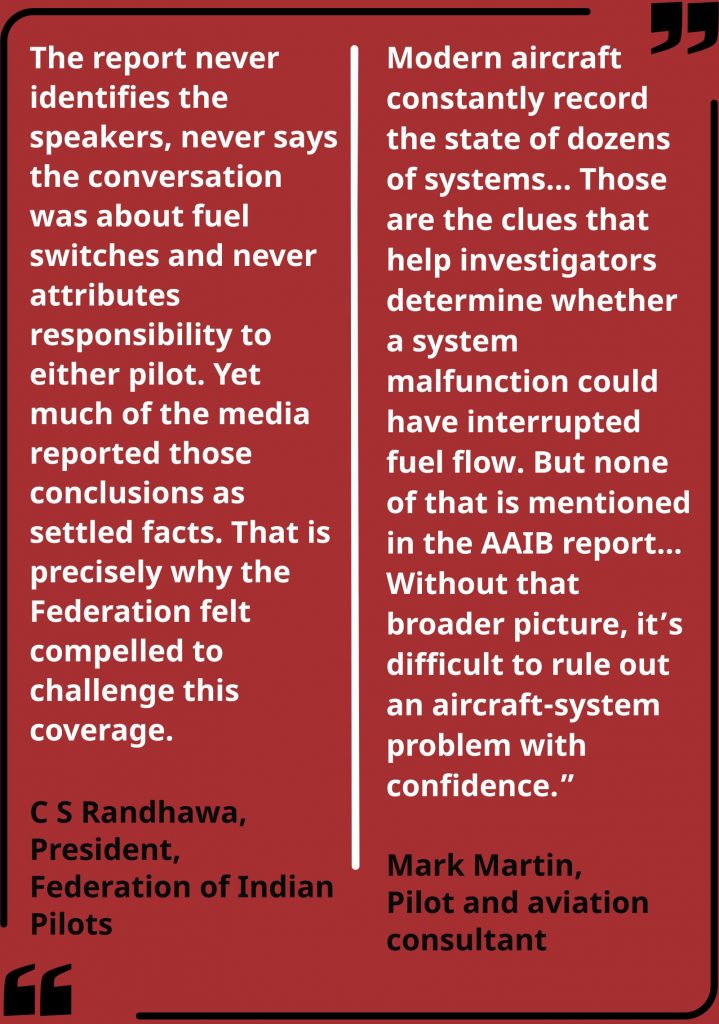
“The report never identifies the speakers, never says the conversation was about fuel switches and never attributes responsibility to either pilot,” Randhawa said. “Yet much of the media reported those conclusions as settled facts. That is precisely why the Federation felt compelled to challenge this coverage.”
The Federation has since issued legal notices to The Wall Street Journal, Reuters and others over their reporting of the crash.
From Selective Disclosure to a Settled Narrative
The same concerns have also been raised by Pushkaraj Sabharwal, the 92-year-old father of Capt. Sumeet Sabharwal, in a petition before the Supreme Court.
A former deputy director of training and licensing at the Directorate General of Civil Aviation (DGCA), Pushkaraj Sabharwal argues that the AAIB’s handling of the cockpit voice recorder amounted to selective disclosure that created a particular impression of the crew’s actions.
“The AAIB which admits to have the entire last two hours of recorded cockpit Pilot conversation, ought to have released the entire transcript of the recordings or alternatively released none at all,” the petition states.
It further argues that the report “hides more than it actually reveals” and accuses investigators of engaging in “a shocking tale of narrative framing” by selectively paraphrasing a cockpit exchange.
The petition underlines the fact that the report does not reveal which pilot asked the question, which pilot responded or even the precise timestamp at which the conversation took place.
“The above insinuation by the AAIB is nothing but narrative framing to blame the dead pilots for the accident in its final report,” it says, arguing that investigators released an interpretation of the exchange without providing the wider transcript that would allow the public to independently assess its meaning.
During the proceedings, a two-judge Bench comprising Justice Surya Kant and Justice Joymalya Bagchi reassured Sabharwal’s father that the Court would rely on evidence rather than media accounts. “No one in India believes it was the pilot’s fault,” the Bench observed.
On November 13, 2025, solicitor general Tushar Mehta, appearing on behalf of the Union government, also told the Court, “The Ministry of Civil Aviation has issued a press note saying that blame was not attributable to anyone. There is no question of blaming anyone in the report.”
However, by the time the matter reached the Supreme Court, the global narrative had largely been set. People had been told that investigators were focusing on pilots and fuel switches.
Reporting on the cockpit conversation was not based on any publicly available evidence beyond the AAIB’s single sentence. Nor was it supported by cockpit transcripts or technical analysis released by investigators. Much of the early reporting relied on anonymous sources cited by WSJ in reports published on July 10, July 11, July 17 and August 26.
For example, quoting “people familiar with U.S. officials’ early assessment of evidence”, WSJ wrote on July 17, “…The first officer expressed surprise and then panicked, these people said, while the captain (Sabharwal) seemed to
remain calm.” This was later picked up by other outlets like Bloomberg.
The Technical Questions that Received Less Attention
Soon after the report was released, the Federation of Indian Pilots highlighted what it believed were indications of possible electrical anomalies on the aircraft.
Among the issues it flagged was the non-activation of the Emergency Locator Transmitter (ELT), which is designed to automatically transmit a distress signal after a crash. The Federation also questioned the extensively damaged condition of the aircraft’s Enhanced Airborne Flight Recorder (EAFR), or tail black box, despite the surrounding tail section appearing largely intact and showing no visible signs of smoke or fire.
It contrasted this with the forward EAFR, which, despite bearing the full brunt of the impact and the subsequent fuel fire caused by more than 54,000 kilograms of burning fuel, yielded 49 hours of data covering six flights.
The Federation also questioned the sequence involving the deployment of the Ram Air Turbine (RAT), the aircraft’s emergency power source.
Under normal circumstances, the RAT deploys after the aircraft loses its primary sources of electrical or hydraulic power, including following engine failure. The AAIB report suggests that the fuel cutoff caused the engines to lose thrust, which in turn triggered RAT deployment.
Several aviation experts, however, argue that the sequence on AI171 appears to have unfolded in the opposite order.
According to them, available evidence suggests that the RAT may have deployed before the engines lost power, potentially indicating an earlier electrical disturbance. In simulator tests conducted by the Federation, pilots demonstrated that the RAT requires approximately 10 to 14 seconds to deploy following an engine failure.
The Federation has also released photographs that it says show the RAT already deployed while the aircraft was still on the runway. This, it argues, contrasts with the AAIB report, which published a photograph of the RAT deploying after lift-off and described it as “getting deployed during the initial climb immediately after lift-off.”
Whether those conclusions ultimately withstand scrutiny will be determined by the final investigation. But these questions attracted only a fraction of the attention devoted to speculation about the cockpit conversation.
What was Actually being Discussed?
The significance of the ambiguity surrounding the cockpit conversation has only grown over time.
Over the past year, technical submissions before the Supreme Court, along with analyses by pilots, engineers and aviation experts, have increasingly focused on electrical failures, flight-control computers, automation logic and satellite-transmitted fault messages that reportedly occurred before take-off.
Within those discussions, some engineers have argued that the cockpit exchange may not have referred to the fuel-control switches, but to the autothrottle or the TO/GA system.
As automation scales back when it can no longer trust inputs from the aircraft’s flight computers, these systems can disconnect or disengage. Engineers argue that the question recorded in the cockpit may therefore have referred to one of those systems rather than the fuel supply.
Evidence submitted before the Supreme Court also points to satellite-transmitted fault messages indicating warnings involving all three of the aircraft’s flight-control computers before the crash.
Viewed in that context, some engineers believe the conversation may have been along the lines of: “Did you cut off TO/GA?” or “Disconnect A/T?”
Simon Hradecky, editor of The Aviation Herald, has repeatedly argued in his editorials that if any fuel switches were moved, it was likely as part of an attempted engine relight procedure.
Captain Sam Thomas, president of the Indian chapter of the Air Line Pilots Association (ALPA), says that when faced with a dual-engine flameout, the first action for the pilot monitoring would be to work through the memory checklist.
According to Captain Sunny Kapur, who flies the Boeing 787, those memory items are limited. “The memory items are just two things,” he says. “Recycle fuel switches. Turn on RAT.”
“If fuel switches were involved at all,” Kapur argues, “it is likely the pilots were attempting an engine relight after the flameout rather than causing it.”
These interpretations remain contested and are not reflected in the AAIB’s preliminary report. They nevertheless illustrate that the cockpit conversation is capable of multiple technical interpretations — something largely absent from much of the early media coverage.
The Portrait of Suspicion
One of Capt. Sumeet Sabharwal’s batchmates says he regrets answering a Wall Street Journal reporter’s call in the weeks following the crash.
Later, his comments appeared in a personality profile of the captain that accompanied an anonymously sourced report of WSJ which claimed that investigators believed the captain had moved the fuel-control switches.
The article described Sabharwal as “very reserved”, referred to his old nickname “Sad Sack”, and dwelt on the sparse contents of his cupboard.
“What appeared in print wasn’t the Sumeet we knew,” the batchmate says. “He had an extraordinary memory for dates, technical details and people. He remembered birthdays, anniversaries, promotions and new jobs. Years could pass and he’d still call or message to congratulate someone. He topped courses, mentored juniors and was the person people turned to when they needed help.”
By the time those personal details appeared in print, the broader narrative had already begun to shift from examining an aircraft accident to scrutinising the personality of a pilot who was no longer alive to respond.
We emailed detailed requests for comment to The Wall Street Journal and Reuters, copying the AAIB, aviation regulators, aircraft manufacturers, airlines, insurers, investigators and other parties connected with the AI171 investigation. None had responded by the time of publication.
Jeju Air Preliminary Report vs AI171’s Preliminary Report
On December 29, 2024, Jeju Air Flight 7C2216, a Boeing 737-800 (HL8088), belly-landed at Muan International Airport following a reported bird strike during a go-around. The aircraft overran Runway 19 and crashed into an embankment, killing 179 of the 181 people on board and injuring two.
Its preliminary report is striking for how restrained and factual it remains despite the scale of the tragedy.
The document confines itself to the essentials: The flight history, air traffic control clearances, the Mayday call reporting a bird strike, a description of the wreckage, the aircraft’s last recorded speed and altitude, crew experience, weather conditions, DNA confirmation that Baikal teals struck both engines, and a broad outline of the continuing investigation.
Crucially, even where the report acknowledges significant gaps — for example, the missing final four minutes and seven seconds of cockpit voice recorder and flight data recorder data — it does not attempt to fill those gaps through inference or speculation.
It refrains from selectively quoting digital parameters in a manner that implies pilot error. The crew appear in the report largely as experience figures and casualty counts. In an accident involving bird strike, go-around dynamics and complex aircraft systems, the tone remains descriptive and neutral, explicitly leaving questions of causation to the ongoing investigation.
That approach stands in contrast to the AI171 preliminary report, released six months later.
The AI171 report presents a far more detailed recorder-based timeline, yet uses that material in a manner that, according to several aviation experts, narrows attention to one issue: The movement of the aircraft’s fuel-control switches to CUTOFF shortly after take-off.
“The report spends a lot of time explaining the movement of the fuel-control switches, but it says much less about what the aircraft itself was doing at the time,” says Mark Martin, pilot and aviation consultant.
He adds: “Modern aircraft constantly record the state of dozens of systems—whether the aircraft thinks it’s on the ground or in the air, how its electrical systems are behaving, what the automation is doing, and whether other systems were sending unusual commands. Those are the clues that help investigators determine whether a system malfunction could have interrupted fuel flow.
“But none of that is mentioned in the AAIB report. Instead, the report provides detailed recorder data for the fuel switches, but far less information about these other systems. Without that broader picture, it’s difficult to rule out an aircraft-system problem with confidence.”
Joe Jacobsen, deputy director of the Foundation for Aviation Safety, which has provided technical evidence to the US Senate on both the Boeing 737 MAX crashes and the Air India AI171 crash, says the preliminary report omits key technical evidence.
“It doesn’t even cover the basics,” he says. “There’s no engine spool-down sequence, no progression of engine core speeds (N1 and N2), no reconstruction of the electrical system, and no explanation of what triggered the deployment of the Ram Air Turbine (RAT).”
The Jeju Air report leaves its evidentiary gaps unfilled. The AI171 report presents selected data in a manner that encourages readers to draw conclusions before the investigation is complete.
A Conversation that Became Evidence
To sum up, the cockpit conversation at the centre of the AI171 investigation did not mention fuel. It did not mention switches. It never identified the speakers. Yet within days of its release, that one exchange had become the basis for a worldwide narrative that one of the pilots had caused the crash. Whether that narrative ultimately proves correct or incorrect is a question only the final investigation can answer.
But even as the AI171 investigation remains ongoing, a single ambiguous sentence, stripped of context and unsupported by a full transcript, continues to be treated across much of the world as evidence of pilot responsibility.
______________________________
A glossary of all the technical terms used in the story can be accessed here.