Barely 200 kilometres from Delhi’s Jantar Mantar, where students and youth of the country came together in thousands to demand educational reform in India, a notice was served on a university, declaring that most of its built structures were illegal and would soon be demolished.
The institute, Mohammad Ali Jauhar University (MAJU), located in Rampur, Uttar Pradesh, was established in 2006 by the Mohammad Ali Jauhar Trust, founded by Azam Khan, one of the founding members of the Samajwadi Party. Khan, a former MP and 10-time MLA from Rampur, was one of the most powerful politicians in the region until the Bharatiya Janata Party (BJP) came to power in 2017.
MAJU is recognised by the University Grants Commission (UGC) and holds minority institution status. However, its staff and student body comprise people from varied backgrounds and religious communities, vice-chancellor (VC) Prof Zaheeruddin and students themselves told Alt News.
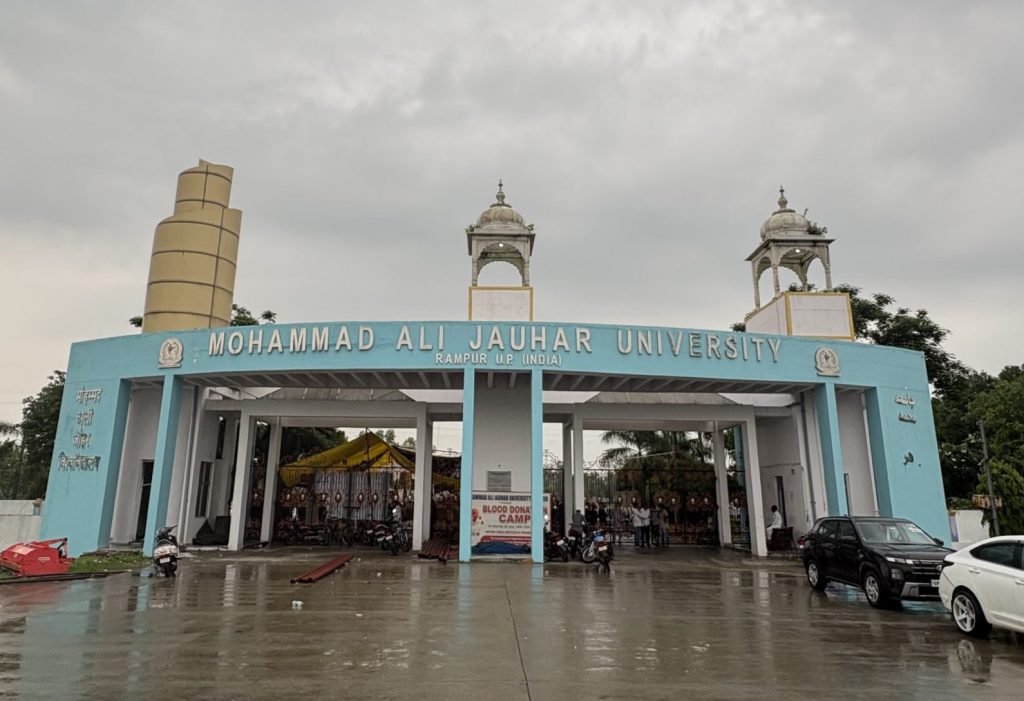
On July 15, the Rampur Development Authority (RDA) issued a notice to the university declaring that 38 of its 40 buildings were illegal and would be demolished within 20 days. The university was told to carry out the demolition itself, failing which, the RDA would carry out the demolition while charging the university expenses. However, the demolition order was stayed on July 28 by the chairman of RDA and the Moradabad divisional commissioner, Aunjaney Kumar Singh, till August 10.
Only a day after the notice, on July 16, a ‘counselling camp’ was set up outside the university’s main gate, the VC said. On the same day, the UP Public Works Department (PWD) declared an internal road belonging to the campus as a public road while installing signage, he alleged.
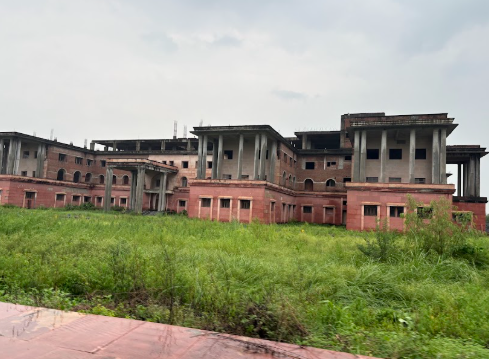
On July 27, Alt News visited the 475-acre campus on the first day of the semester. The buildings — designed, according to the VC, in the image of the White House and Turkish mosques — looked grand but lifeless as several structures stood half-built with construction abandoned mid-way. An air of uncertainty loomed over the campus and on the faces of the very few students who were present.
Some students, who were protesting the demolition, told Alt News that a student delegation had met the DM and sought written assurance that the buildings would not be demolished until the matter was decided by the Supreme Court. The DM gave only a verbal assurance and declined to put it in writing, they said.
‘All Buildings Constructed Before RDA’s Jurisdiction’
Zaheeruddin, who served as pro-VC and chairman of the department of law at Aligarh Muslim University (AMU) before joining MAJU in April 2025, said that a prior show-cause notice had been issued on June 28 seeking a response from the university on the demolitions.
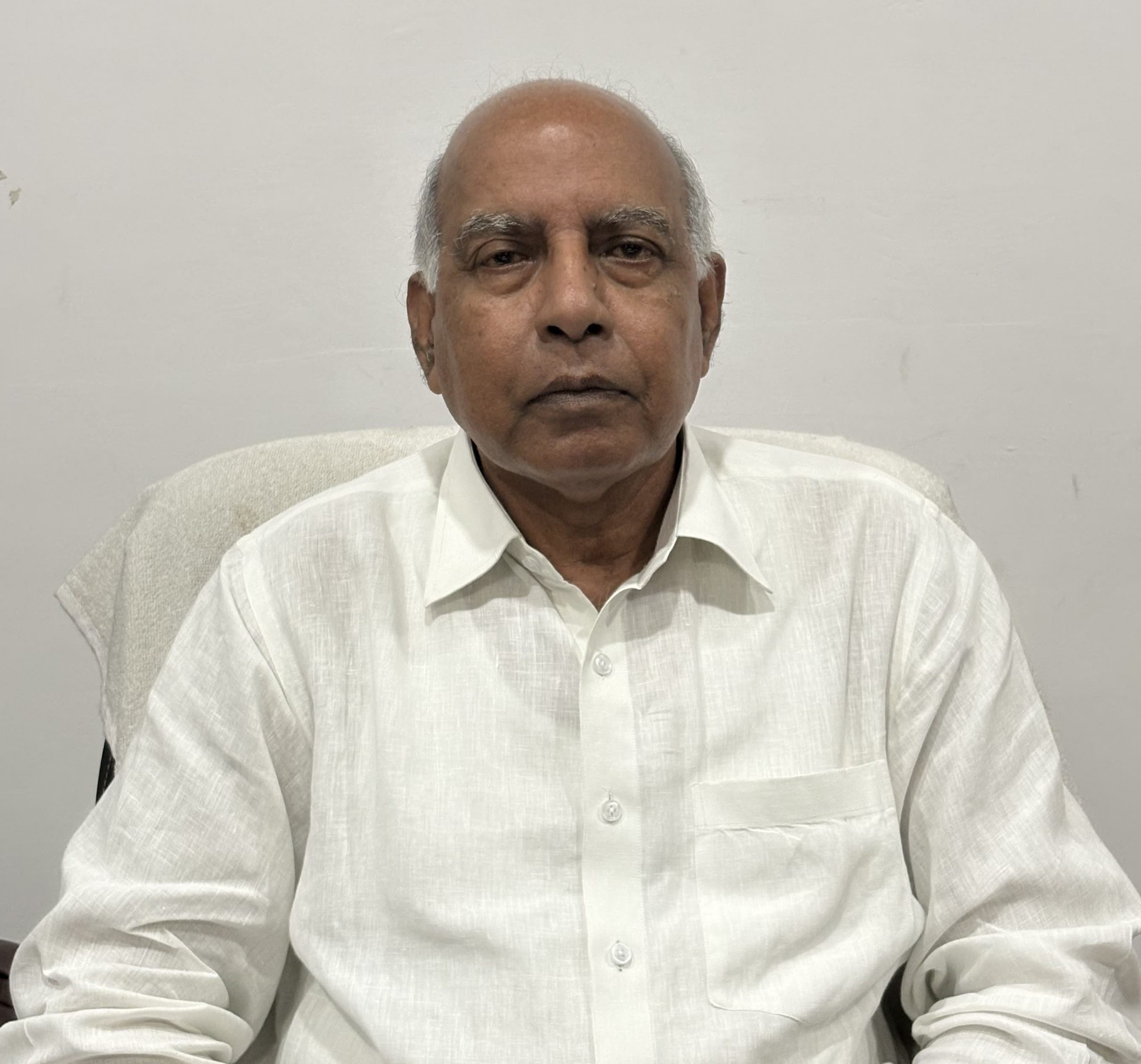
The university’s response was deemed unsatisfactory by the RDA, which called for a physical meeting on July 14, attended by registrar SN Salam and the institute’s legal counsel. The authority only heard their arguments for five minutes, and the next day, the demolition order arrived, said Zaheeruddin, adding: “This was completely unexpected for us. Our classes were running, admissions were fully underway. Compared to the past two years, more admissions were happening this year.”
The VC told Alt News the 38 buildings were constructed before 2016, when the university grounds fell under the gram panchayat, not the RDA. The RDA’s jurisdiction was extended to cover the land only through a notification in September 2024, he said, asserting that the authority is retrospectively taking action against buildings. “All buildings they have mentioned were constructed by 2016, when RDA had no presence in this area at all,” he said.
He further highlighted that multiple regulatory bodies — UGC, Bar Council of India, paramedical and nursing councils — have inspected and approved the university’s infrastructure over the years as part of their accreditation process.
Missing Paperwork & The 2019 Raid
The VC, however, did not want to show the approved maps to prove the buildings’ legality citing legal proceedings. “The matter is before both the divisional commissioner and the Allahabad high court. The university’s lawyers have advised against discussing legal specifics,” he said.
On the other hand, Salam, the registrar, offered a different explanation for the missing paperwork. He claimed that during a state-ordered raid in 2019, when police forces were deployed on campus, large quantities
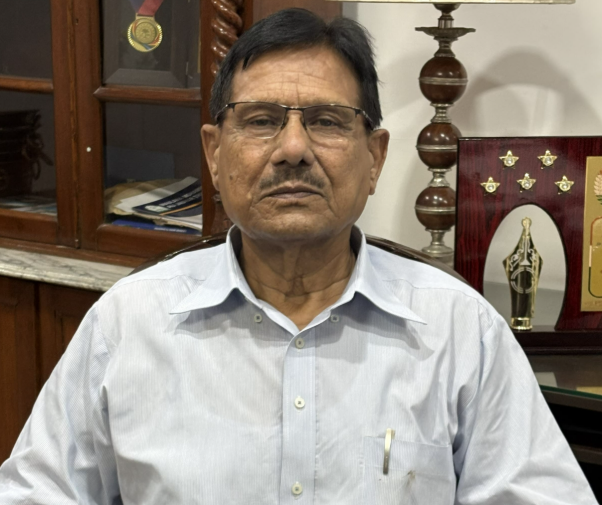
of documents were seized. “They took so many documents, and we don’t know where they took them or find out which documents they took,” he said.
Salam recounted the 2019 raid, “As police and district officials raided the campus, the VC was confined to one floor, the registrar to another, the accounts staff locked elsewhere. There were media reports that around 8,000 books stolen from a 200-year-old madrassa had been recovered from the university. But when the matter reached court, only 26 books were produced.”
Both the VC and registrar claimed that during the raid, several books were destroyed, many of which were hand-written manuscripts. They also claimed that 42 large cupboards, purchased from Kolkata, with receipts and transport documents, were shown as stolen property. Alt News could not independently verify the claims made by the VC and the registrar on the 2019 raid.
The Sudden ‘Counselling Camp’
Exacerbating the adminstration’s and students’ worries after the notice was served, was the sudden counselling camp, allegedly set up the very next day to encourage students to enroll in other universities.
Among those at the camp were officials from Guru Jambheshwar University, Moradabad — a state university whose campus construction began in March 2024, currently operating from a temporary campus with just two rooms built, and teachers from Raza Degree College, Rampur. Their task, the VC said, was to inform prospective students that MAJU would soon be demolished and that they should apply for admission at Guru Jambheshwar University.
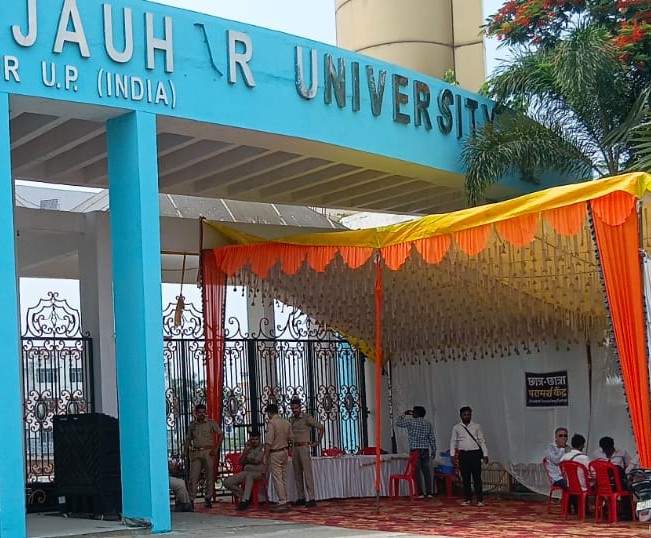
“I felt terrible, they were maligning us right in front of us, sitting outside our campus. I was shocked that government teachers were doing this and the district magistrate had set up the camp while we are still a functioning university,” Zaheeruddin lamented.
Arguing that the counselling camp amounted to contempt of court, he mentioned that the administration wrote to the Rampur DM citing a 2019 high court stay order that specifically ordered that students and staff of the university must not be harassed. The camp was removed after two days, on July 18 evening.
The Students’ Plight
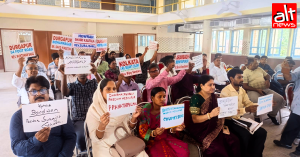
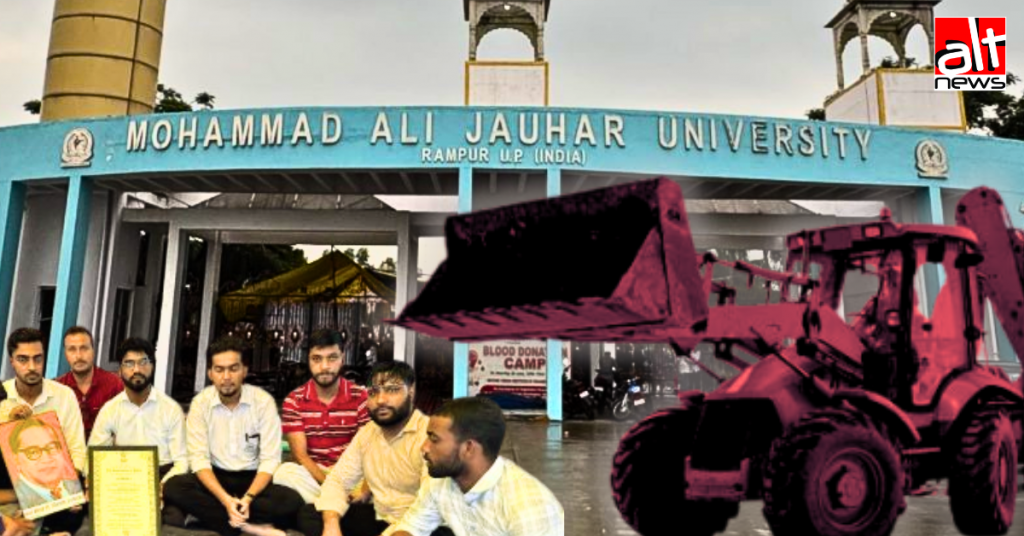
When Alt News visited the campus, the students, now thrust into indefinite anxiety over their futures, were sitting in protest in front of the main gate, demanding that the RDA withdraws the demolition. “We are protesting since July 18 because RDA should withdraw this order. There are 3,000-4,000 students studying here, don’t snatch the pen from their hands,” said a 5th-year student from Panipat, Haryana.
Students echoed the administration’s account on the ‘pattern’ of state action which haunted their campus. Every year during admissions, they said, new action or rumours would surface, discouraging parents and prospective students. “Every year, fear is planted in children’s hearts that the university will be shut down,” said another student.
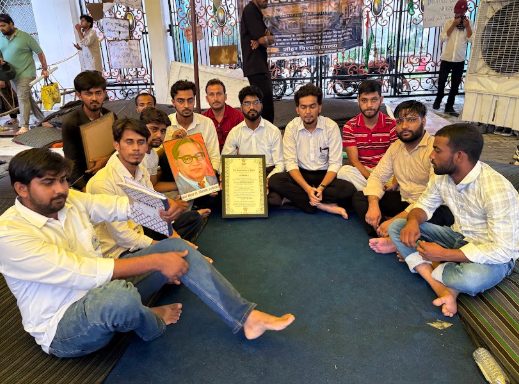
A student from Bareilly said his brother studied at MAJU between 2014 and 2017. After that, the perception in his area was that the university had already shut down. When he arrived for admission in 2015, he was urged not to enrol by several people in and around the area, with claims that the fees were too high and the university could collapse at any time.
The students further claimed that district officials attempted to curb their protest as the SDM arrived at the protest site on July 18 around 10 PM with policemen and asked the students to move their protest inside the campus, away from the main gate. District-level intelligence wing officials also called several parents, urging them to get their children to stop protesting, students alleged.
The students said they raised the issue with the district administration, which assured them that such pressure tactics would not be applied. Another protesting student mentioned that he had written twice to Saurav Das, the chief spokesperson of the Cockroach Janta Party, but had received no response at the time writing this report.
Alt News is withholding the names of the students who spoke to us in order to protect their identity.
RDA Officials Evade Queries
When we reached out to the RDA, we were re-routed through four different officials. We contacted RDA’s vice-chairman Ajay Kumar Dwivedi, also the district magistrate of Rampur, under whose name the July 15 notice was issued. His personal assistant, Ankush, directed us to the RDA secretary, Nitin Madan. The secretary, after answering some of our questions, directed us to the tehsildar, Ranveer Singh, who spoke briefly and redirected us to RDA assistant engineer Manoj Sisodia.
According to every official, only two of the 40 buildings had approved maps, obtained from the panchayat before RDA’s jurisdiction was extended to the area. The remaining 38, they said, had no approval from any authority — the Zila Panchayat, gram panchayat, or RDA. This formed the basis of the demolition notice, they said.
Upon being asked whether the matter could be resolved through compounding, a process where illegal construction is regularised by paying a fine and obtaining retrospective approval, Singh said it had been considered but rejected because the land use at the university site is not permissible under RDA’s current master plan. Sisodia, on the other hand, said that the university had never submitted a compounding proposal to RDA. However, the VC told Alt News that the institute believed that compounding was something RDA would initiate.
Further, we asked whether RDA had issued demolition notices to any other structures in the 62 villages that came under its jurisdiction since September 2024. Madan said “many have happened” without naming a single case. Ranveer Singh added “it keeps happening from time to time”, also offering no specifics. Sisodia eventually admitted that notices issued to other parties are “confidential and that the university’s case attracted attention only because it is a larger structure”.
“The university is in the wrong, but considering everything, the government, higher authorities, the courts, have taken their decision,” Sisodia said while acknowledging the dire condition of the students if the demolition is carried out.
The Azam Khan-Aunjaney Singh Connection
Parellel to all this runs another storied controversy between Azam Khan and Aunjaney Kumar Singh. During the 2019 Lok Sabha elections, complaints were filed by the then assistant development officer (panchayat), Anil Kumar Chauhan, and local BJP leader Akash Saxena against Khan for alleged hateful and provocative remarks against the then DM of Rampur, Aunjaney Kumar Singh, and other BJP leaders.
This led to Khan’s conviction in October 2022 with three years of imprisonment and his subsequent disqualification from the UP state assembly. His conviction was later overturned and he was acquitted by a higher court in Rampur.
Formerly an IAS officer of Sikkim cadre, Singh, hailing from Mau district in UP, notably has been serving as a government official in the state for 11 consecutive years now, and is presently on his sixth extension, which is set to end on August 14. Interestingly, in April last year, Singh accepted Khan’s plea against the imposition of Rs 20 crore fine in another case related to construction of MAJU.
According to Zaheeruddin, the demolition hearing, which was supposed to take place on August 3 at the court of divisional commissioner, has been postponed to August 10, bringing under scrutiny the apparent pendulum swing in the official relationship between Singh and Khan — from the district administration’s actions during Singh’s tenure as Rampur DM that culminated in Khan’s conviction, to subsequent administrative decisions that provided relief in matters concerning Khan’s university, and now the stay on the demolition proceedings.
The Unanswered Question
Beyond the missing approvals and the land use dispute, there is a deeper contradiction that neither the university nor the RDA addressed. During the April 2025 hearing concerning the Rs 20 crore labour cess fine, Khan had argued before the divisional commissioner that 10 of MAJU’s buildings were constructed by the UP PWD and UP Nirman Nigam using MP/MLA development funds.
Khan had then received relief after the divisional commissioner’s court nullified the cess fine imposed by the assistant labour commissioner (ALC) of Rampur. The same court, under the same authority of Singh, has now served a demolition notice to the institute. A pertinent question emerges: If state agencies built these structures with public funds, how did construction proceed without the approved maps?
Four government offices, multiple courts, contradictory bureaucratic positions and years of litigation have turned MAJU into a case study in administrative uncertainty. Whether the buildings ultimately stand or fall will be decided in court. Until then, it is not politicians or officials who bear the immediate cost of this prolonged impasse, but thousands of students who continue to attend classes while wondering if the campus they study in will still exist by the time they graduate.
All photos by Ankit Jain