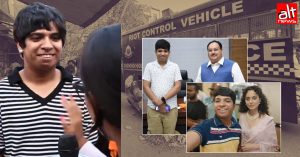
A short Instagram video by a college student from Greater Noida — sardonic, unremarkable in production and filmed in a crowd — was withheld in India on March 30, 2026. The student had not leaked state secrets. She had not incited violence. She had complained about biscuits, traffic, and being made to attend a government event against her will.
The vlog, posted on March 28 by an Instagram named ‘just_happiiee’, documented the inauguration of the Noida International Airport by Prime Minister Narendra Modi. Instagram cited a “legal request based on local laws” as the reason for the restriction, language widely understood to refer to a takedown order issued under Section 69A of the Information Technology Act, 2000, a provision that grants the government broad powers to block online content in the interest of “public order” or “sovereignty”.
PM Modi on March 28 inaugurated the Phase 1 of the airport in Jewar in Uttar Pradesh. He was accompanied by Uttar Pradesh chief minister Yogi Adityanath, governor Anandiben Patel, and Union aviation minister Ram Mohan Naidu.
What the vlog contained was this: A first-person account of a student who says she and her peers were not there by choice.
“Greater Noida ki saare school aur college k saare bacchon ko, in fact mere college walo ne bhi 2 din ki pure attendence free meh milegi” — all students from schools and colleges in Greater Noida, she said, including her own, had been brought to the event with offers of two free days of attendance and other incentives. The crowd, she told her followers, “aai nehi bulai gai hai”, i.e., they had not come, but had been summoned.
She also had notes on the hospitality. In 29-degree heat, stuck in traffic, attendees were handed Parle-G biscuits. “Yaha aane ke baad meh modi ji ko ek hi baat bolna chahungi ‘wah modiji wah. Jo chutiya kata hai na sabka,” she said. (I only want to say wow Modiji, wow! Everyone had been taken for a ride). Her sign-off invited “Modi bhakts” to identify themselves in the comments.
The post was captioned: “Event se zyada struggle yaad reh gaya” (Will remember the struggle more than the event). It was up for two days before it disappeared behind a content restriction wall for anyone accessing Instagram from within India.
The vlog can be viewed here:
Below is a screenshot that shows that the video was withheld in India on March 30, 2026, because of a legal request. This was shared by the student in a subsequent post on instagram.
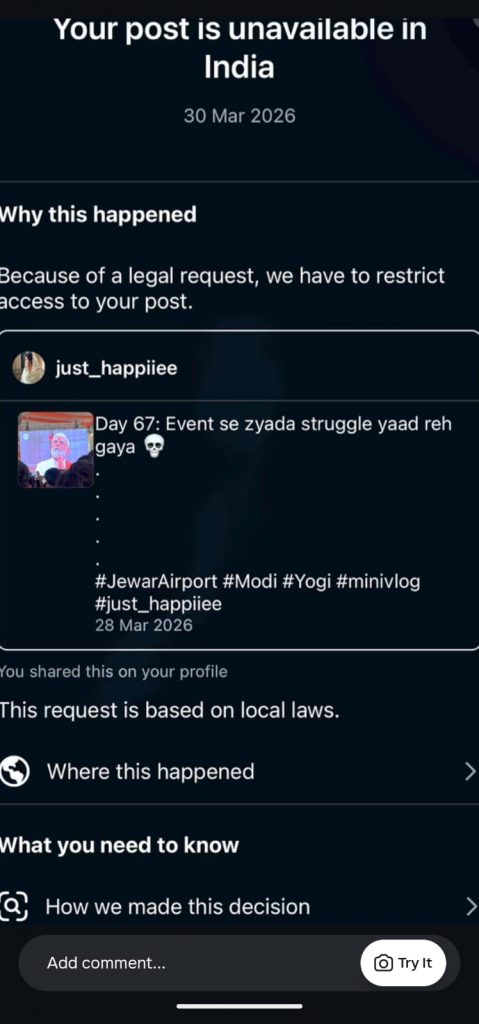
The content creator confirmed in a follow-up video that her earlier vlog had been removed, and stated that the follow-up would likely be her final video addressing the controversy.
“Jaise ki aapko pata hai mera video delete ho chuka hai. Aur iss topic meh yeh mera akhri video hai,” she said, adding that she had been reluctant to make the video given the consistent effort she had been putting into her content. “For the past 60-70 days I have been uploading content consistently and it takes a lot of effort,” she noted, also expressing concern about the safety of her Instagram page.
Clarifying the intent behind the removed video, she maintained that it was a routine vlog documenting her experience at an event, focused on management and on-ground realities, and was not directed against any political party or the government.
The creator also addressed the online backlash she faced, rejecting labels such as “Congressie” and “anti-national.” Asserting a non-partisan stance, she said, “I believe in a nation-first approach,” and added, “My disagreement is not with any political party. But as a citizen, it is my responsibility to ensure that the party I have chosen fulfils its duties. That is why it is important to question the government.”
She also called for broader development, growth, and a better environment as public expectations from those in power.
Concluding the video, she announced she would not make any further videos on the subject and would return to entertainment content going forward.
View this post on Instagram
The blocking is notable not for its legal complexity but for the lack of proportionality. The student made no seditious claims. She documented, with sarcasm and mild profanity, what she said was a stage-managed public event, a practice opposition politicians, journalists, and even some BJP members have previously acknowledged occurs at government programmes. The allegation that students are mobilised to attend political events through institutional pressure is not new, nor is it inherently defamatory.
Yet provisions of Section 69A, which is designed for exigent threats to national security, appear to have been deployed to take down the post.
And this is not an one-off case.
Another vlog by student creator Sohil Khan on the same topic — students being forced to attend the Modi event — which garnered over a million views, mysteriously disappeared from his Instagram feed. Alt News has reached out to Khan for clarification on why the video was removed.
In a follow-up video, Khan claimed he had been receiving threats to take down the original video and asked his followers for advice on what he should do. He stated, “Should I delete the video now, or should I wait for more threats and pressure? I’m quite sure I’ll have to delete it eventually… I want to avoid unnecessary stress, so I won’t create similar content in the future.”
The deleted video is shown below.
Notably, similar videos from the same event have been uploaded by various students and continue to circulate on social media. We also discovered multiple users from Galgotias University who shared their own mini-vlogs of the event, asserting that the university had messaged students early in the morning about attending. One of the videos includes a screenshot of this message.
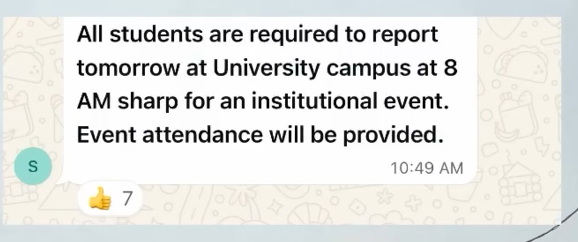
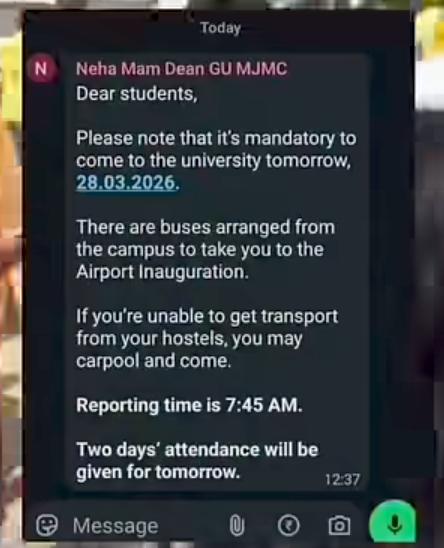
In another video, a student claims that approximately 300 buses transported students from Galgotias University to the event.
ALSO READ: Democracy withheld? Satirical X handles critical of govt blocked in India
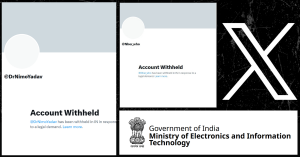
In recent times, the Union government seems to have been on a blocking spree. Section 69A of the IT Act, 2000, has been repeatedly invoke to block or withhold social media posts. Orders shared by affected users suggest a troubling pattern: the law is increasingly being used to curb criticism of the government, stifle dissent, and target political satire, particularly content critical of Prime Minister Narendra Modi and his policies.
On March 10, noted cartoonist Satish Acharya said that two of his cartoons had been withheld in India by the platform X following government directives. The cartoons offered a sharp critique of developments in West Asia and India’s perceived diplomatic silence.
In a recent interview with Alt News, the founder of Internet Freedom Foundation, Apar Gupta, explained that for cartoons, satire, and criticism, the only Section 69A hooks the state usually tries to use are “public order” or “preventing incitement” linked to public order or security. Legally, that requires a clear, proximate connection to violence or disorder, not just that the content is mocking or uncomfortable for the government. A valid 69A direction should also be narrow and content specific, identify the exact post or URL, and record reasons in writing. Recent user reports on X show a recurring due process gap: posts are “withheld in India under Section 69A,” but users receive no reasons and no copy of the order, making legal challenge difficult.
The full interview can be read here.
Independent journalism that speaks truth to power and is free of corporate and political control is possible only when people start contributing towards the same. Please consider donating towards this endeavour to fight fake news and misinformation.