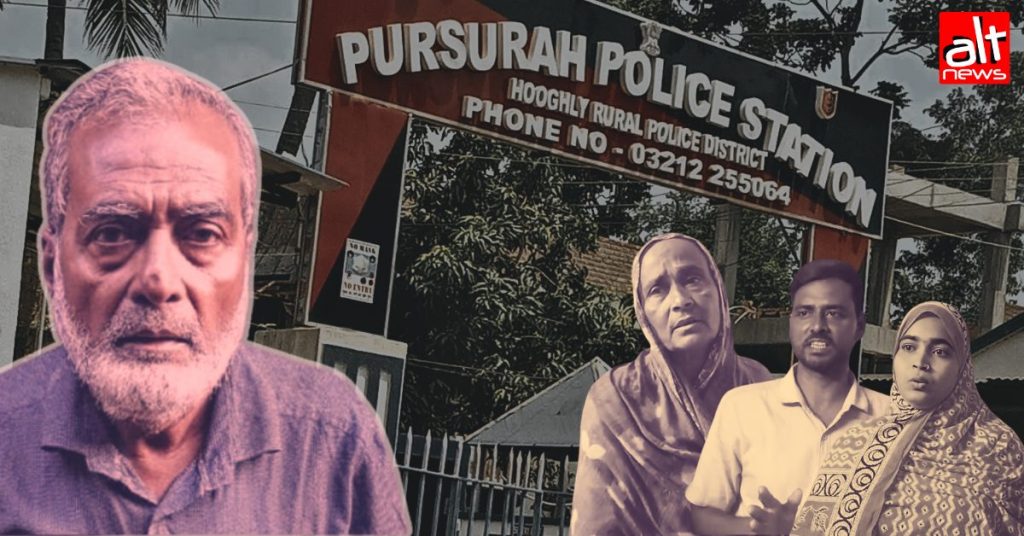
On June 15, 71-year-old Sheikh Shah Alam was allegedly lynched outside his home in Kelepara village in West Bengal’s Hooghly district. But according to his family and local villagers, the atrocities did not begin that afternoon.
They say it was the culmination of weeks of intimidation, extortion and violence allegedly carried out by local BJP supporters since the election results on May 4. Muslims perceived to be supporters of the Trinamool Congress, residents alleged, were threatened, assaulted and forced to pay money.
Four days after the killing, Alt News visited Pirtala, the neighbourhood where Shah Alam lived, to reconstruct the events that led to his death. What emerged was not just the story of an alleged lynching, but of villagers who said they had been living under siege for more than a month.
‘Dragged out, Killed in front of Family’
On the afternoon of June 15, a group of BJP supporters allegedly arrived at the house of Trinamool Congress leader Firoz at Kelepara in Pursurah. Firoz was not there. He had suffered a heart attack a week earlier and was admitted to a hospital. The group then forced neighbours to hand over the keys to his house, searched it for bombs, swords and other weapons they claimed were hidden inside, found nothing, and then turned on Sheikh Shah Alam, witnesses told Alt News.
Alam was beaten to death in front of his family members a few meters from his house.
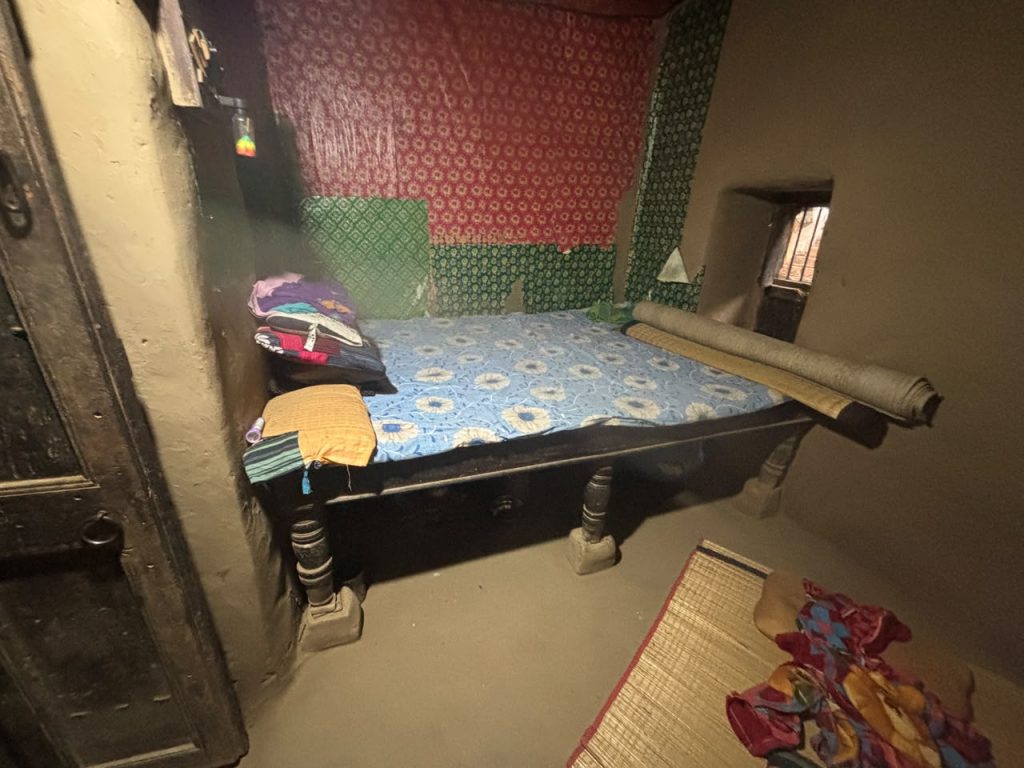
In Kelepara, around 60 km from Kolkata, Alt News spoke to Alam’s family — his wife Marjina Begum, sons Sheikh Rafikul Islam and Sheikh Saiful Islam, daughters-in-law Reshma and Serina. Alam and Marjina lived in a mud house next to their sons’.
“He was dragged out of his home, beaten with bamboo poles, wooden logs, stones and bricks, thrown into a pond, pulled out and assaulted again. Then they left him critically injured. All of this happened in front of my mother. We took him to the Arambagh Medical College and Hospital where he was later declared dead,” said Rafikul.
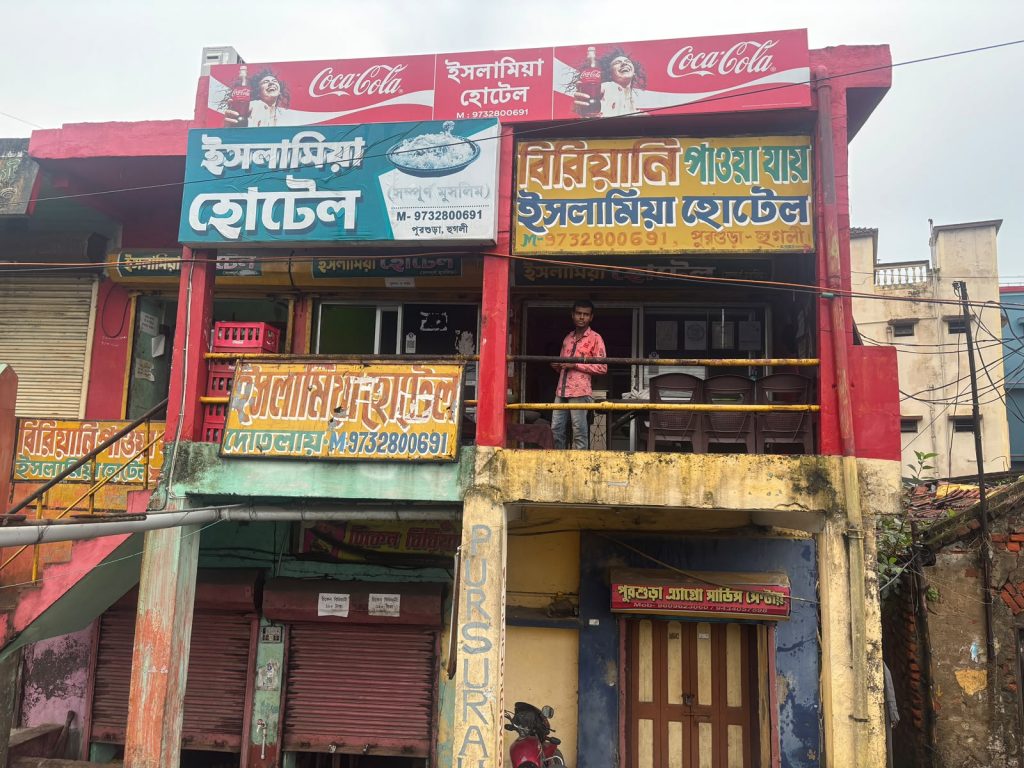
The father of two adult sons, Alam earned a living doing menial work at a biryani hotel in Pursurah. Two months earlier, he and one of his sons had been injured in a road accident while returning home from work. Both had remained largely confined to their home ever since.
A Blow-by-blow Account of the Assault
According to Alam’s family, the attack began around 1.30 pm on June 15.
Serina Begum, Saiful’s wife, recalled that four or five men arrived outside their house in an intoxicated state. “My father-in-law was in our house and I was standing outside. They asked me where he was. I didn’t answer,” she told Alt News.
The group remained outside shouting threats. “He was so frightened that he barely ate lunch that day. I asked him not to say anything and quietly move to the mud house.”
But the attempt to hide him failed.
According to Serina, the group somehow learnt that Shah Alam had moved next door to his own hoouse. Around 2.30 pm, they reached the mud house through a back lane.
Marjina Begum said the men repeatedly ordered her husband to step outside. “We begged them to leave us alone. We folded our hands and asked for forgiveness if he had done anything wrong. They kept insisting he come outside, promising they wouldn’t assault him. I still refused to let him go.”
She locked the door from inside in the hope of preventing them from taking him away. That is when the men temporarily shifted their attention to Firoz’s nearby house.
Claiming he had hidden bombs, swords and other weapons there, they demanded the keys to Firoz’s house which were with Marjina. They then entered the house and searched every room. According to eyewitnesses, they broke several glass windows during the search but recovered nothing suspicious.
When the search yielded nothing, the group returned. Marjina watched helplessly.
“I went to Firoz’s house while they were raiding it. I don’t know if I could have saved my husband had I stayed back,” she said. “I had locked him inside. Four of them went towards Firoz’s house while two remained outside ours. I kept pleading with them.”
According to Marjina, they began pounding on the mud house door until one of its frames burst open.
“They dragged my husband outside,” she said. “They took him near the pond outside Firoz’s house and assaulted him there. The bamboo sticks and wooden logs they used are still lying in the pond.”
Serina Begum said she watched the assault unfold before her eyes.
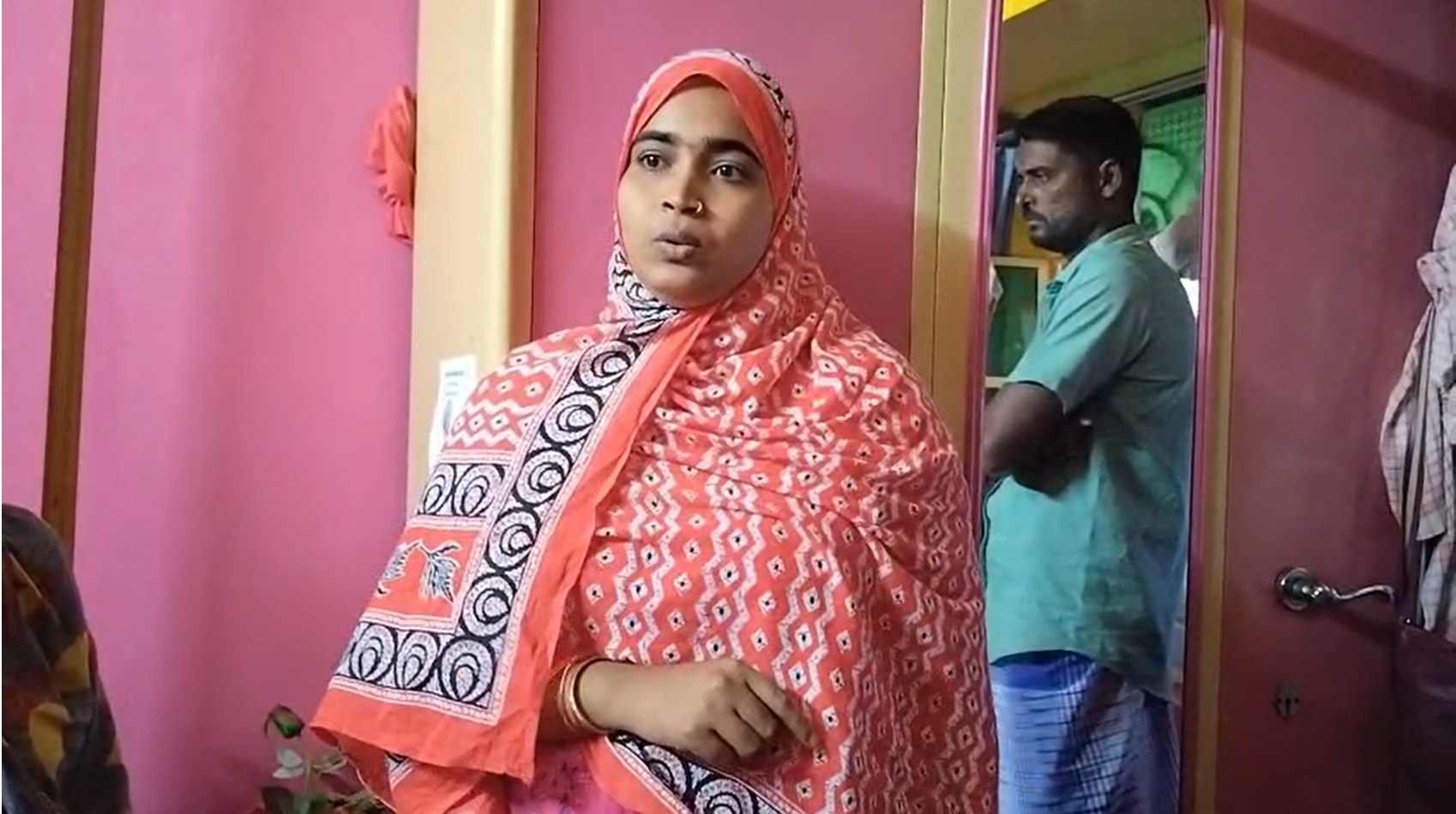
“They struck my father-in-law in the chest with wooden logs. They threw him into the pond while beating him, pulled him out and assaulted him again. They used bamboo sticks, stones, bricks — whatever they could find. One person held him while the others beat him. The assault continued for over an hour.”
When he pleaded with them for his life, she alleged, they told him death would be better for him.
Both Serina and Marjina said they repeatedly tried to intervene but were assaulted themselves. “They hit us with bamboo sticks too,” Serina said, pointing to an injury she said she still bore.
Marjina alleged that throughout the assault the group repeatedly declared that Muslims would no longer be allowed to live in the village. With every blow, she said, they chanted, “Firoz er bodla nichhi, Nurul er bodla nichhi, Mustafiz er bodla nichhi” — “We are taking revenge for Firoz, for Nurul, for Mustafiz (local TMC leaders).”
When the attackers finally left, the two women dragged Shah Alam’s bloodied body back into the concrete house. According to the family, his injuries were horrific. Bones protruded from several parts of his body and his genitals had been mutilated.
Rafikul alleged that even after the assault the family was prevented from taking him to hospital. “We couldn’t even get an ambulance. We somehow arranged a private vehicle from nearly 30 kilometres away. Even then, they initially blocked the vehicle and refused to let it through.”
According to Rafikul, his father had never held any position in the Trinamool Congress. “He was simply a supporter. In 2021 he became a little more involved, but my brother and I discouraged him from politics. He never held any official post. At most, he attended local Trinamool rallies. He was a common voter.”
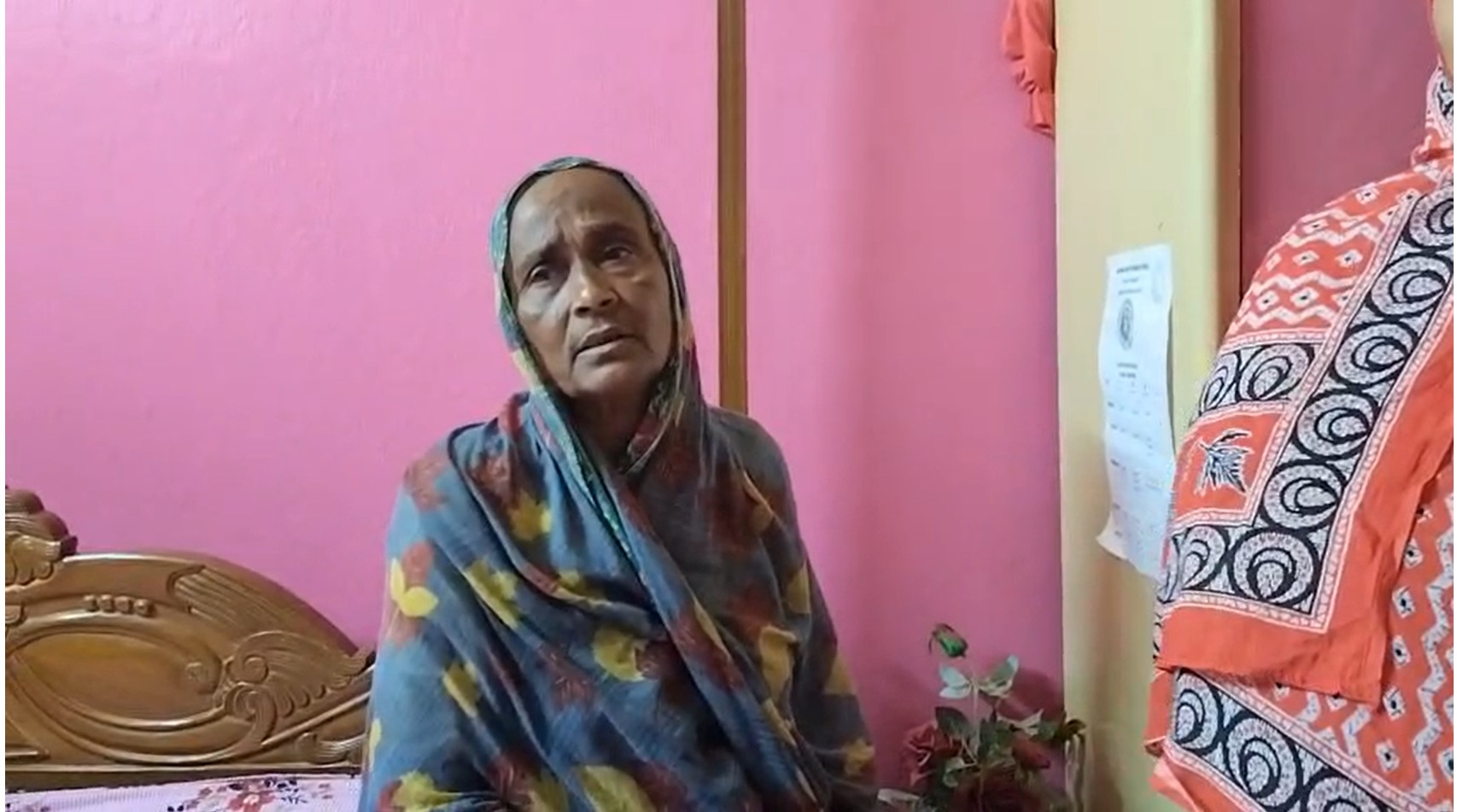
Firoz’s daughter, a second-year college student, witnessed much of what unfolded that afternoon.
She requested Alt News not to photograph her, saying she feared for her safety. She also said she had stopped attending college after receiving threats from the same group of BJP supporters.
“I was chatting with Boro Ma (Marjina Begum) when the goons came,” she recalled. “Boro Ma had the keys to our house. After repeatedly threatening her, they forced her to hand over the keys so they could search our house. They claimed my father had stolen relief material from the panchayat.”
“The men ransacked the house, breaking glass windows in the process, but found nothing. They came back in frustration. Then they dragged Shah Alam away. He was beaten to death in front of our house, beside the village pond,” she added.
Standing outside Shah Alam’s courtyard, several locals pointed to a stack of bricks and a pile of sal logs lying beside the road for construction work. According to eyewitnesses, those were picked up by the assailants and used to thrash Alam.
Pursurah police station OC Subhajit Dey told Alt News on July 7 that six people had been arrested in the case. They are Sourav Porel (25), son of Swarup Porel; Kasinath Porel (68), son of Lt. Karnodhar Porel; Dipankar Ruidas alias Dipu (38), son of Lt. Kartick Ruidas; Jiten Porel (35), son of Kasinath Porel; Pintu Porel (33), son of Swapan Porel; and Madan Porel alias Kinkar (26), son of Ajoy Porel. They are all residents of Kelepara in Pursurah police station area, and are now in jail custody.
When Alt News contacted local BJP MLA Biman Ghosh on July 6 for his view on the allegations against BJP supporters, he said, “The incident happened a long time back. What would you do with my response?”. He disconnected the call thereafter. Immediately after the incident, Ghosn had told Anandabazar Patrika, “These individuals have become BJP supporters overnight after the election results. They are carrying out violence. Police have been asked to take strict action against everybody.”
Weeks of Terror in Kelepara
Residents insist that Shah Alam’s killing was not an isolated act of violence but the culmination of weeks of intimidation that began after the election results on May 4. According to them, Muslim families perceived to be supporters of the Trinamool Congress had been living under constant fear since then.
As Alt News spoke to Shah Alam’s family, neighbours one after another described what they alleged was a campaign of threats, extortion and assaults carried out by the same group of men. Several claimed they had been forced to pay money to avoid being attacked or having their property damaged.
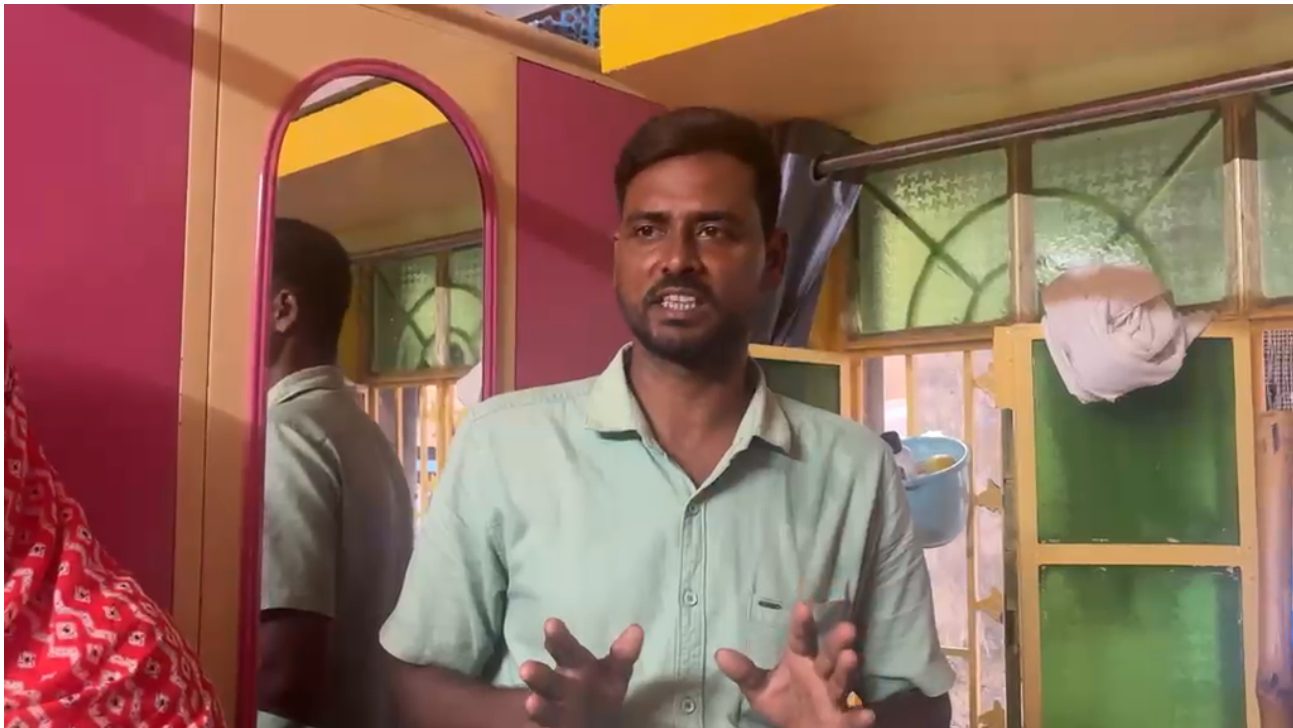
One local resident, Sheikh Gulam Hassan, said he had paid Rs 20,000 after being threatened that his tractor would otherwise be set on fire. Others narrated similar experiences, alleging they had handed over thousands of rupees after being “accused of” supporting the Trinamool Congress.
When Alt News asked whether they knew the alleged perpetrators, every resident answered in the affirmative. They pointed towards a three-storeyed concrete house, a stone’s throw from Shah Alam’s residence, saying one of the accused lived there.
Several names repeatedly surfaced during conversations with the locals, including those of individuals who are now behind bars: Villagers of Kelepara named Jiten Porel, Swarup Porel, Madan Porel, Pintu Porel, Sukumar Ruidas, Dipu Ruidas and Shaheb Marik. They also alleged Saurabh Porel and Kashinath Porel had assisted Shah Alam’s assailants.
Many of Alam’s neighbours claimed they had informed the police about earlier assaults. One of the victims said police officers had visited him after he was attacked.
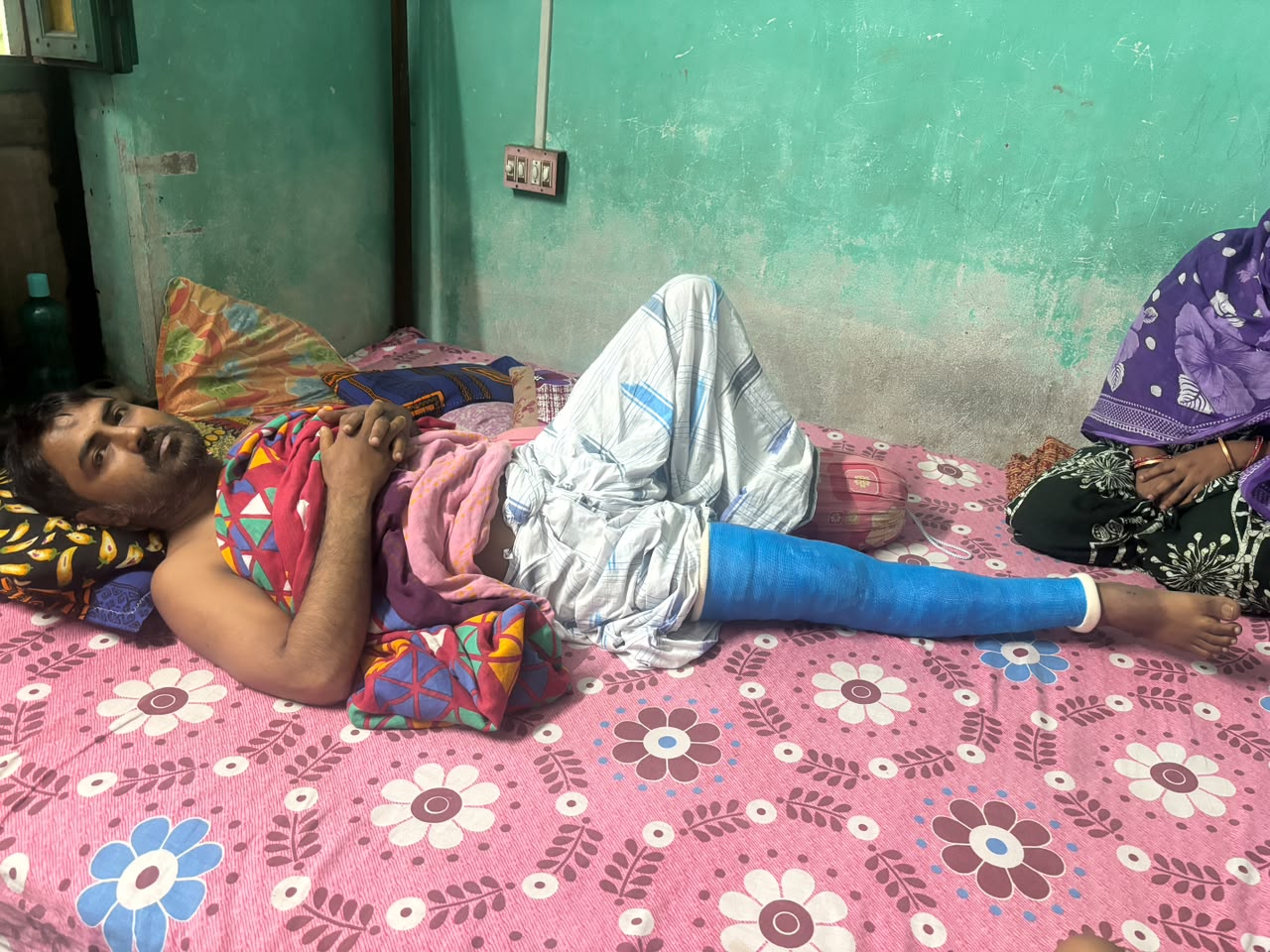
Primary school teacher Altaf Mallick said he too had been attacked by the same group nearly on June 3, when he was returning home from school. “They stopped me near the Ranipur bus stand. They first struck my leg. I immediately realised it had broken. I couldn’t run away. I couldn’t even stand and had to support myself against a wall. They kept beating me for another 15 to 20 minutes.”
He alleged that the men then dragged him to a nearby godown, where they assaulted him again for another half hour. Local residents witnessed the assault and informed his family, who later arrived and rescued him.
Mallick said he believed he had been targeted because of his earlier association with the Trinamool Congress. He also alleged that the same group had extorted Rs 20,000 from him earlier.
“Everybody knows who they are. They all live in the same neighbourhood. They were never prominent BJP workers. All this started after May 4,” he told Alt News.
When asked about their past, one of the locals said, “The accused men were earlier associated with the CPI(M). After 2011, they started lying low. They shifted their allegiance to the BJP a few years back. As soon as the TMC lost the elections, they came to their own.”
Asked why he had not lodged a police complaint, Mallick said he feared retaliation. “I told them whatever happened to me had happened. I wasn’t filing a complaint. I only asked them to make sure it didn’t happen to anybody else. I thought that would help. But it didn’t. Soon afterwards, I heard what they had done to Shah Alam.”
Shah Alam’s younger brother, Sheikh Abdur Rahim, said he too was assaulted on June 3 while trying to help Mallick.
“By the time I reached, they had already fractured his leg. Then one of them picked up a thick bamboo pole and hit me. I knew immediately that my leg had broken too.”
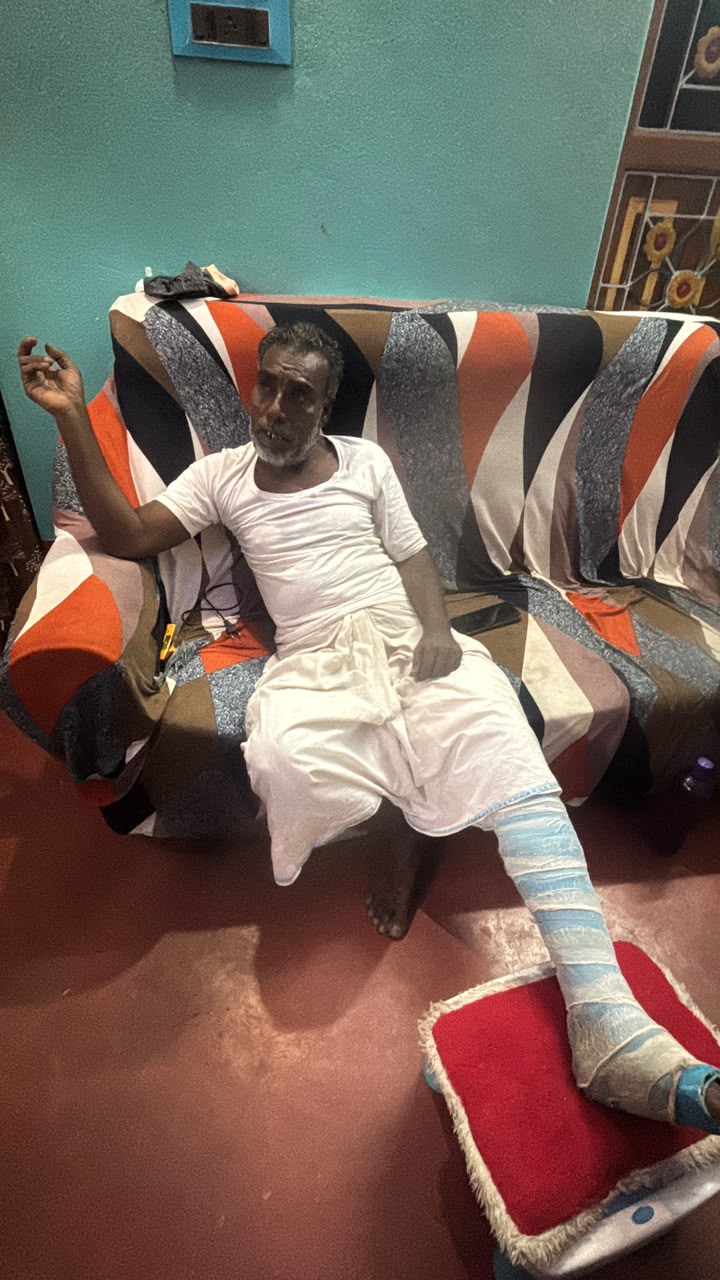
Rahim said he repeatedly asked them why they were attacking him. “They replied, ‘Why shouldn’t we?’ Eventually, one of the men ordered him to leave.
Rahim, too, described what he alleged was an atmosphere of sustained terror in the village. “From around 6.30 pm on the day the election results were announced, they started terrorising us and it hasn’t stopped since,” he alleged.
“They roam around carrying swords and guns. They have been extorting money from every family.”
He alleged that he himself had been forced to cough up Rs 6,000.
“When we ask why they want the money, they say, ‘We have won’. We are not party workers. We are voters. We are Muslims. They accuse us of supporting the Trinamool Congress and make us pay. They tell us, ‘You are Muslims. We will not let you stay here’.”
Despite the repeated assaults they described, both Mallick and Shah Alam’s family said no Trinamool Congress leader had reached out to them. Local ISF leader Saddam Hussein and fellow party workers had come to express solidarity with the bereaved family on the same day as Alt News visited the village.
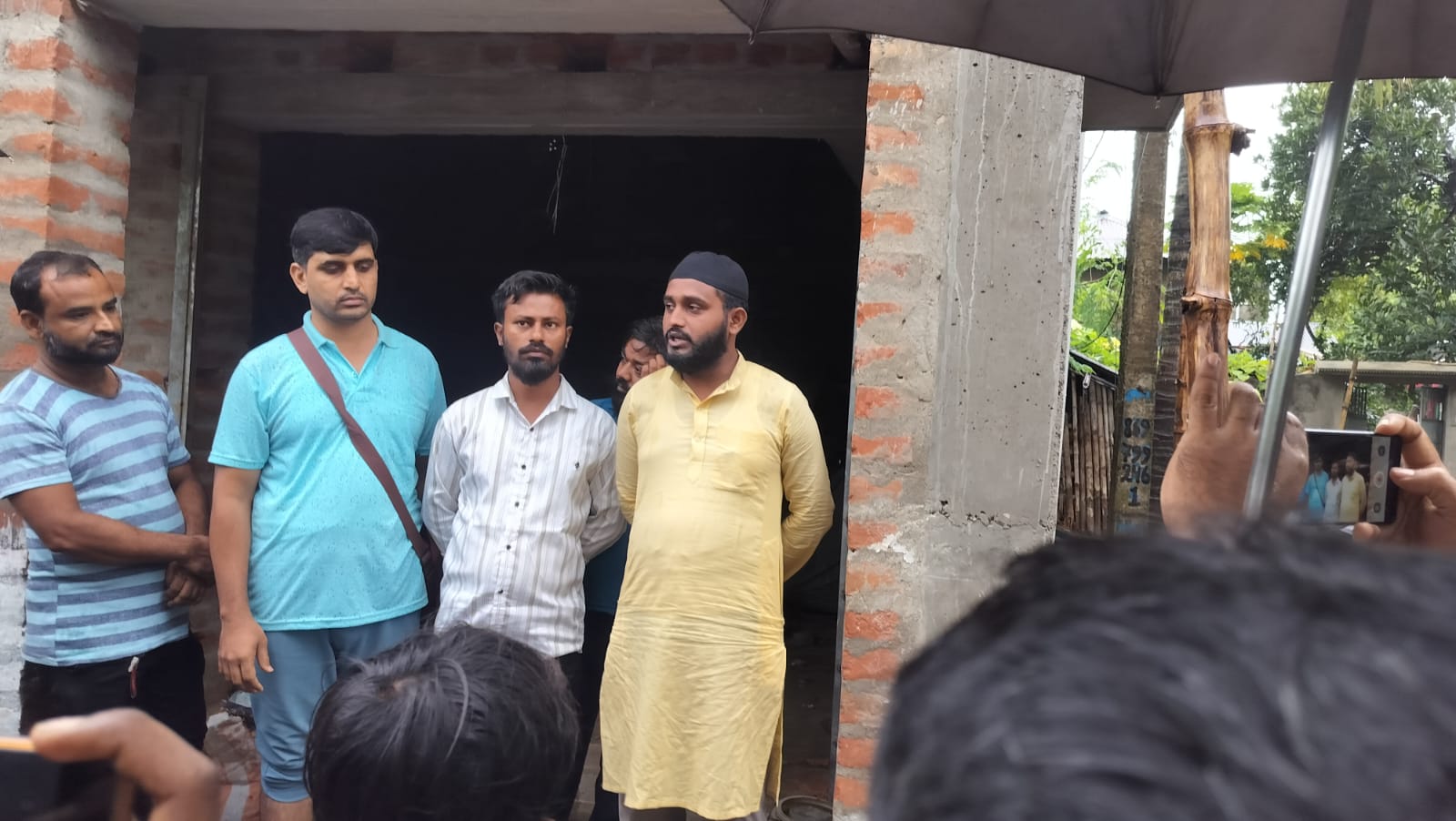
According to residents, Hussein had publicly condemned Shah Alam’s killing and had been following up with the police, demanding the arrest of all nine accused named by villagers.
As Alt News left Pirtala, Shah Alam’s mud house remained locked.
Just a few metres away, beside the village pond where eyewitnesses said the 71-year-old was beaten to death, the bamboo poles and heavy sal logs that residents alleged had been used in the assault still lay where they had been left.
For Shah Alam’s family and many of their neighbours, the lynching was not an isolated act of violence. It was, they said, the deadliest episode in the continuing campaign of intimidation that had transformed everyday life in the village after the Bengal election results.