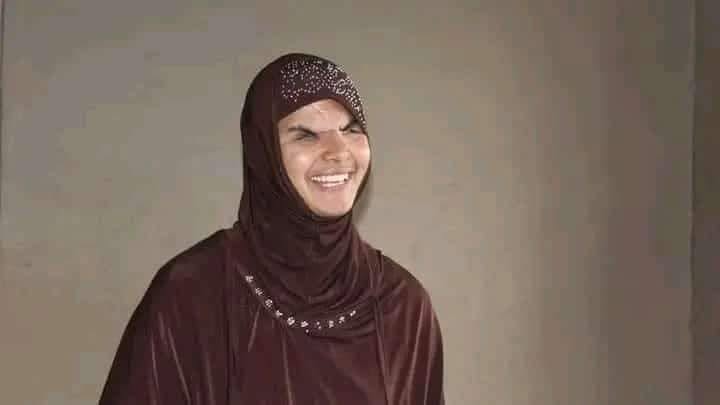
Around 8 pm on July 11, 2016, three days after the killing of Burhan Wani, 14-year-old Insha Mushtaq Lone looked out of a ground-floor window of her house in Sedow village in Shopian district of south Kashmir to watch a protest that had broken out in her neighbourhood. Within moments, a searing pain ripped through her face. She did not know what hit her. Three of her front teeth broke. There was blood all over her.
When she woke up in hospital, her face was pockmarked with more than 100 pellet wounds. Her eyes were bandaged. She could see nothing. She has never seen again.
16-year-old Farzan Sheikh was doing his mathematics homework at home in Srinagar on the afternoon of March 28, 2017, when he heard a commotion outside. Curious, he stepped out and saw a funeral procession passing. Then he heard pro-Kashmir slogans and security personnel fire tear gas and pellets to scatter the crowd. He started running toward home. “I saw a policeman with a gun aiming at me, and he shot directly at me,” he said. “That was the last thing I saw.”
He fell to the ground, bleeding from his left eye, his whole body pierced with pellets. He woke at the Shri Maharaja Hari Singh (SMHS) Hospital to a doctor asking how many fingers he was holding up. He could see nothing through his left eye.
He spent two months convalescing, then returned to school.
Then one day in August, his father forgot to turn off a streetlight that shone into Farzan’s bedroom. Farzan stepped out at 11 pm to do it himself. Pellets struck him again. This time in his right eye. They came from a CRPF vehicle parked across the street. There were no warnings.
After three surgeries on his right eye and four on his left, doctors told Farzan he had lost all vision in his right eye. They, however, said Farzan might regain 40 to 50% vision in his left eye with further surgeries. As for Insha, she continued her studies and cleared her school final and then her Class 12 board exams in 2023.
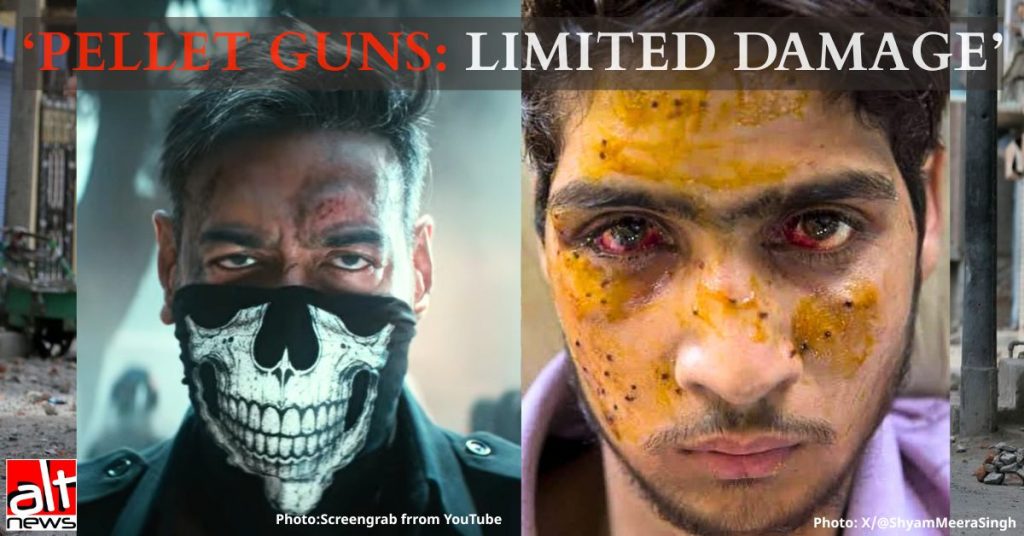
That perhaps explains why the teaser of the upcoming Bollywood film ‘Chauhaan’ describes pellet gun injuries as “limited damage”.
‘Chauhaan Aa Raha Hai’
Starring Ajay Devgn in the lead, the film is directed by Neeraj Yadav and produced by Aanand L Rai under Colour Yellow Productions, in association with Jio Studios. The teaser, unveiled on June 25, 2026, suggests the story is set against the backdrop of militancy and counter-insurgency in Kashmir. While a detailed story line is not clear yet, the visuals prominently feature stone-pelting, pellet gun injuries, security operations, and a conflict-scarred region, indicating a politically charged action narrative. The film is scheduled for a theatrical release on October 1, 2027.
In the 2.24-minute teaser, Ajay Devgn’s voiceover describes the state’s conventional crowd-control measures as inadequate. He says tear gas is ineffective because masks are available online, water cannons have only a temporary effect, and pellet guns inflict “limited damage”.
#CHAUHAAN aa raha hai.
On the late Veeru Devgan Ji’s birth anniversary, we are bringing back our OG action star, Ajay Devgn, in an action entertainer built for the big screen 💥
In cinemas on 1st October, 2027.
Thank you Veeru Ji, for everything you gave to action cinema, and… pic.twitter.com/DYLYCONORw
— Jio Studios (@jiostudios) June 25, 2026
Out on the streets of Srinagar, in the homes of Farzan or Insha though, there is nothing “limited” about the damage pellet guns have inflicted. Over the last 16 years, pellet guns have killed, blinded and permanently disabled people in the valley, leaving behind a trail of shattered eyes, repeated surgeries and lifelong disability. It is this reality that makes Chauhaan’s “limited damage” remark so cruel and so jarring.
‘Non-lethal Alternative’
In 2010, following months of unrest in which over 100 civilians were killed in police firing, the then Jammu and Kashmir government led by chief minister Omar Abdullah requested the Centre to provide a “non-lethal” alternative for crowd control. The Centre subsequently supplied the J&K Police with 12-gauge pump-action pellet shotguns, which were first used in Sopore on August 14, 2010.
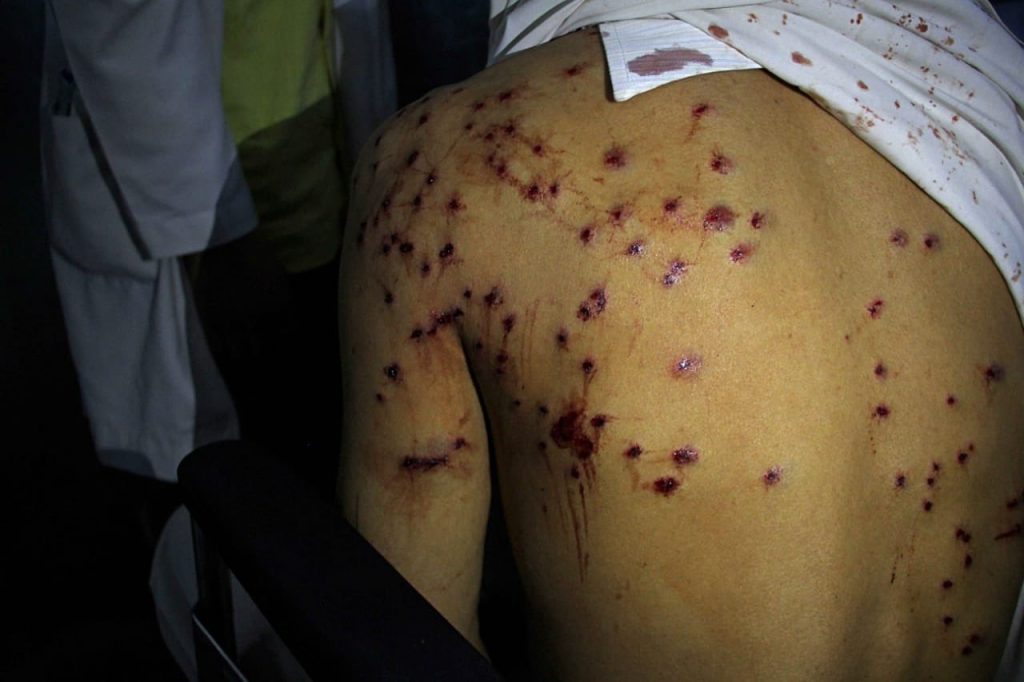
A single cartridge of a pellet gun releases between 360 and 600 small iron or lead balls at high velocity. The pellets scatter in unpredictable directions, making targeted firing functionally impossible. Former Jammu and Kashmir IG Javaid Gillani had acknowledged that pellets did not follow a predictable trajectory. Once fired, the cartridge bursts and the pellets disperse across a wide area, striking anyone within range — protesters, bystanders, people standing at windows, children. Doctors who removed pellets from victims’ bodies frequently decided against extracting all of them because doing so would cause further damage. The pellets remain inside bodies permanently, as fixed as the blindness they cause.
Amnesty International has described the pellet shotgun as “cruel,” “dangerous,” “inaccurate and indiscriminate,” stating that there is no way to use it for crowd control in compliance with international human rights standards. The UN Commission on Human Rights called it “one of the most dangerous weapons used against protesters.” Bollywood, however, chooses to differ. For the makers of ‘Chauhaan’, pellet injuries are “limited damage”.
The Extent of ‘Limited Damage’
A study conducted by Sher-i-Kashmir Institute of Medical Sciences (SKIMS) hospital in Srinagar found that in the first four months of use in 2010, pellet guns killed at least six people and left 198 injured. Of those injured, five lost their eyesight. The youngest victim was six years old; the oldest was 54. The hypothesis — that pellets would be non-lethal — has been disputed from the very beginning. “While the pellet wound itself may seem trivial, if not appreciated for the potential for tissue disruption and injuries to the head, chest, and abdomen, there can be catastrophic results. Patients should be evaluated and managed in the same way as those sustaining bullet injuries…” the paper notes.
Between March 2010 and October 2013, 91 patients with pellet gun injuries were admitted to hospital, according to an RTI application filed by lawyer Abdul Manan Bukhari. Of those, 36 were admitted to the department of ophthalmology; many were assessed as having “no prospect of restoring their sight.”
In 2014, a study published in the Journal of Evolution of Medical and Dental Sciences by doctors at SKIMS Medical College, Srinagar, reviewed 20 pellet gun victims with ocular injuries admitted between January 2010 and September 2013. Of them, 17 patients had injuries in one eye, and three in both eyes. It found that 33% of them did not regain any vision. Mean patient age was 21.45 years.
Then came 2016, the year that became known locally and internationally as the year of the “dead eye epidemic.” The killing of Hizbul Mujahideen commander Burhan Wani on July 8, 2016, triggered months of widespread civil unrest i Kashmir, and security forces deployed pellet guns extensively.
According to official figures presented in the Parliament, 17 people were killed by pellet injuries between July 2016 and August 2017. According to data from the Jammu and Kashmir State Human Rights Commission (SHRC), 1,726 people were injured by metal pellets in 2016. In January 2018, chief minister Mehbooba Mufti told the state assembly that 6,221 people had been injured by pellet guns in Kashmir between July 8, 2016 and February 27, 2017. Among the victims, 728 suffered eye injuries. As many as 54 of them suffered some form of visual impairment.
The CRPF told the Jammu and Kashmir high court in 2016 that it had fired approximately 1.3 million pellets in just 32 days.
A study conducted by Dr S Natarajan and colleagues and published in the Indian Journal of Ophthalmology in 2022 reviewed all 777 patients admitted to a tertiary hospital in Srinagar with ocular pellet gun injuries between July 18 and November 18, 2016. The researchers concluded that “Pellet gun–related ocular injuries resulted in significant ocular morbidity, mostly manifesting as open globe injuries. Treatment often required surgical interventions, but despite expeditious management, visual prognosis remained poor for most of the patients.”
As many as 51.1% of the patients were aged between 20 and 29 years, with the second highest proportion (36.6%) aged between 10 and 19.
For context, the same paper noted that 797 cases of severe eye injuries were reported during the entire Iraq war from 2003 to 2005. British armed forces in Iraq and Afghanistan recorded 63 cases of ocular injury from 2004 to 2008. It also observed that the 777 figure was likely an undercount, as it excluded patients at other facilities and those without access to medical care.
By 2017, more than 1,200 victims had organised themselves into the Pellet Victims Welfare Trust. Nearly 100 of them had both eyes severely damaged or were completely blind. The Trust’s chief, Mohammad Ashraf is blind in one eye and has over 600 pellets lodged in his body and head. “It soothes my soul if some help reaches the victims,” Wani told Turkish news company Anadolu Agency in 2022.
According to The Polis Project, between July 2016 and February 2019, 2,942 Kashmiris were injured and 18 people killed by pellets. Of total injuries caused by pellets in this period, 1,459 people sustained eye injuries and 139 lost their vision.
In August 2020, security forces fired pellets and tear gas shells to disperse Shia mourners participating in a Muharram procession in Srinagar’s Bemina area, leaving at least 40 injured. Police said the mourners had violated prohibitory orders restricting religious gatherings due to COVID-19.
Children, Teens among Victims
Hiba Jan, 19-month old, was in the arms of her mother, Marsala, on November 25, 2018, when security forces fired tear gas outside their home in the Kapran area of Shopian. Feeling suffocated inside the house, Marsala opened the door to get some air. Immediately, pellets ripped through the mesh door. Some struck Marsala’s hand; one struck Hiba’s right eye.
At the SMHS Hospital in Srinagar, doctors removed the metallic balls from her eye but could not say whether she would regain sight. Hiba’s face and injury became a global symbol.
What makes the impact of pellet guns particularly disturbing and ruthless is the number of children and teens among the victims. Medical and human rights record is quite unambiguous in this respect: Children have been among the victims of pellet gun deployment from the very first year of the weapon’s use. In 2010, the youngest victim at Sher-I Kashmir Institute of Medical Sciences (SKIMS) was six-year old.
When Scroll spoke to doctors treating pellet gun victims in Srinagar’s SMHS Hospital, visiting eye surgeon S Natarajan, who performed surgeries on 40 patients, told the outlet, “We have to do our best… These are youngsters, teenagers and children. We can’t let them go blind.”
A study of 198 pellet injury patients led by Majid Mushtaque of SKIMS published in the Turkish Journal of Trauma and Emergency Surgery found the 72.7% of patients were aged between 16 and 25 years.
Ten-year-old Asif Ahmad Sheikh, a Class 5 student from Anantnag, received a single pellet in his right eye, losing all vision on that side. “Watching cartoons on TV, playing with my friends on the street, reading books for hours — this is what I dream of now,” He told Italian documentary photographer Camillo Pasquarelli.
Mental Health Consequences
As part of a study named Psychiatric Morbidity in Pellet Injury Victims of Kashmir Valley, researchers at the department of psychiatry at Government Medical College, Srinagar, examined 380 pellet and pellet-plus-firearm injury patients from August 2016 to August 2018. They found 85% of pellet victims had developed psychiatric disorders and 79% were diagnosed with major depressive disorder.
In 2025, another study published in the journal Traumatology interviewed ten direct pellet gun victims and found severe and lasting psychological consequences, including symptoms consistent with complex trauma. “Physical injuries led to severe emotional dysregulation, including irritability, aggression, and frustration. Victims reported disrupted eating patterns and psychological trauma. Their self-identity was deeply affected, marked by role reversal, temporal disconnection, guilt, and worthlessness…. Academically, vision loss and trauma-induced distress resulted in diminished motivation and uncertainty about continuing education.” the paper states.
Backlash against the Teaser
It is this lived experience that has fuelled an online backlash against Chauhaan’s teaser and the phrase “limited damage” in particular. For many Kashmiris, the film’s characterisation of pellet gun injuries as “limited damage” is not merely insensitive, it trivialises years of documented suffering.
Viewed as a standalone piece of media, the teaser does not invite the audience to reflect on the human cost of pellet guns or the trauma they have left behind in Kashmir. Instead, it packages that suffering as spectacle. The juxtaposition of the peppy song ‘Jumma Chumma De De’ with visuals of violence further problematises the scene. For viewers unfamiliar with the documented history of blindness, death and lifelong disability in Kashmir caused by pellet guns, the emotional cue is not empathy for those who lost their eyesight or their loved ones, but excitement at the promise of a protagonist who will deal with the problem more forcefully. In that sense, the teaser encourages audiences to cheer a narrative built on the trivialisation of one of Kashmir’s deepest and most enduring traumas.
National Conference leader and Srinagar MP Aga Syed Ruhullah Mehdi wrote on X, “The teaser of Chauhaan is deeply disturbing for every Kashmiri who carries the memories of the years when pellet guns became a symbol of pain and irreversible loss. The teaser dismisses tear gas, water cannons and pellet guns as “ineffective measures” before introducing a hero as the “solution.” But what they call “ineffective” left behind thousands of shattered lives…”
The teaser of Chauhaan is deeply disturbing for every Kashmiri who carries the memories of the years when pellet guns became a symbol of pain and irreversible loss.
The teaser dismisses tear gas, water cannons and pellet guns as “ineffective measures” before introducing a hero…
— Office of Aga Syed Ruhullah Mehdi (@Office_ASRM) June 29, 2026
Yet the fact remains that it was under Omar Abdullah’s government that pellet guns were introduced into Kashmir as a crowd-control weapon in 2010.
Rights activist Wajahat Farooq Bhat urged filmmakers to “stop glorifying violence through fictional “alpha male” heroes and endless gunfights.”
As a #Kashmiri, I say this with conviction: enough is enough.
For decades, we buried our loved ones, lived through bomb blasts, gunfire, curfews, fear, and uncertainty. There was nothing glamorous, heroic, or entertaining about that reality. It destroyed families, stole… https://t.co/e7702tZDFf
— Wajahat Farooq Bhat (@Wajahatfarooqbt) June 26, 2026
National Conference’s Kashmir spokesperson Imran Nabi Dar called the movie a work of “propaganda that has put Goblean propaganda to shame.” He also wrote on X, “Mocking children and young people who lost their eyesight, some even their life, and opening up old scars of their families is nothing short of a spiteful agenda against Kashmiris.”
On the other hand, actor Amitabh Bachchan is among those who appreciated the teaser.