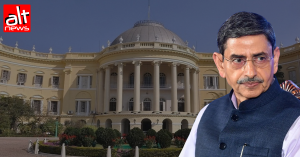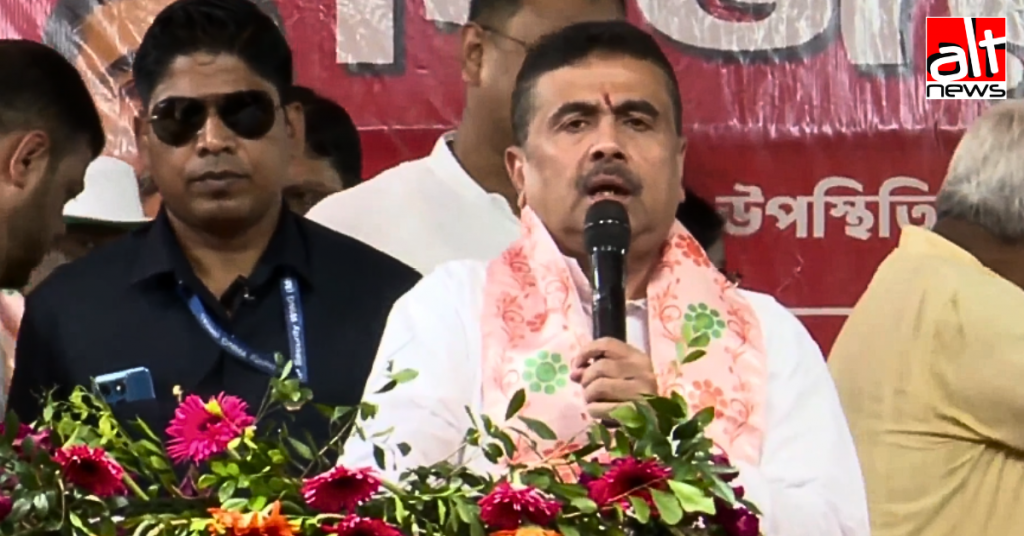
West Bengal chief minister Suvendu Adhikari has framed the upcoming bypolls in Nandigram and Rejinagar as a ‘test’ for minorities. To note, Nandigram has a Muslim population of around 26%. In the case of Rejinagar, it is much higher, at 65%.
The bypolls, set to take place on October 6, were necessitated after the constituencies were vacated by Suvendu Adhikari, and Aam Janata Unnayan Party (AJUP) chief Humayun Kabir, respectively, both of whom had won two seats each in the assembly election held earlier this year. Adhikari retained Kolkata’s Bhabanipur seat, while Kabir retained his seat in Murshidabad’s Nowda.
Hasirani Rath, the candidate fielded by the BJP in Nandigram, is the mother of Suvendu Adhikari’s personal assistant and close aide, Chandranath Rath, who was assassinated two days after BJP’s electoral victory in the state, on May 6, in Madhyamgram. CBI has filed a chargesheet against 11 accused in connection with the murder.
On Tuesday, September 15, Adhikari walked with Hasirani Rath in a massive procession, to file her nomination in Haldia’s Nandigram constituency.
“I will end with an appeal to the minorities in Nandigram and Rejinagar. An opportunity lies before you. Will you stay with the government or not? If you wish to stay with the government, if you wish to work hand in hand with the chief minister and get work done, you have a test on October 6, in Rejinagar and Nandigram. Whether you pass or fail this test is entirely up to you. Besides, we’re already winning and will continue to win.
There is no need to worry.”
Coming from a chief minister, the statement might appear problematic because constitutionally, he and his government are meant to serve every resident equally, whether or not they vote for his party. Here, Adhikari singles out the minorities as a separate group and tells them they must pass a ‘test’ on October 6 if they want to stay with the government. This makes government support sound like a reward for voting a certain way or conditional on political compliance, not a right every citizen has.
Besides, saying that passing or failing is ‘entirely up to you’ might sound like a warning. This can deepen polarisation, because it treats minorities as people whose loyalty must be proven and encourages others to see them with suspicion. It can also alienate them. When a community is told its standing depends on its vote, it has every reason to fear that the police and administration, who take their cue from the chief minister, will treat them differently afterwards.
Adhikari’s polarising statement is consistent with several of his campaign speeches before the April elections and his statements after winning. In December 2025, Adhikari had said, “Muslims are on the side of Naushad (Siddiqui), and Humayun. Hindus and Adivasis are on the side of Modi-ji,” polarising voters on the basis of their religious identity.
Again, after collecting his winning certificate for the Bhabanipur assembly seat, where he defeated three-time chief minister Mamata Banerjee, Suvendu Adhikari openly framed the result along communal lines while speaking to the media. Claiming that Muslims in Bhabanipur had not voted for him and had instead backed Banerjee, whom he referred to as “hijabi Mamata”, Adhikari said Hindus, Sikhs, Jains and Buddhists had ensured his victory, which he described as “a victory of Hindutva”.
Further back, in July 2022, Adhikari had made the same polarising pitch more explicitly at a BJP meeting in Kolkata. Calling for the abandonment of the party’s minority morcha, the then Nandigram MLA had condemned Prime Minister Modi’s catch phrase, ‘Sabka Saath, Sabka Vikaas’ (development for eevryone), and chanted, ‘Jo Hamare Saath, Hum Unke Saath’ (Support only those who support us).
On the day of the swearing-in, however, Bengal’s ninth chief minister visited Jorasanko Thakurbari to pay tribute to Rabindranath Tagore on his 166th birth anniversary, and sent a message of inclusivity, saying, “I belong to everyone.”
It is worth noting that Kolkata’s Chitpur Jyotinagar Colony, a Muslim-majority settlement, has gone without water supply for more than fifty days now. BJP MLA Ritesh Tiwari, winner of the Kashipur-Belgachhia constituency seat, had publicly declared after the election results that he would not do anything for Muslims. “Only those who have voted for me have the right to me. We didn’t go to ask for votes from those who did not vote for us,” he had said.
READ IT HERE: Forty-six days on, taps in Kolkata’s Jyotinagar Colony still run dry
In the 2026 assembly elections across West Bengal, Assam, Kerala, Tamil Nadu and Puducherry, the BJP did not field a single Muslim candidate, and naturally no Muslim MLA was elected from the party in those polls. BJP does not have a single Muslim MP at present. Nationwide, it has only two Muslim MLAs — Achab Uddin from Manipur and Tafajjal Hossain from Tripura.