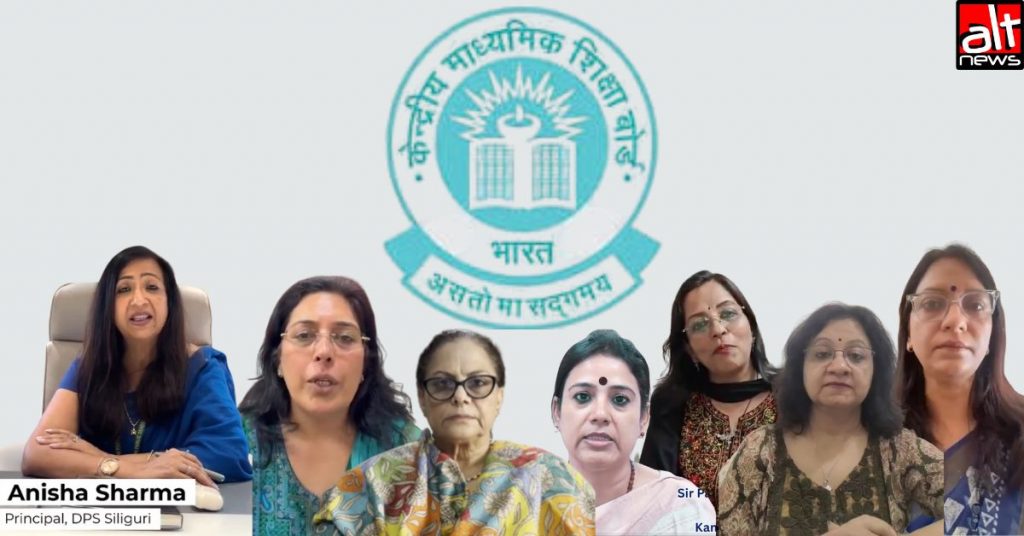
As Class XII board examinees took to social media to raise concerns about alleged marking discrepancies in the CBSE’s newly introduced On-Screen Marking (OSM) system, a parallel trend emerged online: principals of CBSE-affiliated schools began posting strikingly similar videos and parroting similar lines while defending the evaluation mechanism and urging students to “trust the system.”
For the first time this year, the Central Board of Secondary Education (CBSE) introduced the On-Screen Marking (OSM) system, a digital evaluation mechanism intended to replace the conventional process of physically handling and checking answer scripts. Under the new system, answer sheets are scanned, uploaded to a centralised portal, and evaluated digitally by examiners logging into the CBSE platform. Marks are entered directly into the system, reducing manual tabulation errors and streamlining the evaluation process.
However, shortly after the declaration of results, social media platforms, particularly X (formerly Twitter), were inundated with complaints from students alleging serious irregularities in the evaluation process.
Among them was Vedant Srivastava, who claimed that after receiving unexpectedly low marks in Physics, he applied for photocopies of his answer scripts through CBSE’s re-evaluation process. To his shock, the Physics answer sheet uploaded by the Board did not appear to be his own. To make things worse, upon seeing his post, Doordarshan news anchor Ashok Shrivastav sarcastically wrote in Hindi: “Did Pakistanis also appear for CBSE exams?!!”
READ: Doordarshan anchor calls Delhi student Pakistani for raising CBSE marking grievance – Alt News
Dozens of students have since alleged that the scanned copies of their answer scripts were blurry, partially missing, displayed blank pages, or were otherwise difficult to read. Several students also claimed that correct MCQ responses were awarded only partial marks, step marking had been ignored, answers appeared unchecked, and overall scores were inexplicably lower than expected.
Amid mounting outrage and confusion, another curious pattern began to emerge online.
A deluge of videos featuring principals, faculty members, and administrators from CBSE-affiliated schools suddenly appeared across various social media platforms, many uploaded through official school accounts. This seemed like a strange coincidence. Across these videos, school administrators repeatedly described the transition from traditional paper-checking to digital evaluation as a “monumental step” towards “modernising” the examination ecosystem.
The language, tone, and structure of these statements bore uncanny similarities, with many institutions seemingly parroting near-identical scripts defending the OSM system and urging students to “trust the process.”
One such post was uploaded by Delhi Public School (DPS), Nerul, Navi Mumbai, on its official Facebook page in response to growing anxieties surrounding the OSM rollout. The school described the shift from manual checking to digital evaluation as a “massive step towards modernizing the examination ecosystem” and characterised the transition as a “monumental reform” aimed at ensuring “fundamental improvements” in the evaluation process.
The post highlighted the purported benefits of OSM, including automated total calculations and question-wise score mapping, which it claimed would eliminate clerical errors such as calculation slips and incorrect posting of marks that have historically plagued manual evaluation systems.
Addressing the growing concerns raised by students regarding discrepancies in their digital answer scripts, the school urged them not to panic. Acknowledging the unprecedented scale of the exercise — “around 98 lakh answer sheets were digitized globally” — the statement conceded that “implementation bumps” were inevitable but assured students that no one would be disadvantaged due to technical errors.
The post further asserted that the CBSE had been “highly proactive,” “empathetic,” and “communicative” in addressing complaints. It concluded by urging students and parents to “embrace these digital advancements with patience” and “trust the system.”
One notable detail, however, stood out: instead of being signed off by the school principal, the statement was attributed to the “City Coordinator CBSE.”
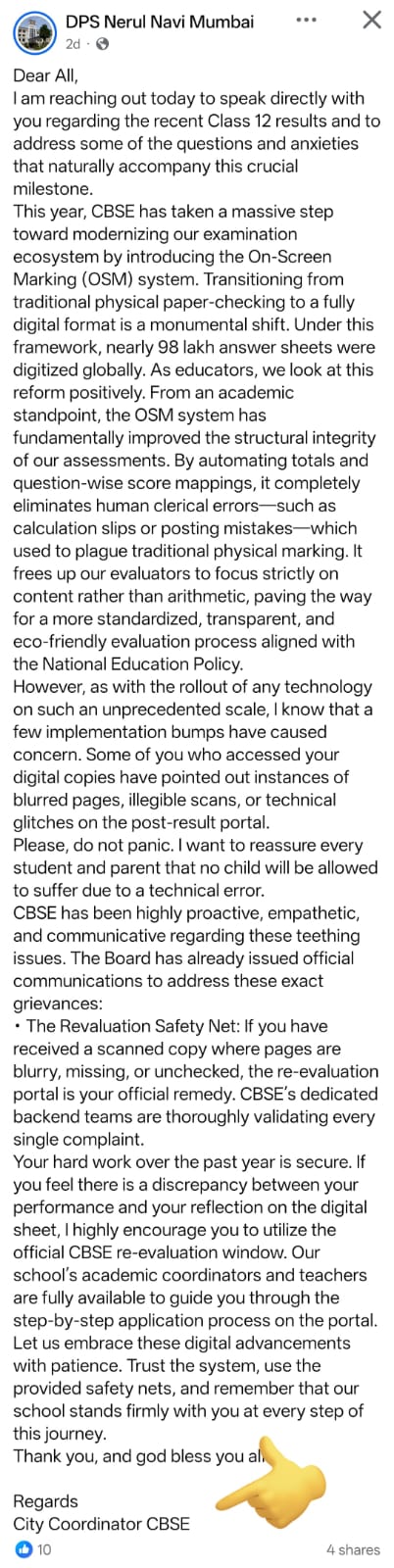
The post has currently been deleted from the page.
The videos followed a similarly familiar template. Principals opened by acknowledging students’ “questions and concerns” surrounding the newly introduced evaluation mechanism before describing the OSM rollout as a “crucial milestone” in the evolution of the examination process.
Alt News found striking similarities between the DPS Nerul statement and videos uploaded by principals from several schools, many of whom appeared to be reading from identical or near-identical scripts. These included:
3. Principal of New Ear School Baroda. #cbseosm #OSM pic.twitter.com/bb4Gypitpg
— Mohammed Zubair (@zoo_bear) May 29, 2026
2. K R Mangalam World School, GK-II
Director Principal, K.R. Mangalam World School, GK-II. #CBSE #OSM pic.twitter.com/lRnlsnnkTU
— Mohammed Zubair (@zoo_bear) May 29, 2026
3. Sir Padampat Singhania Education Centre, Kanpur
Principal – Sir Padampat Singhania education centre. #CBSE #OSM pic.twitter.com/4LheRiP65B
— Mohammed Zubair (@zoo_bear) May 29, 2026
Principal – Cygnus World School. pic.twitter.com/MmLhwEBLay
— Mohammed Zubair (@zoo_bear) May 29, 2026
View this post on Instagram
6. CHIREC International School, Kondapur
Principal, CHIREC International School, Kondapur. pic.twitter.com/IRwP6kOqXe
— Mohammed Zubair (@zoo_bear) May 29, 2026
7. Lakshmipat Singhania Academy, Kolkata
Message from Ms. Meena Kak (Director), Lakshmipat Singhania Academy, Kolkata to all the students of class 12 (Session 2025-26) @cbseindia29 @cbseindia29_bbr pic.twitter.com/0Hm04cvdI7
— Lakshmipat Singhania Academy, Kolkata (@LSAkolkata) May 26, 2026
Most of the videos have been taken down from the pages now.
Several other schools uploaded similar videos, carrying substantially similar messaging if not verbatim. These included:
- DPS Siliguri
- Bhagirath Rati Maheshwari Vidyapeeth
- Vikash Residential School, Bargarh
- Remal Public School, Delhi
- Miles Broson Residential School, Guwahati
- CM Shri School, Rohini
Not only principals of the schools, but also faculty members and students were allegedly ordered to make such videos and upload them on social media platforms.
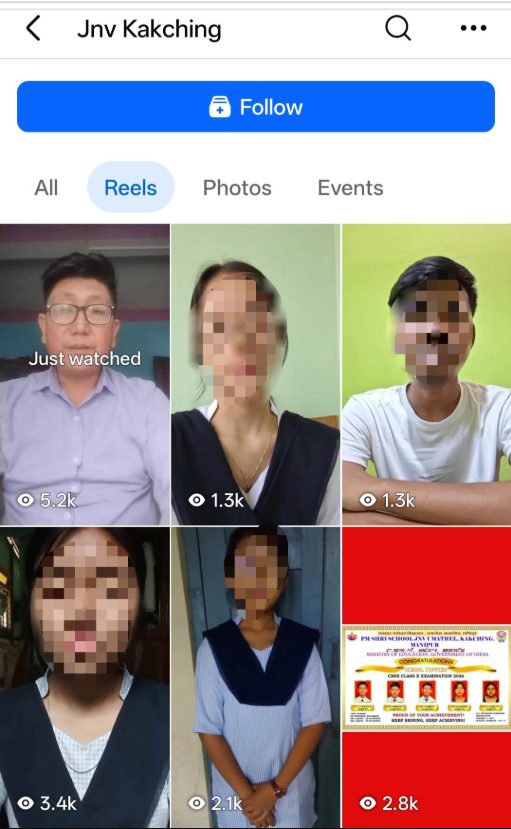
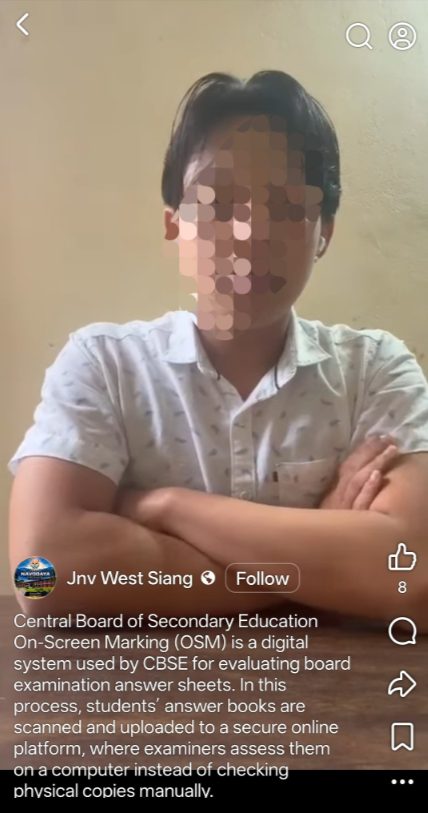
While Alt News could not independently obtain official circulars sent to schools, a report published by Hindustan Times stated that it had reviewed a document titled “Materials for Principals”, which allegedly contained prepared talking points and a suggested script for school heads to read aloud. The contents of that document, according to the report, closely mirrored the messaging seen across the videos uploaded by various schools in defence of the controversial OSM rollout.
Alt News has previously documented similar patterns, in which social media content creators appeared to amplify government policy narratives using scripts reportedly circulated by PR agencies. Following the rollout of ethanol-blended petrol, several creators published videos in collaboration with the Ministry of Petroleum and Natural Gas promoting its benefits. A similar pattern emerged in early 2026 after the Supreme Court accepted the Union government’s 100-metre elevation formula for a uniform definition of the Aravalli Hills: multiple influencers came forward reporting they had been approached by agencies for paid collaborations to produce content favouring the ruling. Alt News documented several such influencers who had uploaded near-identical videos on the issue.