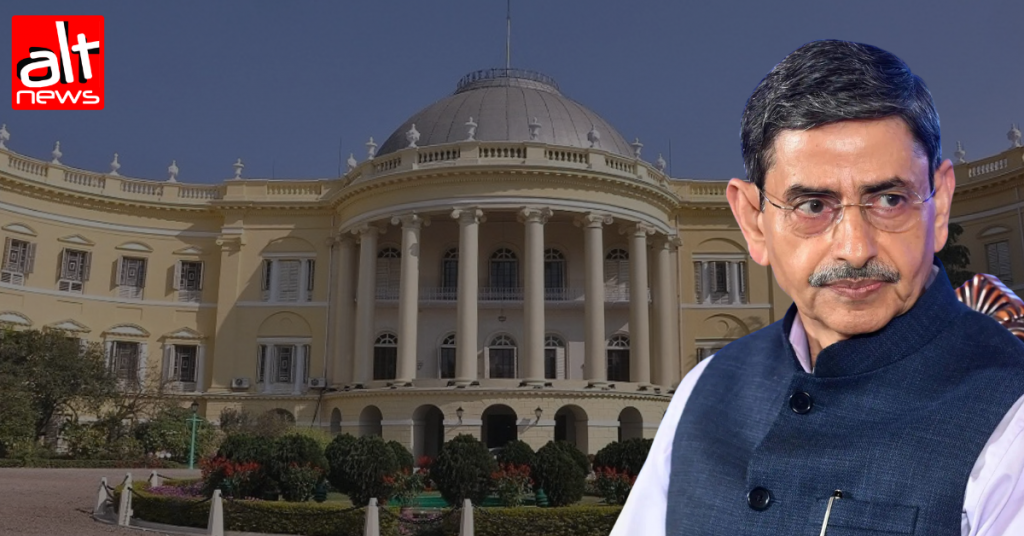
Lok Bhavan, the office and residence of West Bengal Governor R N Ravi, formerly known as Raj Bhavan, has declared a state-level essay writing competition for students from schools, colleges, and universities. The circular published on October 3 mentions two topics: Calcutta Massacre, 1946 – Causes and Consequences for students of Classes X to XII, and Direct Action Day by All India Muslim League – A Fatal Assault on Civilisational Bharat for college and university goers.
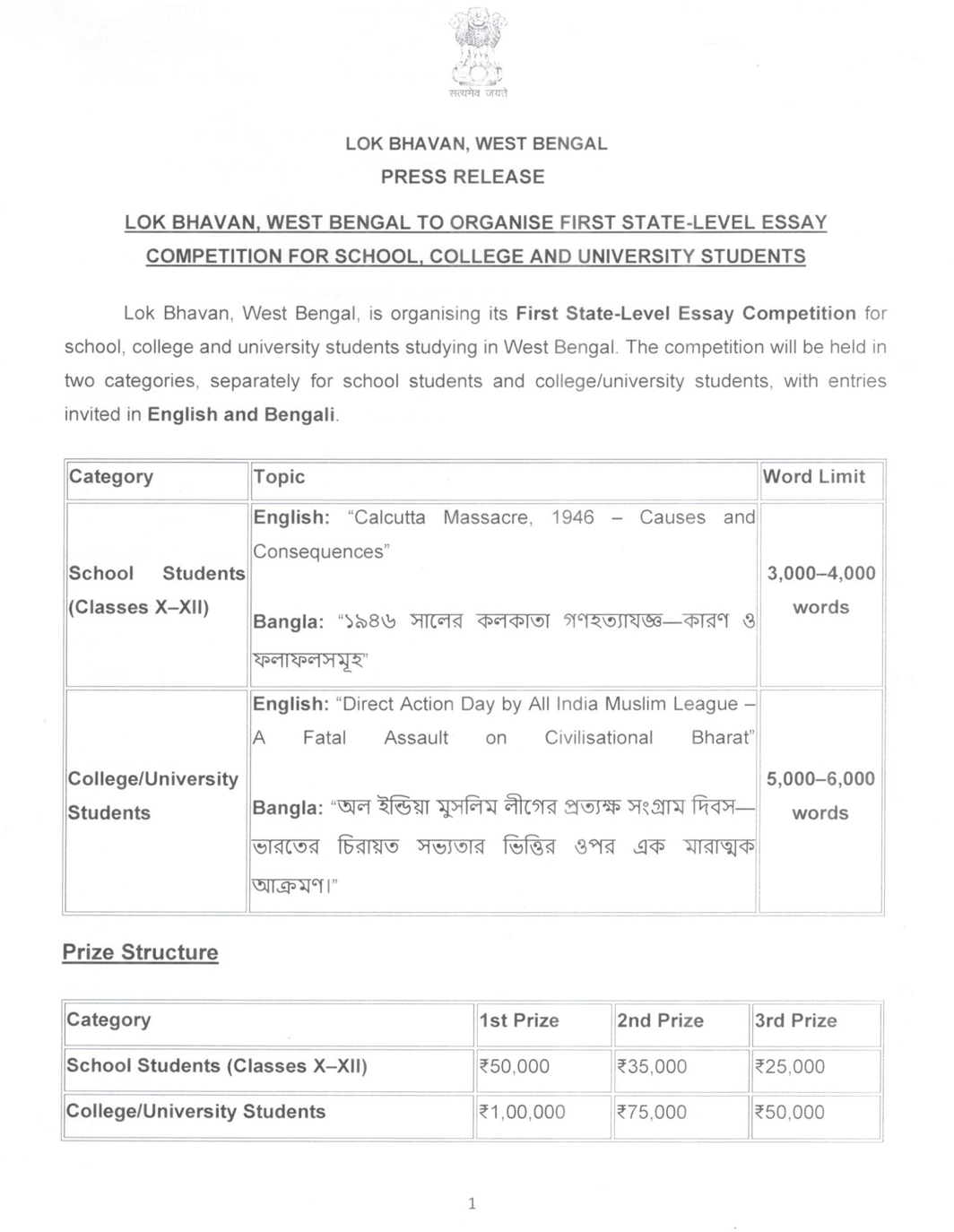
The competition carries handsome monetary awards going up to Rs 1,00,000.
Both the topics relate to the Direct Action Day (August 16, 1946) also known as the ‘1946 Calcutta Riots’ and ‘Great Calcutta Killings’ which marked the beginning of a period of communal violence in Bengal that preceded and followed Partition.
However, the choice of topics raises questions because they do not seem to be framed neutrally. The term ‘Civilisational Bharat’ is ideologically loaded and is not standard historical terminology, and it gives the topic a distinctly Hindu nationalist framing.
Secondly, while the Calcutta killings of 1946 and Direct Action Day are important subjects for understanding the events leading up to Partition, the phrase ‘a fatal assault on civilisational Bharat’ embeds a particular ideological interpretation into the topic, rather than inviting students to examine the political circumstances, the causes and consequences of the violence and the competing narratives around it.
The wording is also problematic because it turns a complex period of history into a communal binary, with the Muslim League positioned as an assailant and ‘Bharat’ as the entity under attack. It is not just the inclusion of a controversial historical event that is concerning, but also the communal framing through which students are being asked to approach it.
Anwesha Sengupta, author and assistant professor of history at the Institute of Development Studies, Kolkata (ISDK), views the initiation of this competition in schools and colleges as an attempt to push a certain narrative and memory of the Direct Action Day and 1946 Calcutta riots.
“The history of the 1946 riots is very complicated. The government has, in recent times, tried to turn this event into an opportune moment for a particular brand of history-writing. The chief minister himself has routinely referred to it, in his speeches and on social media, helping create the figure of the ‘other’, in the demography of Bengali Muslims,” she said.
Sengupta also pointed out that one needed to have a certain degree of academic maturity to teach or write about riots. “How can school and college students be incentivised to turn out well-researched essays on this topic?” she questioned.
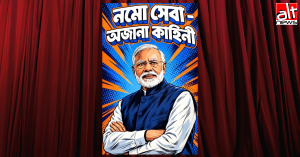
The essay competition notification comes close on the heels of another student-centric initiative by the West Bengal government that drew scrutiny for its political content. Alt News recently reported on the ‘Namo Seva: Untold Stories’ play, part of a month-long programme marking Prime Minister Narendra Modi’s birthday and 25 years in public service. The play, which was staged by students at schools and colleges, eulogised PM Modi on his achievements.
The play script sent out by West Bengal government to schools and colleges makes actors (which means students) shout ‘Jai Sri Ram’ and ‘Modi hai to Mumkin hai’ or wonder how ‘Modiji has been working tirelessly day and night for the last 25 years.’