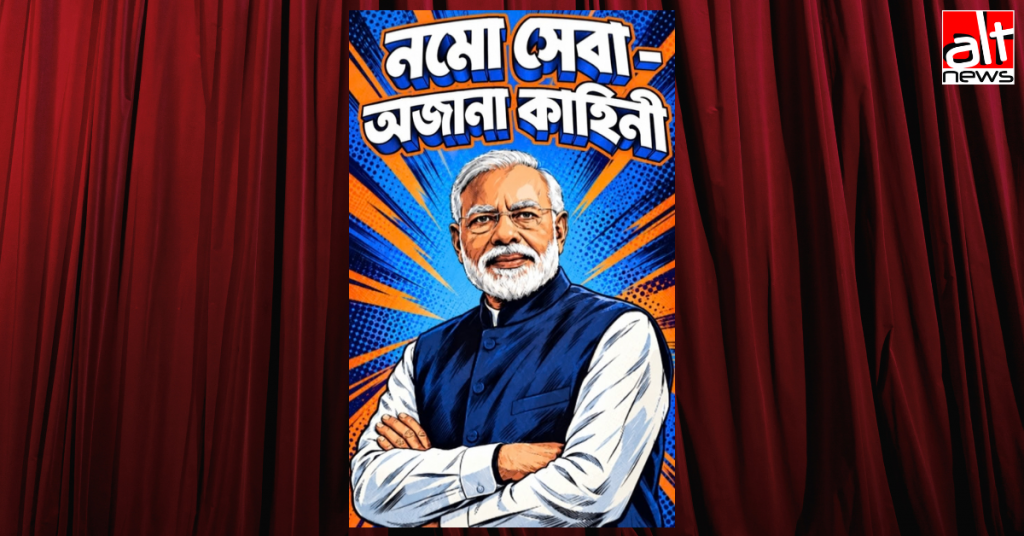
As the Union government continues to host the ‘Seva Sankalp Abhiyan’ — a month-long celebration of Prime Minister Narendra Modi’s birthday and 25 years in public service, from September 17 to October 17 — one among the various events planned is the ‘Namo Seva: Untold Stories’.
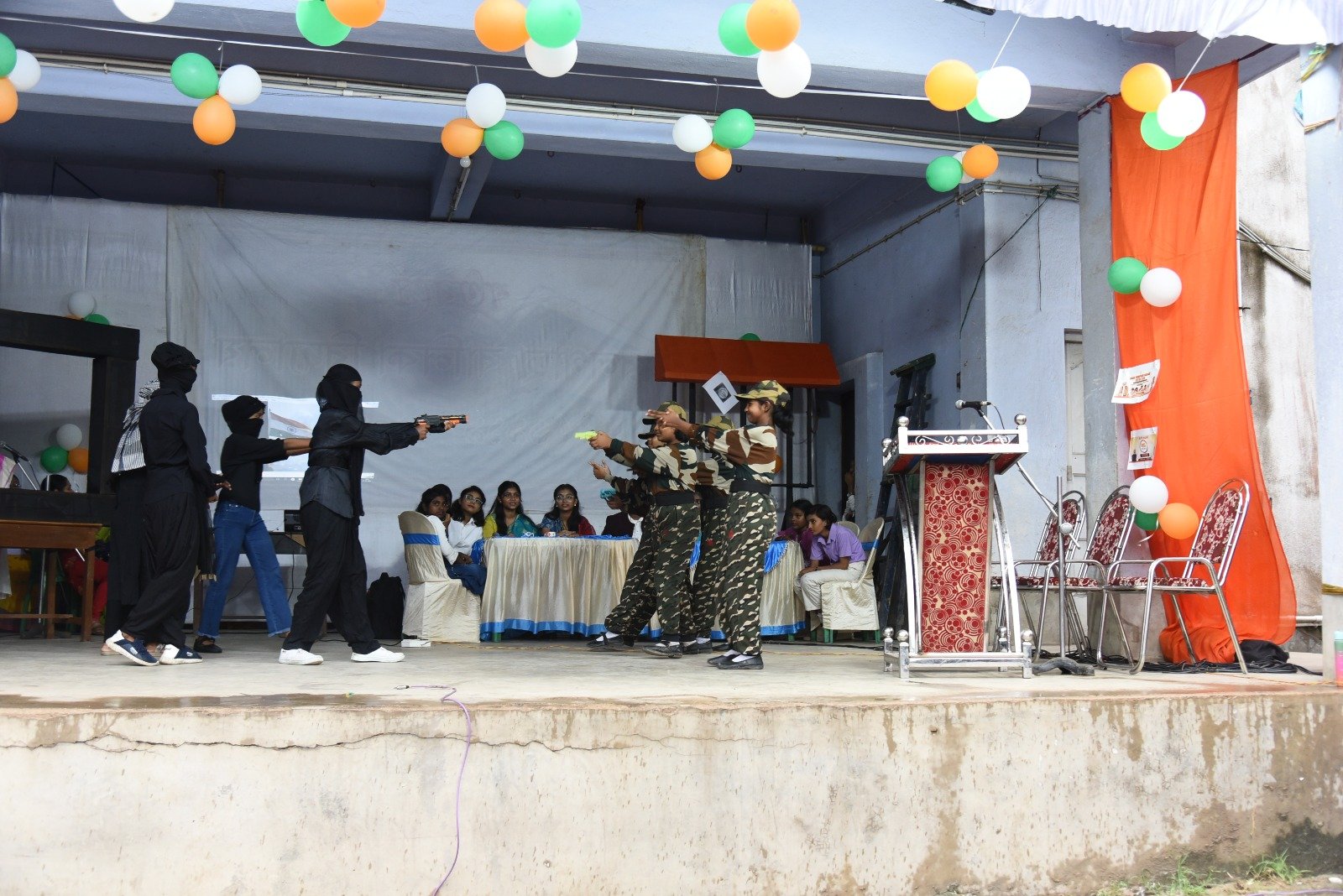
Part of the larger celebrations aimed at promoting public participation towards the ‘Viksit Bharat’ vision, the theatrical performance has been carried out by students in functions across various schools and colleges. Several cultural forums, theatre groups, volunteers, and BJP workers themselves put up the play in events organised by state authorities to reportedly raise awareness about the welfare schemes launched by PM Modi as well as his life and work.
Also called ‘Namo Seva Gatha’, the play has been staged across several states, including Assam, Bihar, Gujarat, Uttar Pradesh, Haryana, Chattisgarh, Madhya Pradesh, Maharashtra, West Bengal, and many others. In the performances so far, despite its many forms — street play, cultural performance, panchayat event, school drama, puppetry show, and more — the script remained more or less the same, albeit in different languages.
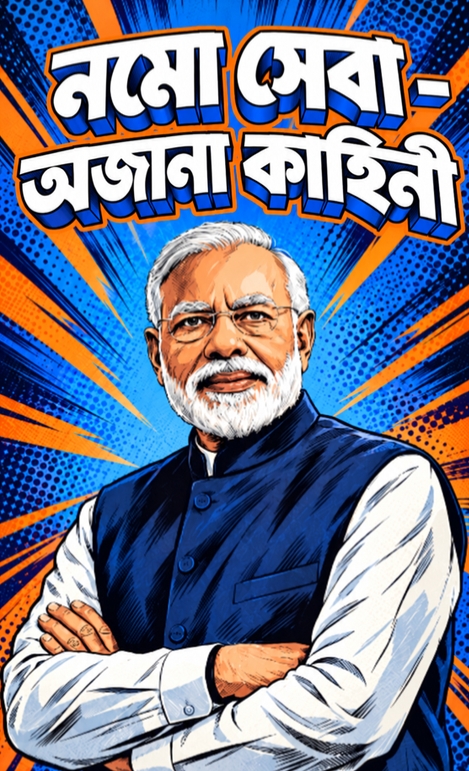
Alt News read the script and instructions sent out by West Bengal school education department to primary, secondary, and higher secondary schools, as well as colleges and universities in the state. Further, a report by Ei Samay states that district school inspectors (DIs) had sent out instructions for the play to some schools.
Student participation in the play was reportedly voluntary. However, the performances have drawn criticism over the use of educational institutions to stage what a section of students and academics described as a politically charged celebration of the Prime Minister. Critics have questioned the appropriateness of asking students, especially young children, to enact a script that repeatedly praises Modi and his government, while also incorporating political and religious slogans such as “Modi hai toh mumkin hai” and “Jai Sri Ram”.
What’s There in the Script?
The script has “untold stories” about the Prime Minister were narrated in the form of a conversation between five school friends — Mohit, Raman, Kajal, Disha, and Sonali — who have reunited after many years at a cafe. They recall the days they have left behind and reflect on changing times, portraying Narendra Modi as the architect of ‘Viksit Bharat’ — a vision he has set for India to achieve by 2047.
Modi’s first appearance in the play comes in the aftermath of the 2001 Gujarat earthquake which killed over 20,000 people. He emerges through a screen of smoke amid the ruins of a collapsed structure, waving the Indian flag as a beacon of hope amid the devastation, before taking oath as Gujarat’s chief minister in his mother tongue.
The friends then turn to discussing range of topics from the advent of digital payments and UPI and the spread of modern technology into India’s hinterlands, to “Operation Ganga” during the Russia-Ukraine war, the abrogation of Article 370, the consecration of the Ram Mandir in Ayodhya — presenting them as beneficial and “grounbreaking” schemes and measures undertaken by Modi as the Prime Minister.
The script further represents the country as plagued by terrorism in the years preceding Modi coming to power. “Militants would carry out attacks whenever they felt like it. Bomb blasts, serial blasts, had become a daily affair,” a character reminisces. A scene that shows the Uri surgical strike of 2016 invokes the usage of “weeping, sounds of gunfire, and the notes of a bugle”. In one of the street plays staged in Varanasi, a character links the surgical strike to an alleged rise in the sale of diapers in Pakistan around that same time.
🔹वाराणसी में ‘नमो सेवा गाथा’ अभियान के तहत शहर के चार प्रमुख स्थानों पर नुक्कड़ नाटकों का मंचन किया गया,कलाकारों ने प्रस्तुतियों के माध्यम से ‘सेवा ही संकल्प’ के संदेश को आमजन तक पहुंचाया,नाटकों में केंद्र और प्रदेश सरकार की जनकल्याणकारी योजनाओं,को रोचक ढंग से प्रस्तुत किया गया pic.twitter.com/bNj8XkuChx
— AIR News Lucknow (@airnews_lucknow) September 29, 2026
Modi’s role in curbing the spread of the COVID-19 pandemic is also emphasised through the dialogue: “When rumours were spreading across the country and ordinary people were afraid to get vaccinated, Modiji himself took the first vaccine shot and shared his photo, dousing all the rumours. This rekindled faith in the whole country, assuring us that we were safe.”
In one segment of the script, a news reporter hails Modi by invoking the first half of the popular catchphrase “Modi hai toh…”, leaving the audience, presumably comprising students, to not only complete it, but also participate in it: “Modi hai toh mumkin hai” (Modi makes it possible). At another juncture, the script exalts the Prime Minister for bringing about unprecedented progress in the country, children are then made to chant religious slogans like “Jai Sri Ram”.
In another segment, a child is made to say “Modiji! you have worked tirelessly day and night for 25 years to create so much for us…”
We also found several linguistic and grammatical errors in the Bengali script, including awkward constructions, poor syntax and passages that appeared to have been poorly translated from Hindi. Check the part below:
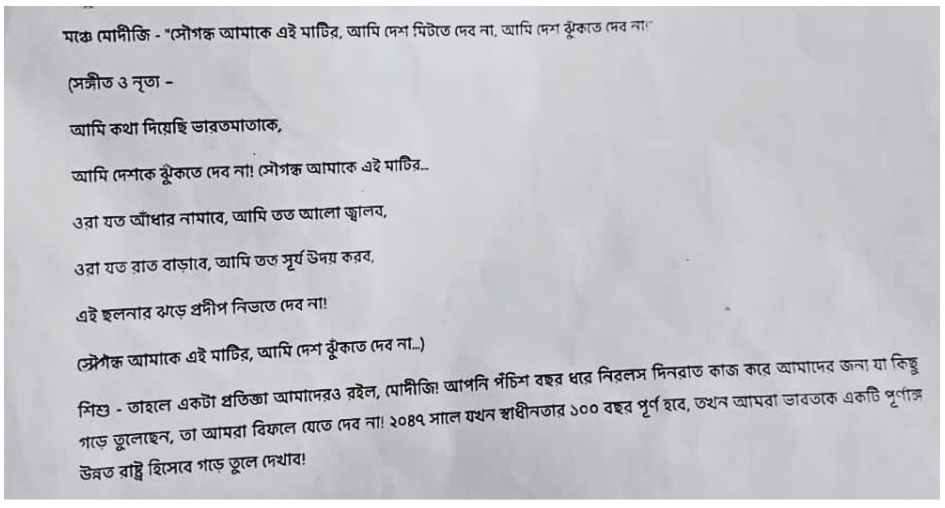
The line given to the character playing Modi, “সৌগন্ধ আমাকে এই মাটির, আমি দেশ মিটতে দেব না”, makes no sense whatsoever.
BJP Leaders As Audience Members
The play, following this uniform script, was enacted by performers, students and children across the nation, often with the presence of several Bharatiya Janata Party (BJP) leaders in audience. Recently on occasion of Gandhi Jayanti, Uttar Pradesh chief minister Yogi Adityanath attended a performance of this play in Lucknow.
#WATCH | Lucknow, UP: CM Yogi Adityanath attended the ‘Namo Seva Unheard Stories’ program under the ‘Seva Sankalp Abhiyan’. On this occasion, he also addressed the gathering. (02.10) https://t.co/qp2vr0D0zg
— ANI (@ANI) October 2, 2026
BJP’s national secretary Swadesh Singh took to X to share his experience witnessing the ‘NaMo Seva Ankahi Kahaniyan’ programme in Odisha.
Participated in the NaMo Seva Ankahi Kahaniyan programme under the Seva Sankalp Abhiyan in Jatani, Khordha, Odisha, commemorating 25 years of Shri Narendra Modi ji’s journey of Seva and Samarpan.
Through captivating theatrical performances, talented artists beautifully portrayed the remarkable work and transformative initiatives undertaken by the Modi government over the past 25 years, bringing the inspiring journey of service and dedication to life.
#NamoSevaAnkahiKahaniyan
#SevaSamarpanAbhiyan— Dr. Swadesh Singh (@swadesh171) October 4, 2026
BJP UP state president Pankaj Chaudhary attended a rendition of the play organised by the BJP at GL Bajaj College in Greater Noida’s Knowledge Park. The event was attended by several other MPs, MLAs, and party office-bearers and workers.
Union Minister of Ports Sarbananda Sonowal wrote on X, “A beautiful tribute to Hon’ble PM Shri Modiji’s 25-year legacy of public service, good governance and nation-building,” after attending a street play organised by students in Assam.
25 Years of Seva & Samarpan!
Witnessed the street play ‘Namo Seva – Untold Stories’ at Tinsukia Thana Chariali yesterday.
A beautiful tribute to Hon’ble PM Shri @narendramodi ji’s 25-year legacy of public service, good governance and nation-building.
#SevaSankalpAbhiyan https://t.co/HWPwIfCEIZ
— Sarbananda Sonowal (@sarbanandsonwal) October 5, 2026
In West Bengal particularly, we found that the play has been staged across districts like Bankura, Hooghly, Malda, Coochbehar, Murshidabad, Jalpaiguri, often involving young children as the performers. Most of these enactments have local BJP MLAs in attendance.
সেবা সংকল্প অভিযান
‘নমো সেবা – অজানা কাহিনী’ পরিবেশিত হল বিভিন্ন প্রান্তে। উৎসাহী মানুষের ভিড়ে পাত্রসায়েরের প্রত্যন্ত এলাকায় বৃষ্টি উপেক্ষা করে বালসি বালেশ্বর তলায় পথনাটিকার উপস্থাপন।
পাত্রসায়ের উন্নয়ন সমষ্টি, বাঁকুড়া। #NamoSevaEkAnkahinKahani #SevaSankalpAviyan pic.twitter.com/kg1OKtFq2N
— SDI&CO BISHNUPUR (@sdicovsu) September 28, 2026
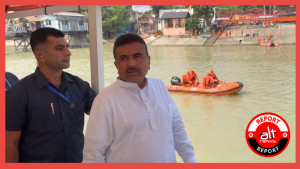
West Bengal BJP ministers Koustav Bagchi and Arjun Singh had earlier posted a promotional video of the play from their respective X handles, showing its performance atop a launch boat in the Sunderbans.
A state-level event, presided over by the minister of state for labour, Bhaskar Bhattacharya, and the minister of state for department of information & culture, Purnima Chakraborty, also took place on October 2, at Kolkata’s Shishir Mancha.
সেবা সংকল্প অভিযানের অন্তর্গত নমো সেবা ,অজানা কাহিনি। রাজ্য স্তরের অনুষ্ঠানের রঙিন মুহূর্ত ।
স্থান : শিশির মঞ্চ , কলকাতা।
২ অক্টোবর, ২০২৬ https://t.co/FyZuLTDaoX— Dept. of I & CA, Govt. of West Bengal (@icawbgov) October 4, 2026
‘We Were Coerced Into Participating’
The play stirred a controversy at Kolkata’s Scottish Church College. Some members of the college’s drama club spoke out against the college authorities, alleging that they were being coerced into participating in this play.
A student, requesting anonymity, informed Alt News that in an online meeting between faculty members and students organised on the evening of September 24, the matter came to a head, with students allegedly being reprimanding for not agreeing to take any part in the play. “As students of a college as prestigious as ours — one that counts Netaji Subhas Chandra Bose among its distinguished alumni — we cannot compromise on our individual convictions of what is right and what is wrong. Students should not have to face any undue pressure simply for exercising their fundamental right to act according to their own conscience and free will,” they said.
Posters stuck on walls around the college area on the evening of September 28, upholding the ideals of free expression by students, were allegedly removed within half an hour of them being put up, college sources who spoke to Alt News claimed.
Ultimately, the play which was scheduled to take place on September 29 at Scottish Church was cancelled after several students protested, The Telegraph reported. The report also quoted the mother of a student as alleging that college adminstration was pressuring students as well as the teachers to “act in a propaganda play”. She told the news outlet: “This resistance means a lot. It will also send a strong message to heads of other colleges that they cannot force their students to act in a play against their will.”
However, Madhumanjari Mandal, the principal of the college, squarely denied the allegations that there was any degree of pressure was involved. “Acting in the play was voluntary,” she told The Telegraph.
‘Propaganda’ Masked As Cultural Event?
Anwesha Sengupta, author and assistant professor of history at Institute of Development Studies, Kolkata (ISDK), believes that these plays represent a more effective form of propaganda.
Speaking to Alt News, she said, “When children come across the mention of Prime Minister Narendra Modi in their textbooks, they consume it dispassionately. This is not the case with performing a script, where it gets more internalised, as it is a group activity.”
“The play is a part of the same machinery which has been in the making for years now, and which tries to project the Prime Minister as a God-like figure. Since these directives come through teachers, and children usually grow up revering and trusting their teachers, the move comes across as more immediate, as compared to encountering Modi in a curriculum text, which seems to have mandated from a more distant, abstract authority,” she added.
Another student from Scottish Church College told Alt News, “It is unbelievable that an event so overtly political in nature was even allowed to be organised by the college.”