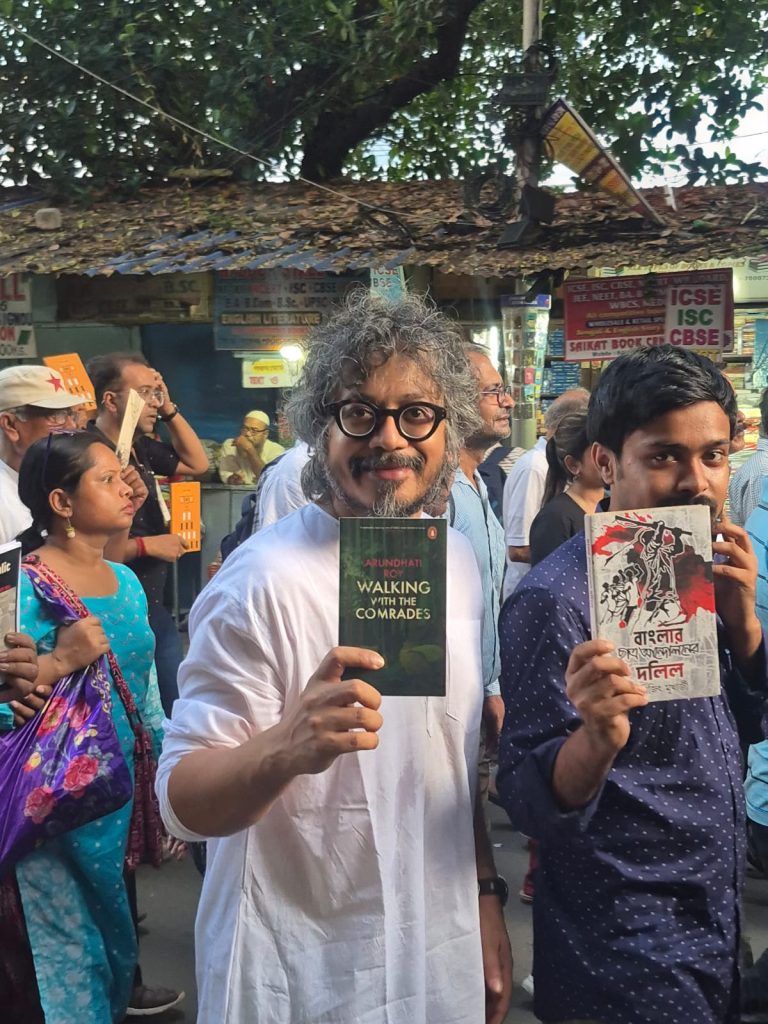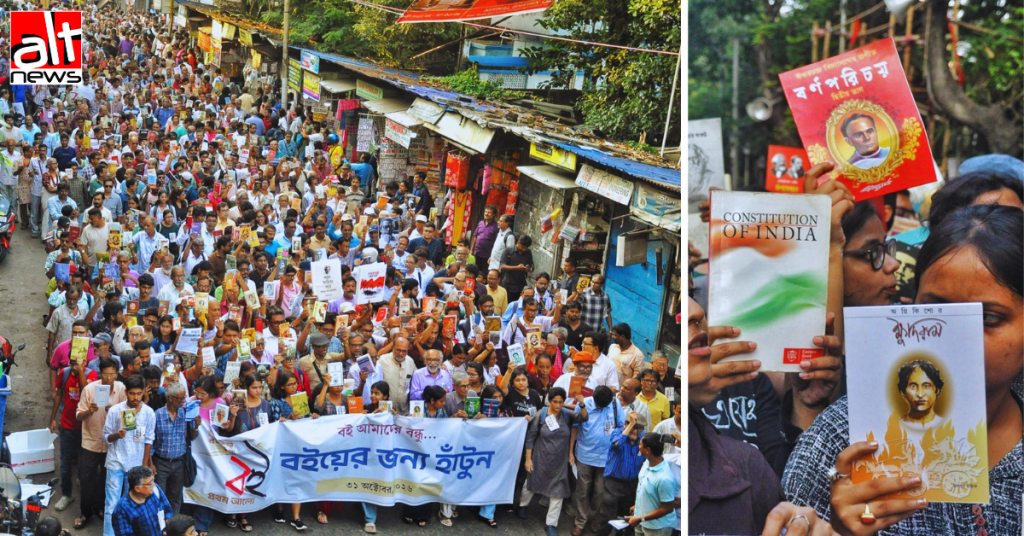
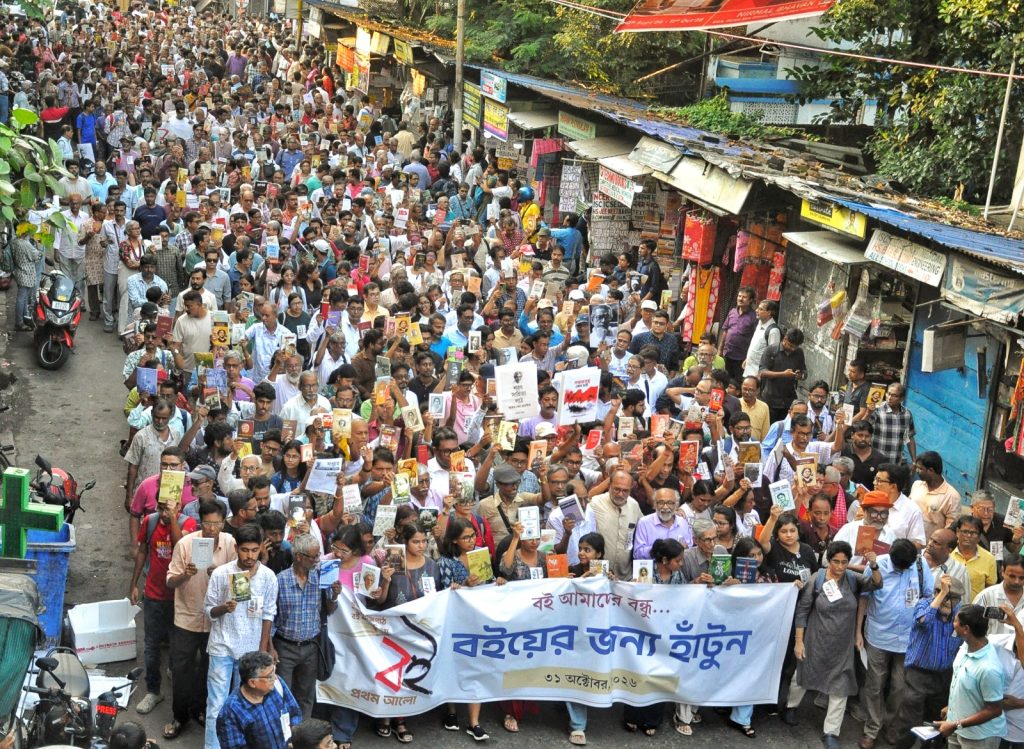
Kolkata witnessed an unusual procession on Saturday, October 31, as thousands of book lovers took to the streets carrying books instead of political flags. Called “Let’s Walk for Books”, the march was organised in protest against the alleged vandalism of Left-affiliated bookstalls by BJP workers and police during Durga Puja festivities across West Bengal.
The procession began at College Square, the hub of Kolkata’s literary and academic life as well as the publishing industry, following an appeal circulated on social media over several days. Among those who urged people to join were prominent academics, writers and public figures, including Pabitra Sarkar, Shamik Bandyopadhyay, Jawhar Sircar, Kumar Rana, Malini Bhattacharya, Ziad Ali, Paranjoy Guha Thakurta and Shobhanlal Dasgupta.
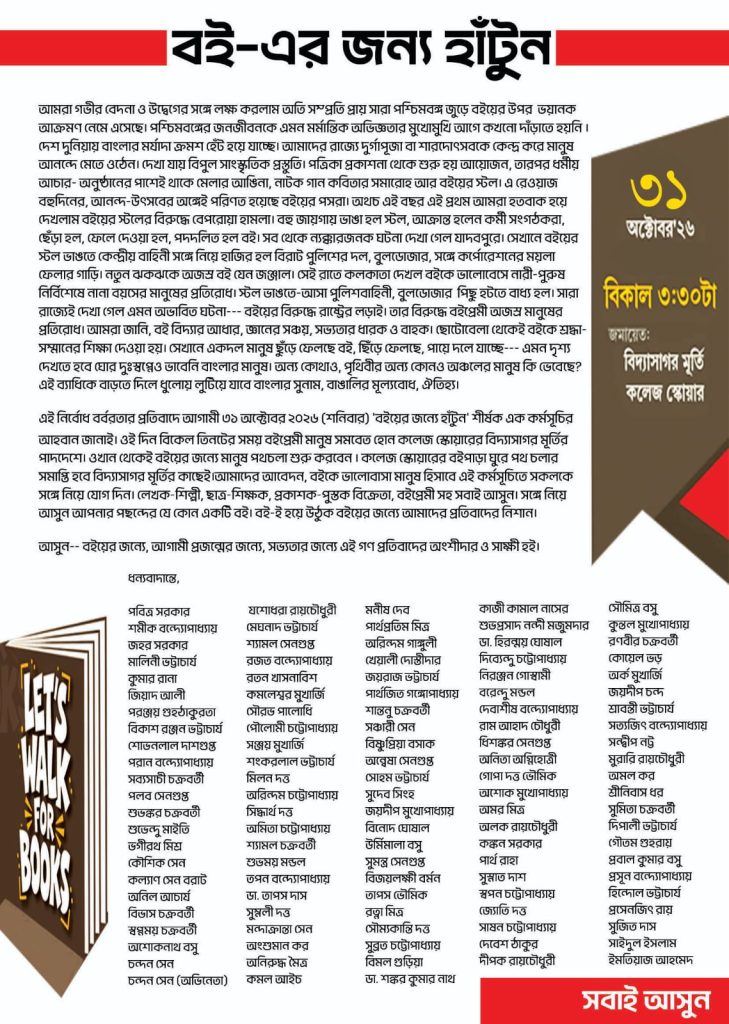
The appeal, which urged participants to carry a book each, said books were facing a ‘barbaric’ attack across the state.

Bookstalls have long been part of Durga Puja festivities in Bengal, along side fairs, music, theatre and poetry events.
This year, however, several bookstalls were allegedly vandalised, their organisers assaulted, and books thrown onto the streets and trampled underfoot, the appeal noted. In Jadavpur, an attempt was allegedly made to demolish bookstalls with the help of central forces. A Kolkata Municipal Corporation garbage truck was also brought in to remove newly printed books.
The appeal described the incidents as an assault on Bengal’s cultural traditions and warned that continued attacks on books could damage the state’s reputation and values. It called on writers, artists, students, teachers, publishers, booksellers and others to assemble in front of the Vidyasagar statue at College Square, carrying a book of their choice as a symbol of resistance.
The Rally
Responding to the appeal, people began gathering around College Street from 3 pm. Students from colleges and universities joined participants across generations, from middle-aged people to the elderly. Almost everyone carried a book.
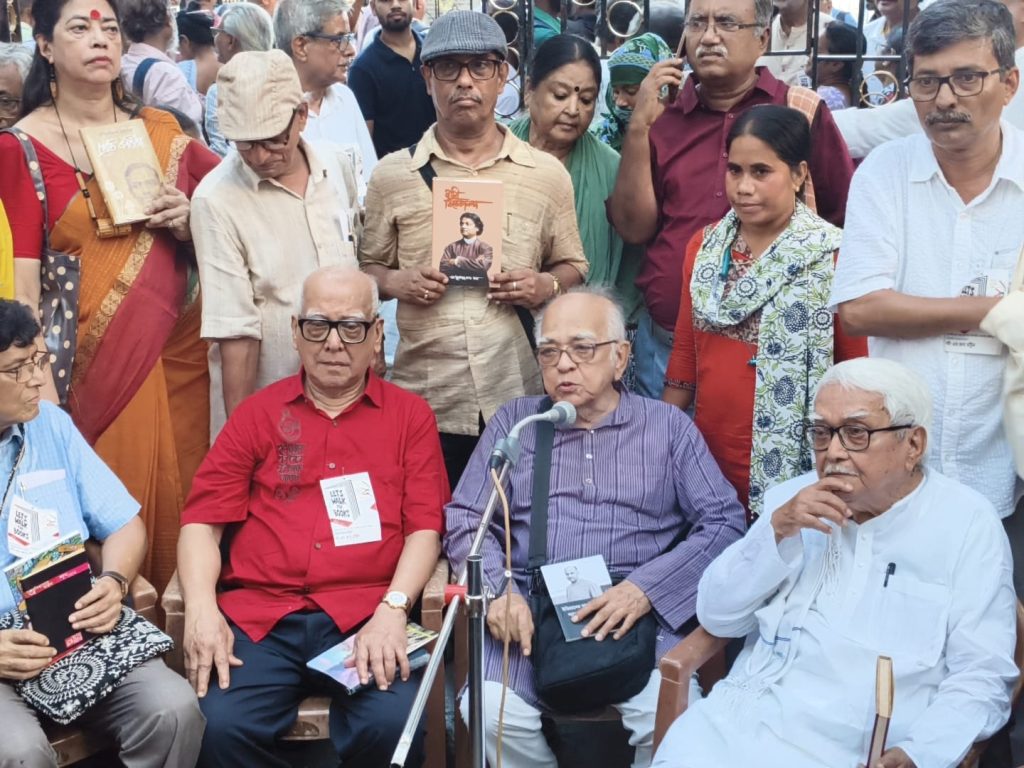
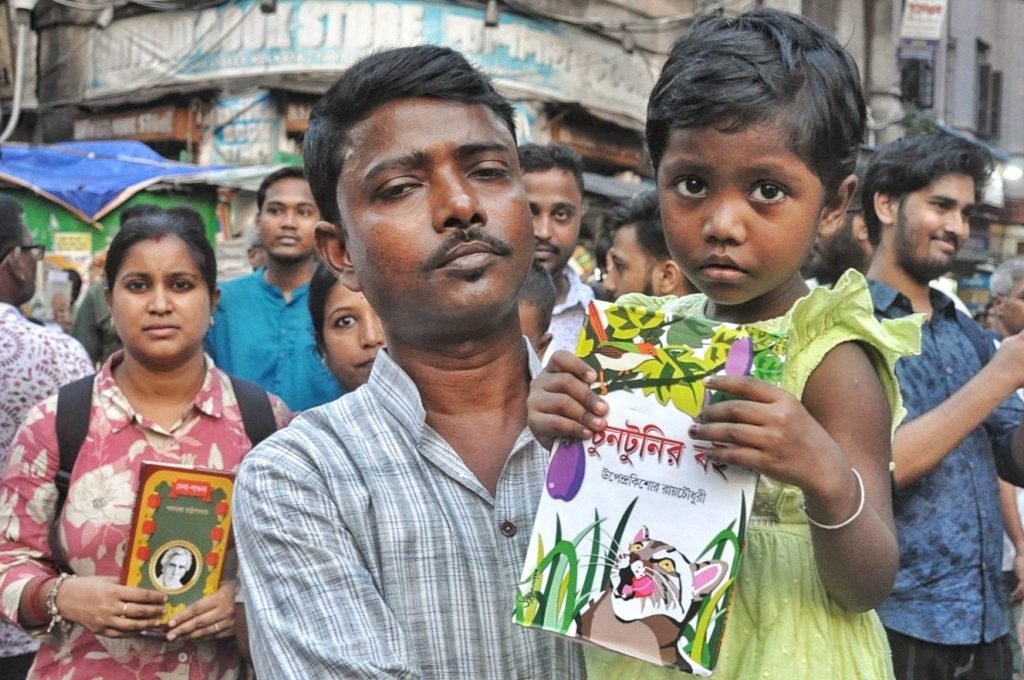
The collection reflected a wide range of political, literary and religious traditions. Participants carried works by Rabindranath Tagore, Karl Marx, Bhagat Singh, Sukanta Bhattacharya and Sarat Chandra Chattopadhyay, alongside books by contemporary writers such as Arundhati Roy. Some carried works by Syama Prasad Mookerjee, while others held copies of the Bhagavad Gita, the Ramayana, the Mahabharata and books on Swami Vivekananda.
Scheduled to begin at 3.30 pm, the march started around 3.45 pm, with several thousand people taking part. In a city accustomed to processions marked by political flags, banners and party slogans, this one stood out. Participants carried books and sang songs.
They sang the Bengali translation of Turkish poet Nazim Hikmet’s song “They Don’t Let Us Sing”, as well as Rabindranath Tagore’s “Bnadh Bhenga Dao”. International protest songs, including “We Shall Overcome” and its Bengali version, “Amra Korbo Joy”, also featured in the procession.
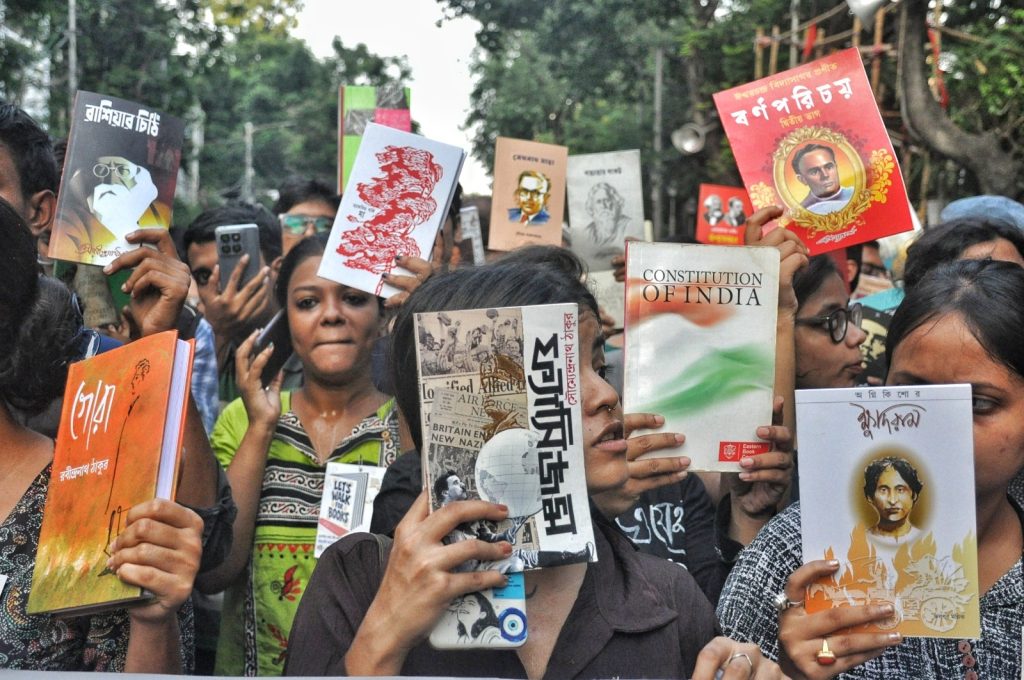
Large banners, or tifos, carried messages such as “Don’t Burn Books, Read Them” and “Books versus Bulldozer”.
The procession also offered glimpses of solidarity among participants. An elderly newspaper vendor distributed candies to those taking part. In a video shared on social media, he said he had joined the march because of his love for books. Although financial difficulties had prevented him from completing his education, he said, he had always loved reading and ensured that his daughter completed her education.
Starting in front of College Square and Calcutta University, the march passed the National Book Agency and the iconic sweet shops, Putiram and Mouchaak, on Surya Sen Street, before entering Bankim Chatterjee Street. It then proceeded past the College Street Coffee House and Presidency University before returning to College Square.
Several videos shared on social media showed people standing on balconies and outside shops, recording the procession on their smartphones. Marchers waved at onlookers along the route.
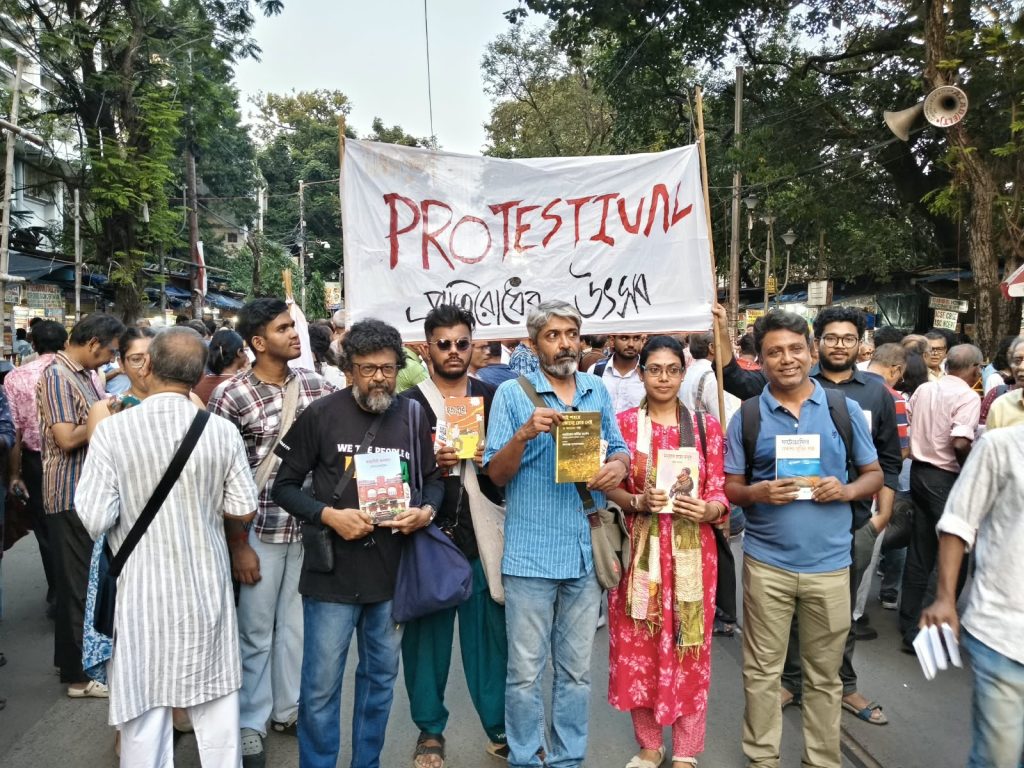
Left leaders Mohammed Salim, Sujan Chakraborty and Biman Basu also joined the procession, walking at the back.
After the march, the Indian People’s Theatre Association (IPTA) organised a brief cultural programme in front of the College Square gate. Activists performed songs including “Tu Zinda Hai”, Paul Robeson’s “Ol’ Man River” and Bhupen Hazarika’s Bengali adaptation, “O Ganga Boichho Keno”.
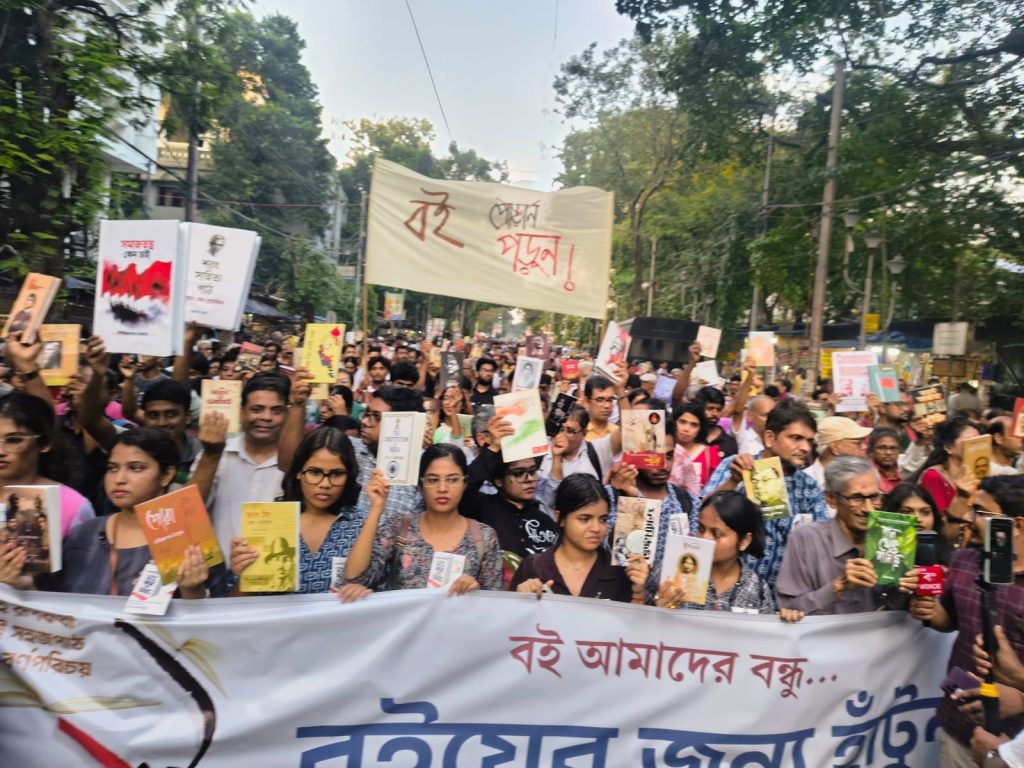
Addressing the gathering, senior Left leader Biman Basu said people who believed in reading books had come together for the march. He added that efforts to promote reading must continue whenever books come under attack.
Participants said the protest was not about defending any particular political ideology. A book, they said, was neither Left-wing nor Right-wing; it was simply a book. Some described the attacks during Durga Puja as an assault on education, free thought and rationalism, and said they had joined the march to collectively resist such incidents in the future.
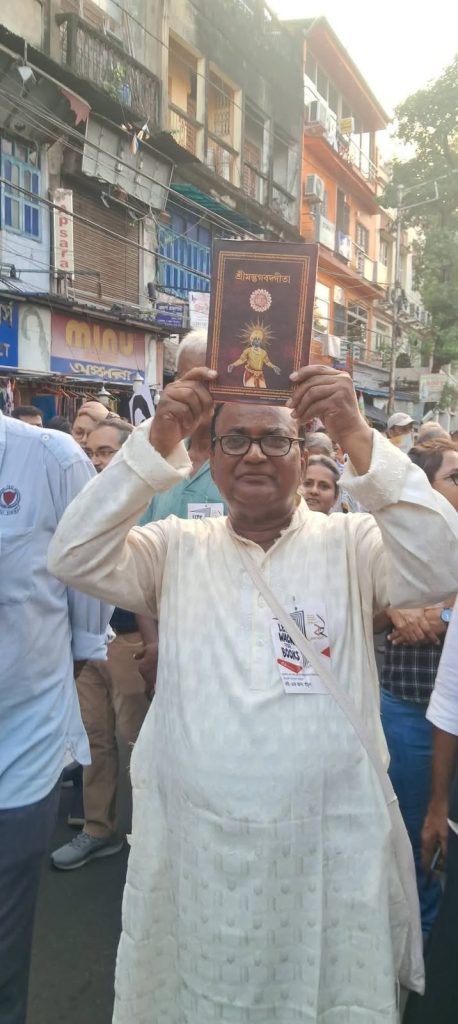
SFI central executive committee member Shuvajit Sarkar (in blue shirt in photo below), who participated in the march, said, “Fascists and communal forces oppose books because books promote rationality and reject blind subordination. We will defend books and continue the struggle against the divisive politics of the RSS and BJP until we defeat it.”