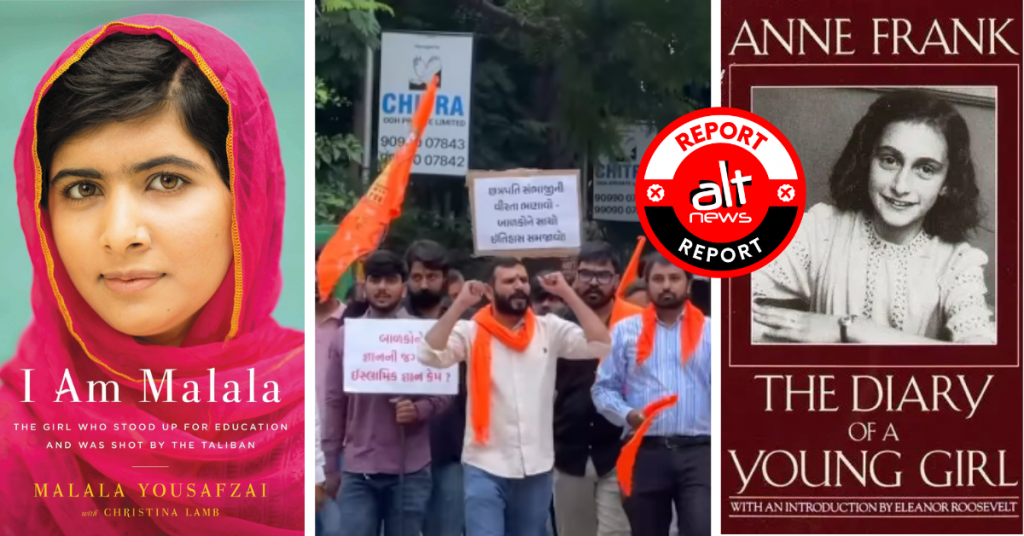
A book-reading session in Ahmedabad descended into chaos on August 27 after members of the Bajrang Dal and Vishva Hindu Parishad (VHP) allegedly disrupted the gathering by raising slogans, threatening participants and making communal remarks. They allegedly tore copies of ‘I Am Malala’ and ‘The Diary of a Young Girl’ being read at the session and used abusive language, before the confrontation eventually turned into a scuffle.
Organised by Students and Youth Collective, Ahmedabad, (SYCA) at AUDA Garden in Vastrapur, the session was attended by around 40–50 people. According to SYCA, around 30-50 Right-wing activists, who claimed to be associated with the two outfits, arrived at the venue wearing saffron scarves and carrying baseball bats and sticks.
View this post on Instagram
During the ruckus, one of the attackers was caught on camera saying, “Check if they are Muslims by pulling down their pants.” An FIR was filed later in connection with the incident at Vastrapur Police Station naming Bajrang Dal members Hiren Rabari and Jimit Rabari.
SYCA members shared photos with Alt News which showed torn books and injuries to the participants. At least six were injured, they said.
How the Anand Niketan School Controversy Escalated
The August 27 confrontation at the reading session was the latest escalation in a controversy that began with a canteen incident at Anand Niketan School in Ahmedabad’s Shilaj area and soon shifted focus to two books in its library.
On August 11, something resembling a piece of glass was allegedly found in food served at the school canteen. An eighth-grade student reportedly swallowed it and was later admitted to hospital. The student’s parents protested and made serious allegations against the school management.
Within days, however, the controversy expanded to include two books available in the school library — ‘I Am Malala’ and ‘The Diary of a Young Girl’. Hindutva organisations, including the Bajrang Dal and VHP, questioned why a book by Pakistani activist Malala Yousafzai was available at the school. Hindu activists allegedly entered the school premises by climbing over the gate, raised “Jai Sri Ram” slogans and threatened the school management.
View this post on Instagram
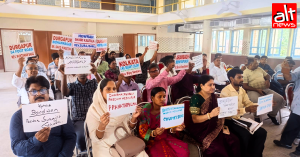
Posters displayed at a protest by Hindutva outfits questioned the school’s choice of books and teachers. Among the slogans were: “Knowledge of Swami Vivekananda and the Vedas — this is India’s honour”, “When will you teach the knowledge of the Vedas?”, “Why are there non-Hindu teachers in a Hindu school?” and “Why are children being given Islamic knowledge instead of education?”
Ahmedabad district education officer R M Chaudhary subsequently issued show-cause notices to the school over both the canteen incident and the books controversy. One notice referred to a complaint alleging that the school was forcing children to read certain types of books. In the notice concerning the canteen, the education department sought details of the arrangements made to ensure food quality, the agency operating the canteen and the action taken by the school after the incident.
When Alt News contacted the district education office (DEO), an official alleged that some guardians had complained about the school charging extra money for the two books. Alt News sought a copy of the complaint on which this allegation was based, but the official did not provide it.
Neither Book Part of Syllabus: School
The school dismissed the canteen operator following the incident and closed the canteen. It also removed the two books from the library and suspended its supervisor, Munja Sams.
Speaking to Alt News, a school spokesperson confirmed that the canteen operator had been dismissed and the canteen itself shut. The spokesperson said the school was making changes to the canteen to strengthen safety standards and prevent such incidents in the future.
On the book controversy, the spokesperson said that neither ‘I Am Malala’ nor ‘The Diary of a Young Girl’ was part of the school curriculum. Both had been included in the reading list by the school’s book club.
The spokesperson said, “Apart from these two books, books by Veer Savarkar and the Dalai Lama are also available in the library. However, after the education officer issued a notice, both books have currently been removed.”
Alt News also asked the school about the DEO’s allegation that parents had been charged extra for the two books. The school denied this, saying it had not charged any additional fee for library books. According to the spokesperson, the amount collected from parents was the fixed amount, which covered routine expenses such as stationery, laboratory materials, activities and educational trips under the Fee Regulatory Committee (FRC).
Speaking to local news outlet Jamavat, two school teachers also addressed the controversy. They said the student complained of stomach pain after allegedly swallowing a piece resembling glass or fibre in the vegetable and was immediately taken to hospital.
The teachers also explained how the books were selected. According to them, the school runs a book club in which a committee of teachers approves books based on students’ age and reviews their content. They said the list included books on Swami Vivekananda, Dr S Radhakrishnan, Dr A P J Abdul Kalam and books on Rani Lakshmibai, besides Malala Yousafzai’s book.
A teacher said the school did not promote any particular religion, but instead sought to promote “humanity”. The teacher added that students were encouraged to think critically while respecting the opinions of others.
On August 14, the school’s Instagram account shared screenshots of emails from parents supporting the school. While several parents raised concerns and offered suggestions regarding the canteen, most expressed support for the school’s decision to include the two books, describing them as important for students’ development.
View this post on Instagram
‘A Matter of Concern for the Education System’
The Students and Collective Group (SYCA), which later organised the August 27 reading session, had already criticised the campaign against the school before the confrontation. In a statement, the group described the controversy as a worrying development for the education system in Gujarat and India.
SYCA argued that schools should be spaces not only for formal education but also for critical thinking, discussion and debate, and that students should have access to books that encourage them to engage with different ideas.
The group also defended the two books at the centre of the controversy. ‘I Am Malala’ is Malala Yousafzai’s account of her campaign for girls’ education and rights, while ‘The Diary of a Young Girl’ documents Anne Frank’s experiences during the Nazi persecution of Jews and the Holocaust. SYCA argued that rather than being treated as “objectionable”, both books should be regarded as valuable resources for students.