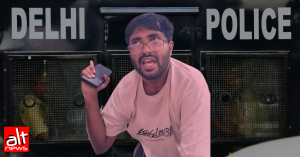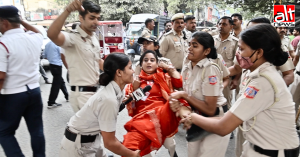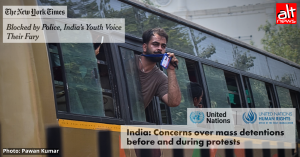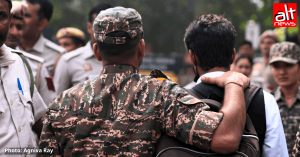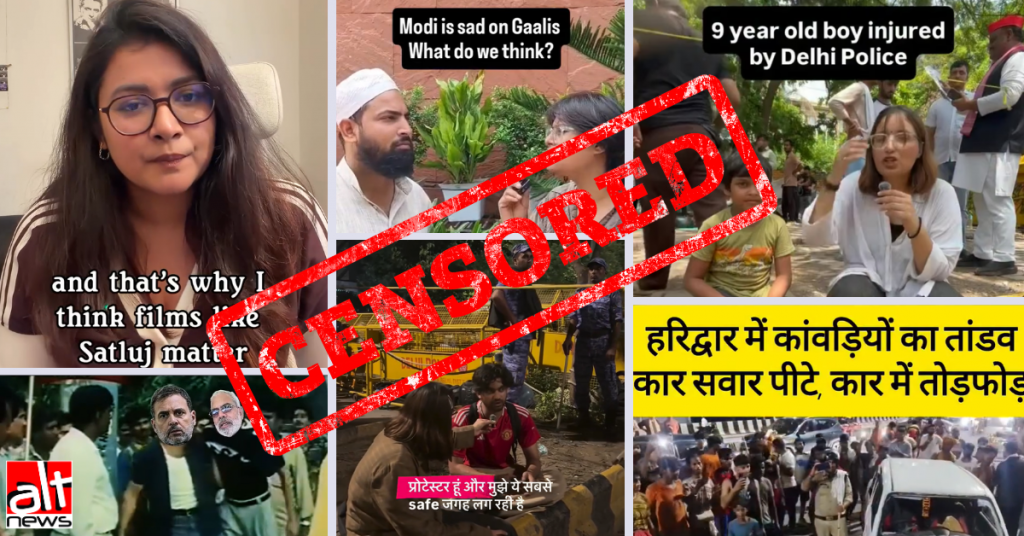
A wave of blanket and seemingly arbitrary restrictions is sweeping Instagram in India, with posts and accounts being taken down or restricted, particularly content related to the Cockroach Janta Party (CJP) protests, political satire and any kind of criticism of the ruling dispensation.
The takedowns have exposed an opaque and largely unaccountable process, with users given little to no meaningful avenue to appeal the removal or restriction of their posts and pages. Meta’s explanations often lead to a loop of generic messages citing “local legal requirements” or “automated systems”. While India is identified as the location of the restriction, the platform offers little clarity on what triggered the decision or why specific content was targeted, including through Meta’s Transparency Centre.
The timing of this state-ordered censorship frenzy is difficult to ignore. It comes immediately atter a youth-led movement whose whose unprecedented reach and mobilisation were driven largely by social media, with Instagram playing a central role. The platform helped transform CJP from a satire page into a nationwide movement, amplifying dissent and mobilising young people at a scale that ultimately forced the government to concede to some of its core demands.
For many creators affected by the takedowns, their work on Instagram is a primary source of income and professional engagement. Alt News spoke to several users, including content creators, comedians, satirists and journalists, caught up in this expanding censorship drive.
ALSO READ: Government orders trigger sweeping Instagram censorship days after CJP protest
Anjali Priya, an Instagram creator with more than 104,000 followers, is among those affected. Priya’s content spans politics, entertainment and other issues, typically combining personal commentary with factual references.
On August 1, Priya uploaded a video featuring a photo of Prime Minister Narendra Modi from his address to young protesters, in which he “forgave them” for using expletives during the Chalo Sansad protest in Delhi’s Jantar Mantar on July 20.
In the satirical video, Priya, using a cat filter, asked when Modi would give the opportunity to the citizens to forgive him, urging him to take accountability for the police brutality that occurred against students during the July 20 march, which led to hundreds being severely injured and hospitalised.
The video received nearly two million views before Instagram notified Priya that it had been restricted in India. Meta said the action was taken by an “automated system pursuant to legal requirements under India’s Information Technology (Intermediary Guidelines and Digital Media Ethics Code) Rules, 2021”.
A similar restriction was imposed on her July 24 carousel meme post calling for the PM’s resignation. The platform cited a legal request based on local laws.
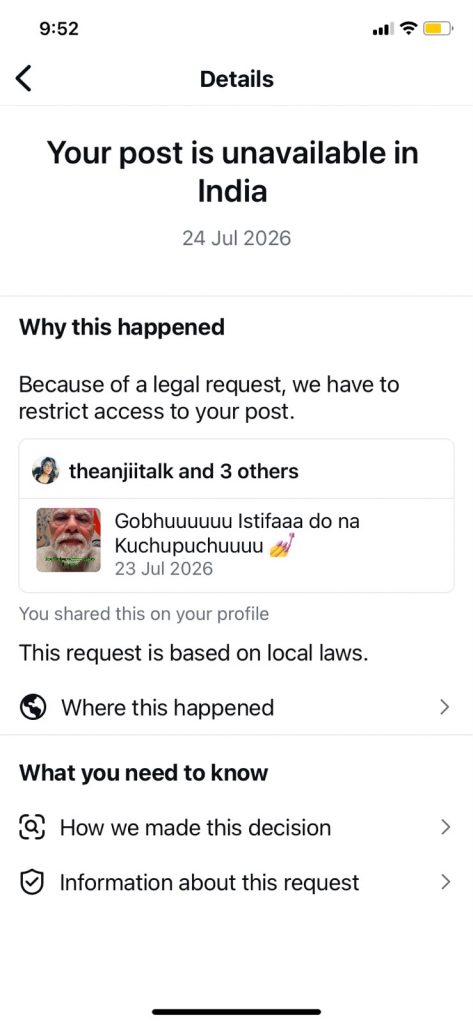
The restricted post is shown below:
Speaking to Alt News, Priya describes the restrictions of her posts as nothing short of a ‘digital emergency’. “I used to read about the emergency, but the BJP government’s actions have made me experience a taste of what it was like,” she said. “This is a digital emergency. We don’t need to go 50 years back to understand it — we are living through it right now.”
‘Censorship on Censorship’
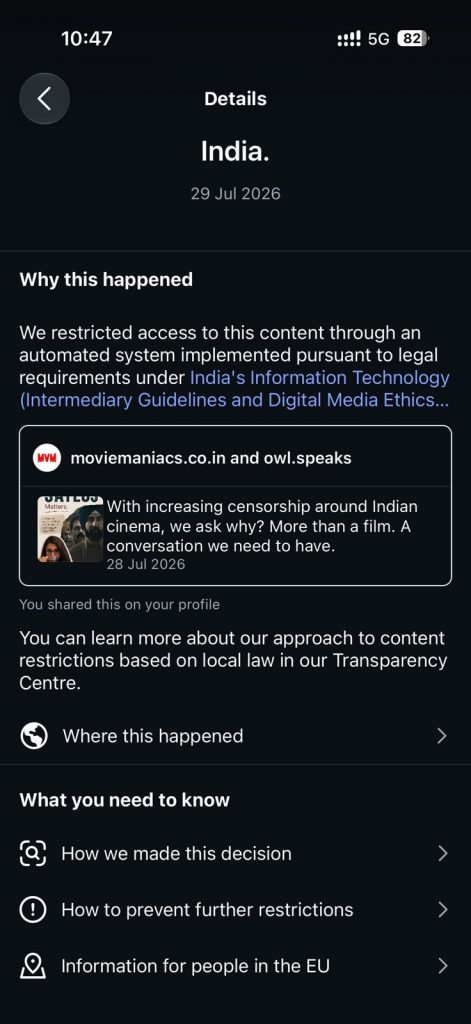
Sneha Pan, the administrator of the Instagram page Moviemaniacs.co.in, told Alt News that a video uploaded on her page on July 28 had been restricted in India. The video addressed the increasing censorship surrounding Indian cinema, particularly highlighting the case of the recent film, ‘Satluj’, based on the life and murder of human rights activist Jaswant Singh Khalra. Originally titled ‘Punjab ’95’, the film was subjected to prolonged scrutiny by the Central Board of Film Certification (CBFC), which sought multiple changes before clearing it. The dispute contributed to a three-year delay in its release, and after eventually making it to a streaming platform, the film was swiftly taken down, adding another chapter to its troubled journey with censorship.
On July 29, Pan received a notification from Meta indicating that the post was unavailable in India, in accordance with India’s Information Technology (Intermediary Guidelines and Digital Media Ethics Code) Rules, 2021 (IT Rules).
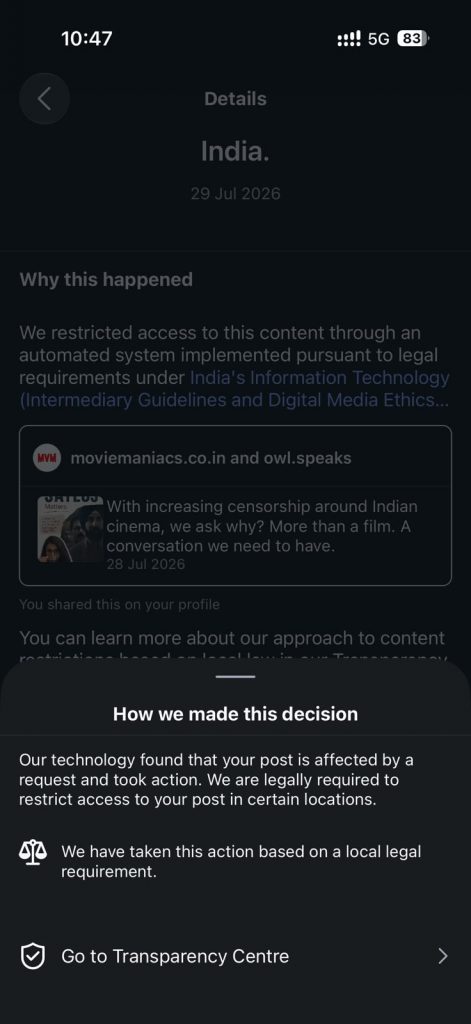
The “How we made this decision” section said: “Our technology found that your post is affected by a request and took action. We are legally required to restrict access to your post in certain locations.” It also included the message: “We have taken this action based on local legal requirements.”
Pan calls the restrictions “deeply troubling” and highlights the irony in this particular case as hard to miss: “I was talking about censorship, and now the conversation about that censorship itself has been censored.”
‘Meta doesn’t want to annoy the government’
Sunil Sharma, a satirist who runs the Instagram account Rofl Gandhi2.0, with around 130,000 followers, alleged that a comment mocking Modi’s Bengal campaign post was removed after he shared it on his Instagram story in April.
On May 21, Sharma posted a video featuring Rahul Gandhi and Modi, with the former quipping that while the country was “going through hell”, the latter was asking why “Melody” was so “chocolatey” — referring to the viral social media phenomenon from back in May, when the Indian PM gifted Italian PM Giorgia Meloni a packet of Melody toffees during his visit to Italy. Sharma’s post played on the joke of the famous Melody chocolate’s advertising line: “Melody itni chocolatey kiyu hai?” This video was made unavailable in India on July 21.
Another video, posted in April, satirising Modi and Donald Trump, was restricted on July 31.
Sharma had commented, “Pyaz kya chez hai beta, hum toh desh bhi kha jate hai” [What is an onion, son? We even eat the country] on a post by Modi, featuring another viral moment when the Prime Minister had ‘jhalmuri’ during his visit to Kolkata as part of the West Bengal election campaign. While the comment was eventually deleted from the post, he had shared the comment on his own Instagram story, which was removed by the platform on April 19. 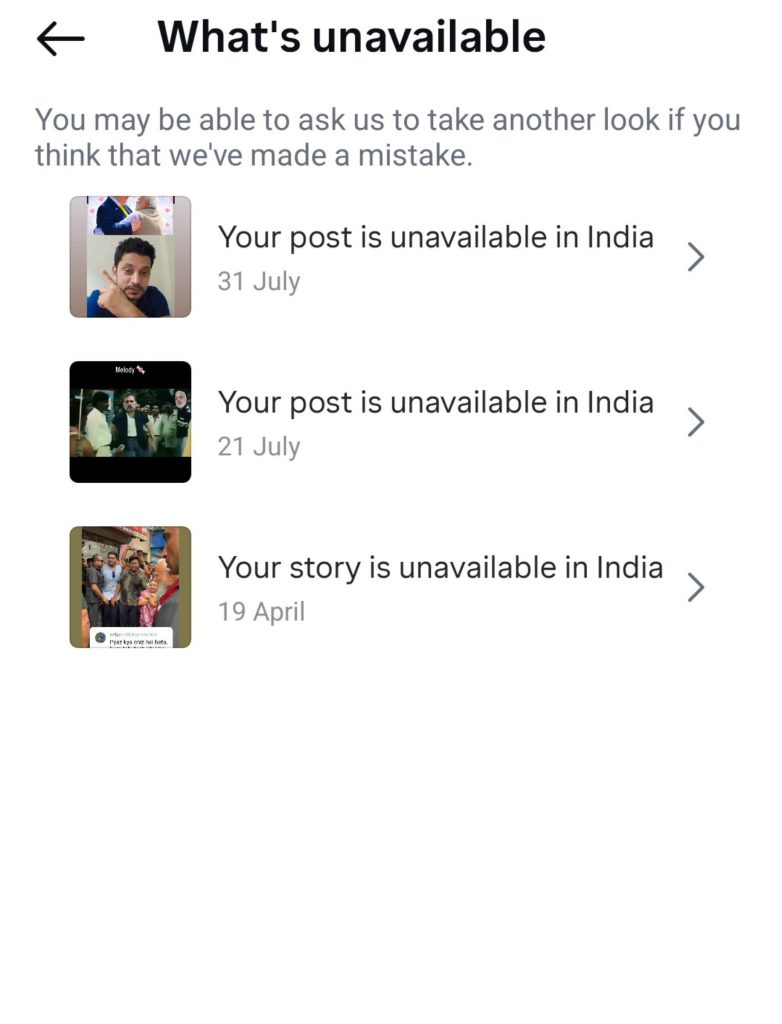
“I think Meta just wants to survive in India, as it is a big market owing to WhatsApp. Because of WhatsApp, Meta is not taking risks. They don’t want to annoy the government. Instagram has been a democratic platform, but now they want to reset the algorithm to promote right-wing content more,” Sharma opined.
‘Suppressing the Voice of Democracy’
Journalist Sachin Gupta, on August 1, uploaded a video reporting on the alleged violence by Kanwariyas on the streets of Uttarakhand in the presence of police. The video was removed on August 3 with a similar message: a government or law-enforcement request under Section 79(3)(b) of the IT Act.
Gupta told Alt News that an FIR had been registered in the case and that police were taking further action. “How can you then label a video related to that case as fake or misleading?” he asked, calling the restriction “nothing short of an attempt to suppress the voice of democracy.”
“Government wants to completely control social media,” Gupta said. “Journalism within media houses is already under government control. Now, even the few journalists who can express their views through social media are being targeted, and attempts are being made to control them as well.”
‘No Transparency For The User’
Shrishti Khanna is an educator by profession and a political content creator who speaks on issues like Palestinian genocide, local Indian politics, Hindutva and the RSS-BJP playbook. With around 104,000 Instagram followers, Khanna’s account was banned in India on July 7 following a government request under Section 79(3)(b) of the IT Act.
Sharing details of her long censorship battle with Alt News, Khanna said that she received no notification from either Meta or the government, and only discovered that her account was restricted in India after her followers and friends intimated that her account was not visible to them. Khanna was compelled to create a back-up account.
However, this was not the first time her account had been suspended. On June 9, Instagram suspended her account for alleged copyright infringement — something Khanna described as a tactic allegedly used by the BJP IT cell to target accounts posting politically sensitive content. Meta later acknowledged the suspension as an error and restored the account after Khanna appealed. As of today, her main account remains suspended.
Her X account was also locked on June 11. The only explanation she received was that following a review, X had determined that her account had violated its rules.
Khanna said a writ petition challenging the Instagram ban is currently before the Delhi High Court. Since the restriction was issued at the government’s request, she said, there is no way to appeal through the platform. “One has to take it to court if they want to appeal or challenge it, or even find out on what grounds the account was banned, because there is no transparency offered to the user,” she said.
Khanna said she is receiving legal assistance from the Internet Freedom Foundation (IFF), which had also supported her during her earlier suspensions.
Video on Police Lathicharge Taken Down
Varnika Dhawan, a 21-year-old content creator with approximately 56,000 followers on Instagram, uploaded a satirical video on July 24, in collaboration with a fellow creator and satirist, Nitesh Kumar Tiwari. In the video, they took a jibe at the politicians who have allegations of rape and molestation against them and how the government allegedly treats them with garlands and respect.
This video garnered around 8.3 million views, after which it was restricted in India following a similar message: “local legal requirements” or “a request from the government”
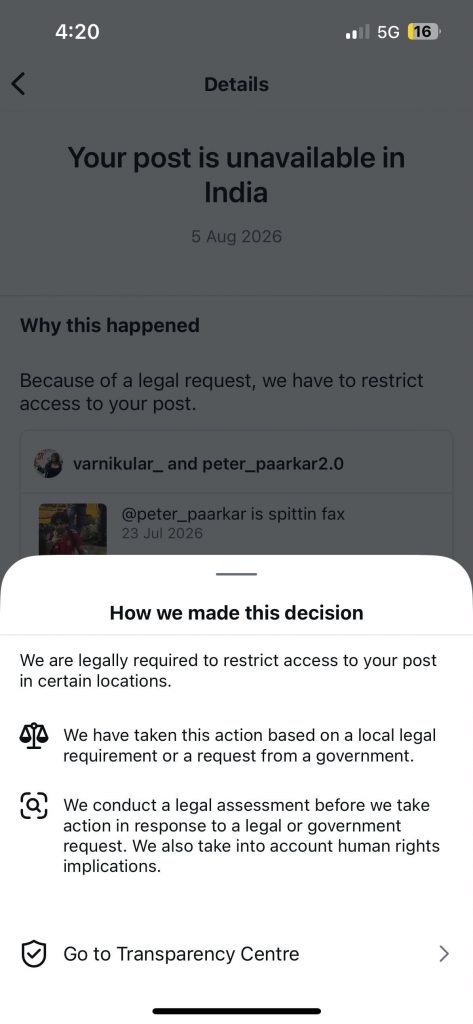
On July 22, Dhawan uploaded another video featuring a 9-year-old boy who was allegedly a victim of the lathi charge by the Delhi police during the July 20 march. This video amassed around 2.1 million views, but on August 5, it was restricted in India.
On the same day, Dhawan posted a video questioning the reason for the restriction of the second video. The caption asked: “9-year-old kid beaten by police, the video is a violation of local laws, beating up wasn’t a violation of any laws?”
View this post on Instagram
‘They are Restricting only Viral Videos’
Nitesh Kumar Tiwari, who posts satire through the Instagram page peter_paarkar2.0, also faced similar restrictions. On August 1, he uploaded an image mocking the fiasco over youth using expletives during the protest against the politicians and the ruling government. This post was also restricted in India.
Speaking to Alt News, Tiwari noted that censorship is not being implemented simply based on content. He observed, “They are restricting videos only after they go viral. My video received around 8.3 million views before it was restricted. After a few days, both Varnika and I reuploaded our videos and they are still live on our pages.”
Four videos from the Instagram account sakhi.bandhu have been restricted in India. In the first video, the user is seen playfully interacting with a policeman.
The second video shows a van loaded with food for police personnel, garnering approximately 4.3 million views.
The third video features the user singing along with other protesters and received around 634,000 views.
The last video includes a statement from Mohammed Junaid — a prominent face who volunteered and served free food and drinking water to the protesters during the CJP protest.
Another one of their videos, which depicted how the user was mishandled by the police during the protest, was taken down from Instagram.
Following these repeated bans, Sakhi uploaded a video asking Instagram for an explanation. “I cannot understand what kind of community guidelines these reels are violating that they are being censored,” they said.
Sakhi further mentioned that they have been targeted in various ways on the platform and have reported the same to Meta, but in vain. “Till date, no action has been taken regarding my…but the reels I upload, which depict reality on the ground, are getting restricted and removed.”
Alt News has written to Meta seeking clarity on the basis for the restrictions, including whether it independently reviews government requests and the criteria it applies. We also asked them about the number of such restrictions since July 20 and the appeal process, including how long reviews take and who conducts them. This story will be updated if we get a response from the platform.